
Around this point is where niche-relevant backlinks become the actual lever.
SEO is not a switch that delivers traffic overnight. You publish an article, wait for Google to index it, and hope visitors start arriving. Sometimes that happens quickly. In most cases, building consistent organic traffic requires research, technical improvements, useful content, and regular updates.
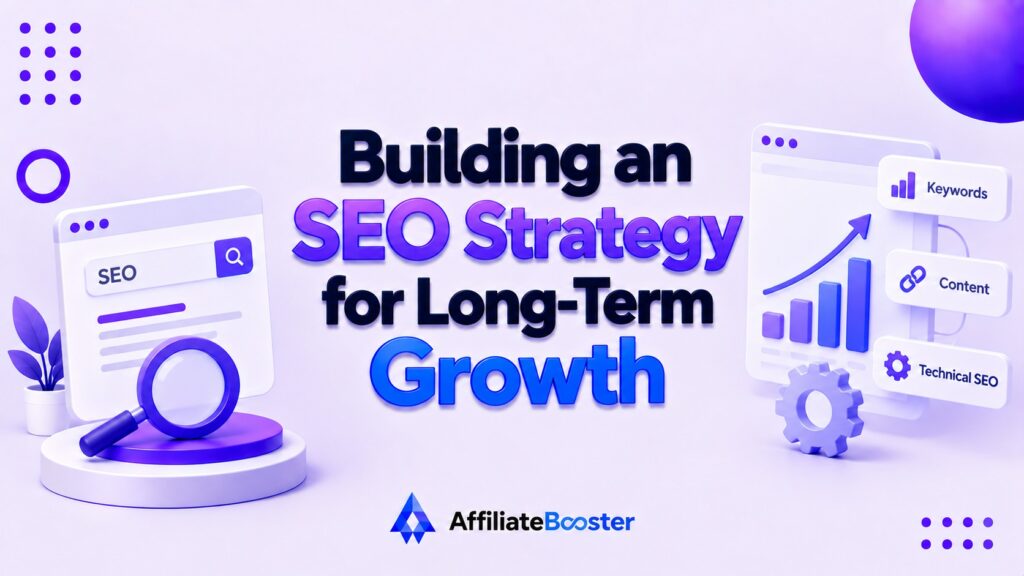
For affiliate publishers, the challenge is even greater. Competition is high, search behaviour is changing, and AI-powered search results are affecting how users discover websites. Publishing more articles is not enough. Publishers need to understand where their audience searches, what information it needs, and how to turn relevant traffic into meaningful actions.
This is where strategies such as Parasite SEO, niche-relevant backlinks, internal linking, and content optimisation become part of the discussion. Parasite SEO helps marketers leverage established platforms, while a long-term SEO strategy focuses on building an independent website that continues to attract visitors over time.
The most useful approach is not to depend on one tactic. It is to combine different methods while prioritising content quality, search intent, and measurable results.
Why SEO Is Changing in 2026
Search is becoming more competitive as Google integrates AI-powered features into its results.
Google says that AI Overviews and AI Mode are designed to help users ask more complex questions and discover a wider range of sources. The company also says that these features create opportunities for websites to appear in new search experiences.
However, independent research suggests that AI-generated search experiences can change how often users visit external websites. A 2026 study published on arXiv examined more than 55,000 queries and reported that AI Overviews appeared for 13.7% of queries overall and 64.7% of question-based queries within its research sample.
The study also found that some cited domains did not appear on the traditional first page, suggesting that AI citations and conventional rankings may not always align.
Another study, based on browsing data from a representative panel of 900 adults in the United States, reported that clicks to sources cited in AI Overviews occurred in approximately 1% of visits in its sample.
The researchers also found an association between AI Overviews and fewer clicks to external websites. These results come from specific research samples and should not be treated as a universal click-through rate for every website.
For publishers, the message is clear: ranking for a keyword is not the only objective anymore. Content needs to be useful enough to encourage readers to explore, compare, subscribe, click, or take another relevant action.
A Few SEO Statistics to Keep in Mind
Recent industry research highlights how quickly the search environment is evolving:
- Semrush reports that AI search traffic increased by 527% in one year in its 2026 SEO statistics overview. This is a Semrush-reported figure based on its own data and methodology, not a universal measurement of all AI search traffic.
- A 2026 research study analysed 55,393 trending queries across 19 topical categories to measure Google AI Overviews, showing the growing effort to understand how AI-generated search affects publishers.
- Research into user behaviour around AI Overviews found that source clicks were rare in its sample, reinforcing the importance of measuring actual traffic and conversions instead of relying only on visibility.
These figures do not mean traditional SEO is no longer useful. They show why website owners should diversify their visibility and create content that offers more value than a short answer on a search results page.
What Is Parasite SEO and How Does It Work?
Parasite SEO involves publishing content on an established third-party website or platform to benefit from its existing audience, visibility, or search presence.
Instead of publishing every article on a new affiliate website, marketers may use platforms such as Medium, Reddit, Quora, LinkedIn, or other relevant publishing communities. These platforms may already have established domains, regular visitors, and pages indexed by search engines.
The strategy is often discussed in affiliate marketing because it can provide a way to test topics and reach users without waiting for a new website to develop authority.
For example, an affiliate marketer promoting a tracking platform could publish:
- An educational article explaining affiliate tracking.
- A comparison of different campaign tracking tools.
- A discussion about common conversion tracking problems.
- A practical guide to measuring traffic quality.
The content should be created for the platform's audience. A useful contribution is different from a page that exists only to insert keywords, manipulate rankings, or push affiliate links.
Benefits and Risks of Parasite SEO
Parasite SEO may offer several potential benefits:
Access to an established audience: A third-party platform may already have readers interested in a specific subject.
Topic testing: Marketers can use external content to understand which questions generate engagement before developing a larger content campaign.
Faster experimentation: Publishing on an existing platform may be operationally simpler than building and maintaining a new website.
Additional visibility: A useful article can potentially appear in search results or be discovered directly through the host platform.
However, the strategy also has limitations. Marketers do not fully control the platform’s algorithm, moderation rules, link policies, or future availability. Content may be removed, visibility may decline, or promotional links may be restricted.
Google’s site reputation abuse policy also makes an important distinction. Publishing third-party content mainly to exploit a host website’s ranking signals can violate Google’s spam policies. The purpose, context, and quality of the content matter.
For this reason, Parasite SEO should not become the only growth channel. It can support experimentation and distribution, but building your own website, audience, and content library remains important for long-term stability.
Start With Search Intent, Not Just Keywords
Many SEO strategies begin with a list of keywords. A better approach is to understand the reason behind the search.
A user searching for “affiliate tracking software” may be comparing different tools. Someone searching for “how to track affiliate conversions” may need a tutorial. A user searching for a specific brand may simply want its official website.
These different search intents require different types of content.
| Search intent | User’s objective | Recommended content |
| Informational | Learn something | Guide, tutorial, explainer |
| Commercial | Compare options | Review, comparison, buying guide |
| Transactional | Take action | Product or offer page |
| Navigational | Find a brand or website | Official resource |
Google recommends creating helpful, reliable, people-first content rather than content designed primarily to manipulate search rankings.
For affiliate publishers, this means an article should answer the reader’s question before introducing a product or affiliate offer. A comparison article should explain the differences between the options. A review should discuss both useful features and limitations. A tutorial should provide steps that readers can actually follow.
Keywords still matter, but they should fit naturally into the content.
Technical SEO Is the Foundation
A website cannot make full use of its content strategy if search engines struggle to access or understand its pages. Technical SEO may not be the most exciting part of publishing, but it supports everything else.
Website owners should regularly review:
- Page speed and mobile performance.
- Indexing and crawlability.
- Internal linking.
- Website navigation.
- Broken links and redirects.
- Canonical tags.
- Page titles and meta descriptions.
- Mobile readability and layout.
A useful article buried deep within a confusing website may not receive the visibility it deserves. Clear categories, logical navigation, and relevant internal links help readers discover related pages.
Google’s Core Web Vitals are designed to measure aspects of user experience, including loading performance, responsiveness, and visual stability. They should be considered alongside content quality and other technical factors rather than treated as a single guarantee of better rankings.
Why Niche-Relevant Backlinks Matter
Backlinks remain an important part of SEO, but the number of links is not the only factor to consider. Relevance, context, source quality, and the way links are acquired are all important.
A website about affiliate marketing may benefit from coverage on a relevant marketing publication, tracking platform, or industry resource. A large number of links from unrelated websites may add little value and raise quality concerns.
This is where niche-relevant backlinks can support a broader strategy. The objective should be to obtain links that make sense for the audience and help readers discover useful resources.
Possible link-building methods include:
- Publishing original research.
- Creating data-led resources.
- Contributing expert commentary.
- Building relationships with relevant publishers.
- Developing useful tools or guides.
- Earning editorial mentions through digital PR.
Paid links require additional care. Google’s spam policies identify links created primarily to manipulate rankings, including certain paid links and optimized links in advertorials, as potential link spam. Appropriate link attributes and clear sponsorship practices should be used where applicable.
The best link-building strategy is not about collecting links as quickly as possible. It is about creating content that is relevant enough to be referenced by the right websites and audiences.
Consistency Is More Important Than Publishing in Bursts
Publishing ten articles in one week and then stopping for several months is not always an effective content strategy. A smaller, repeatable schedule may be easier to maintain and measure.
For example, a publisher could plan one or two well-researched articles every week or every two weeks. The ideal schedule depends on the team’s resources, the topic, and the amount of research required.
Consistency should include more than publishing new posts. It also involves:
- Updating older content.
- Reviewing affiliate offers.
- Checking internal links.
- Tracking performance.
- Improving weak introductions.
- Removing outdated information.
- Testing different content formats.
The goal is not to publish simply to meet a quota. Quality should remain the priority. A detailed and accurate article may require more time than a short post, particularly in competitive industries.
Use Internal Linking to Build Content Clusters
Internal linking is one of the most practical SEO methods because publishers control links between their own pages.
For example, an affiliate marketing website could connect an introductory guide to:
- Affiliate tracking software reviews.
- A guide to campaign attribution.
- A comparison of traffic sources.
- Landing page optimisation tips.
- Conversion tracking tutorials.
This structure helps readers move between related resources. It also gives search engines additional context about the relationship between pages.
Internal links should be relevant and useful. Avoid adding links only to increase the number of links on a page. The anchor text should clearly describe the destination, and the link should fit naturally into the paragraph.
A content cluster can also help publishers identify gaps. If a website has a broad article on affiliate marketing but no supporting guides on tracking, attribution, or landing pages, those topics may offer opportunities for future content.
User Experience and SEO Aren't Separate Anymore
User experience and SEO aren't separate anymore. A website may attract visitors through Google, but a slow-loading page, confusing layout, or difficult navigation can prevent those visitors from engaging with the content.
For affiliate publishers, this means focusing on more than keyword placement. Websites should load properly on mobile devices, use readable fonts, provide clear navigation, and make important information easy to find. Affiliate links and calls to action should also fit naturally into the content rather than interrupting the reading experience.
This approach connects SEO with the overall quality of the user journey, helping publishers focus on both search visibility and visitor engagement.
Measure More Than Rankings
Rankings are useful indicators, but they do not necessarily represent business performance. A page can rank for a keyword and still attract visitors who are not interested in the product or service.
Affiliate publishers should monitor:
- Organic search traffic.
- Search impressions.
- Click-through rate.
- Affiliate link clicks.
- Leads and conversions.
- Revenue per visitor.
- Returning visitors.
- Engagement with important pages.
For Parasite SEO and paid traffic campaigns, tracking is particularly important. The CPV Lab guide discusses using tracking and performance measurement across different traffic sources and affiliate campaigns.
A tracking platform can help marketers understand which sources generate clicks and conversions. However, attribution is not always straightforward. Different platforms may report conversions differently, and last-click data may not show the full customer journey.
Publishers should therefore compare data across sources and avoid judging a campaign based only on impressions or clicks.
Refresh Content and Adapt to AI Search
Old content can lose value when statistics, product information, and user expectations change. A content refresh should involve a meaningful review rather than simply changing the publication date.
During an update, publishers can:
- Verify facts and statistics.
- Replace broken links.
- Add relevant examples.
- Improve headings and formatting.
- Review search intent.
- Update product information.
- Strengthen internal links.
- Remove unnecessary or repetitive sections.
AI search also creates a reason to make content more specific and useful. Google explains that AI Overviews and AI Mode can display links to a wider range of sources, giving websites opportunities to be discovered in new ways.
At the same time, research indicates that AI-generated answers can reduce clicks to external sources in some circumstances.
Publishers should therefore focus on content that provides additional value, such as original experience, comparisons, evidence, practical examples, and updated information.
AI tools can support research and drafting, but human review remains important. Content should be checked for inaccurate claims, weak explanations, copied material, and unnecessary keyword repetition.
How Paid Traffic and SEO Can Work Together
SEO and paid advertising serve different purposes. Paid campaigns can provide immediate visibility, while organic SEO focuses on building a website’s long-term search presence.
Affiliate marketers may use paid traffic to test a landing page, message, or offer before investing more time in organic content. Search data from paid campaigns can also reveal the questions and benefits that attract users.
A combined approach could look like this:
- Identify a specific audience and search intent.
- Create a useful article or landing page.
- Test relevant messaging through an appropriate paid channel.
- Build supporting organic content.
- Track clicks, leads, and conversions.
- Improve the content based on reliable data.
Paid traffic should not be assumed to automatically improve organic rankings. Each channel should be measured separately, and all campaigns must follow advertising platform policies.
I just HACKED the AI Overview using Google itself 😂
AI SEO is not that difficult when you've been reverse engineering search engines for nearly two decades, and can spot the most powerful parasite instantly!!
The ONLY source cited? My page.. So I just used the fact that Google… pic.twitter.com/AaQ4iVg5pD— Charles Floate 📈 (@Charles_SEO) September 19, 2026
Final Verdict: Building an SEO Strategy for Long-Term Growth 2026
Parasite SEO can help affiliate publishers test topics, reach established audiences, and explore additional visibility opportunities. However, it should not replace a long-term SEO strategy built around an independent website, useful content, technical quality, and relevant partnerships.
The search landscape is changing as AI-powered results influence how people discover information. This makes it important to track more than keyword rankings. Traffic quality, engagement, affiliate clicks, and conversions provide a clearer view of whether an SEO campaign is supporting business goals.
A sustainable strategy combines search intent, niche-relevant backlinks, consistent publishing, internal linking, content updates, and careful measurement. External platforms can support that strategy when used responsibly, but the strongest long-term asset remains a website that offers genuine value to its audience.
SEO growth is rarely instant. The publishers who focus on useful content, reliable processes, and continuous improvement are better positioned to adapt as search behaviour evolves.