
CPAGrip is our first shortlist choice for publishers who need several locker formats. OGAds suits publishers looking at mobile and social distribution, while AdMaven focuses on monetised links. AdWork Media and CPAlead offer broader CPA tools. The right choice depends on the content, permitted traffic and offers available to your visitors.
| Best For | Several types of gated content | Mobile and social-led audiences | Links leading to a gated destination |
| Documented Tools | Content, URL/file and video lockers | Direct links, JavaScript and API integration | Content Locker and link reporting |
| What to Check | Offer availability and unlock tracking | Approved sources and relevant offers | Tasks visitors must complete |


You have something people want to download. Perhaps it is a spreadsheet you built, a design pack or an extra lesson. A content locker gives you a way to earn when someone completes an advertised action before accessing it.
But the action has to feel worth the effort. A long sign-up process in front of a basic checklist can lose a reader before it earns anything.
The best content locker ad networks give publishers useful tools for that exchange. They also make it possible to track whether visitors actually reach the promised content. This guide compares five options using their official product information and practical suitability, rather than claimed personal payout tests.
Best content locker ad networks: Quick comparison
Compare the best content locker ad networks based on locking methods, supported content types, payout thresholds, payment options, and earning potential to find the right platform for monetizing your content while keeping your audience engaged.
Network | Best fit | Documented tools | What to check |
|---|---|---|---|
CPAGrip | Several types of gated content | Content, URL/file and video lockers | Offer availability and unlock tracking |
OGAds | Mobile and social-led audiences | Direct links, JavaScript and API integration | Approved sources and relevant offers |
AdMaven | Links leading to a gated destination | Content Locker and link reporting | Tasks visitors must complete |
AdWork Media | Publishers needing multiple CPA tools | Content, link and product lockers | Integration and campaign conditions |
CPAlead | Publishers with an existing CPA audience | Lockers, offerwalls, API and direct offers | Publisher deposit and eligible payment terms |
These are recommendations by use case. The order is not a ranking of measured conversion rates.
How does content locking work?
A content locker places an offer step between a visitor and a resource. The visitor completes an eligible action, the network records the conversion, and the locker releases access according to its rules.
A URL locker usually sends people to a hosted page before redirecting them to a destination. An on-site locker sits within your own website. An offerwall presents several earning or reward opportunities and may be better suited to a points-based service.
That distinction changes the work involved. If you only distribute one downloadable resource, you may not need an API. If you operate an account-based product, you will need reliable tracking between the offer completion and the correct user.
Use material you own or have permission to distribute. Tell visitors what is behind the gate and what they must do to reach it. The download should match the description.
5 Best content locker ad networks in detail
Explore the 5 best content locker ad networks, comparing their key features, locking methods, payout options, approval requirements, and earning potential to help you choose the right platform to monetize your content, downloads, and audience engagement.
1. CPAGrip: Best for a choice of locker formats
CPAGrip explicitly offers content, URL/file and video lockers, alongside offerwalls. Its URL locker creates a hosted offer page and redirects users after an offer is completed.
That makes it a useful first comparison when you have not yet decided whether the gate should live on your site or on a separate page.
For example, a creator sharing a template from a newsletter might prefer a hosted URL flow. A site offering an additional video lesson may want an integrated gate instead.
The benefit is the choice of implementation, not a promise that every visitor will convert. Start with one asset and preview the available offers for the countries and devices that bring most of your traffic.
Pros
- Several clearly documented locker formats.
- A hosted URL option as well as on-site tools.
Cons
- Different offers can create very different user journeys.
- Access and conversion tracking need testing before promotion.
Our verdict: Put CPAGrip first on your shortlist if you need flexibility over where and how content is locked. Select the simplest flow that delivers the promised asset reliably.
2. OGAds: Best for mobile and social-led content distribution
OGAds describes direct-link, JavaScript and API integration routes for its content-locking product. It also publishes a weekly Net-7 payment arrangement. Confirm the method, minimum and account-specific conditions before treating that schedule as your own payment date.
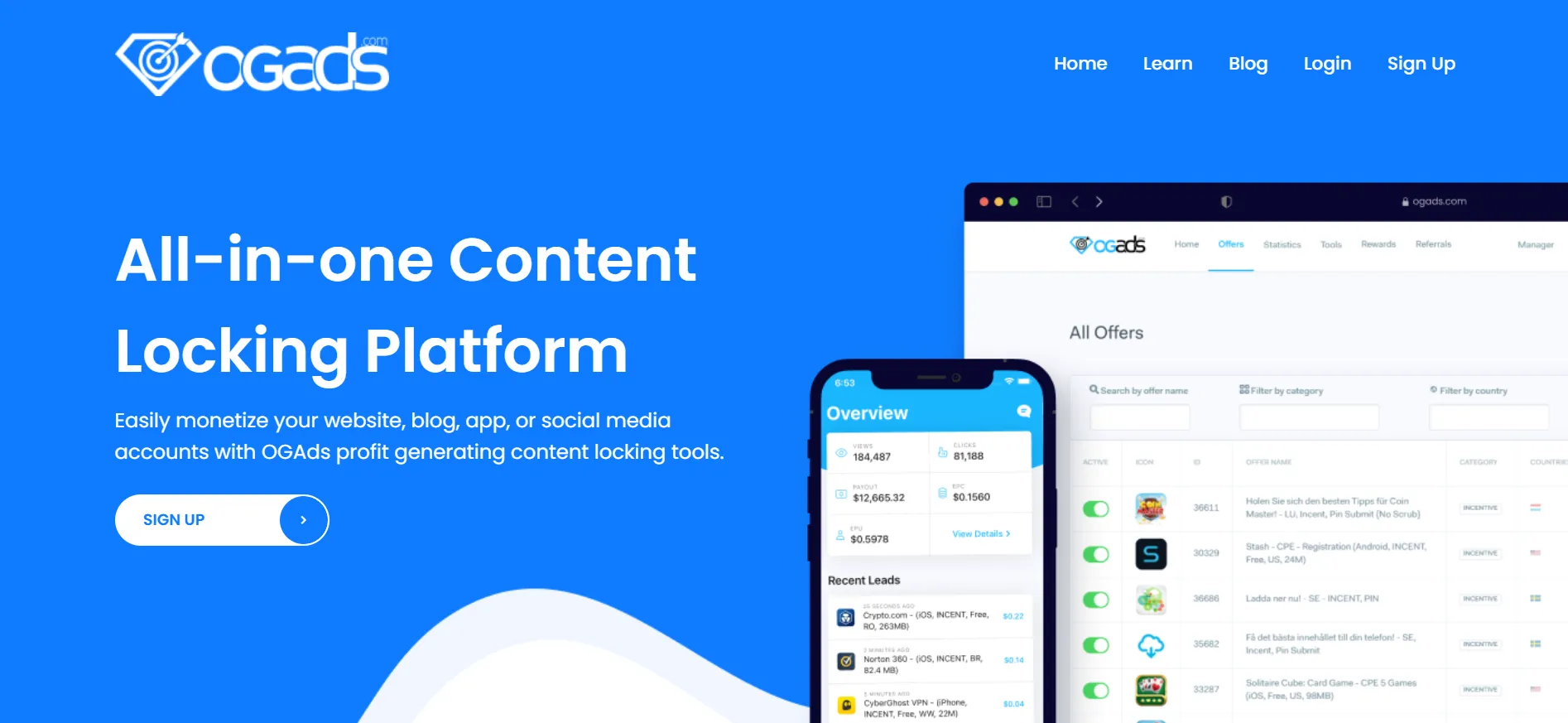
Its practical appeal is the range of ways to connect an audience to the locker. A mobile-first creator can investigate a link-based flow without first designing a full advertising layout.
Before applying, explain where the visitors come from. A link being technically shareable does not mean every social platform, community or paid advertising service permits the destination.
Inspect the journey on a real phone. Check whether the reward is clear, whether instructions remain readable and whether a visitor can return to the right page after completing an offer.
Pros
- Several integration routes for different publishing setups.
- A published payment schedule to discuss before launch.
Cons
- Social distribution still depends on the source platform's rules.
- A smooth desktop preview does not establish mobile usability.
Our verdict: Compare OGAds when most visitors arrive from mobile or creator-led channels. Judge it on the complete unlock experience, not on the appearance of the initial landing page.
3. AdMaven: Best for a link-based content locker
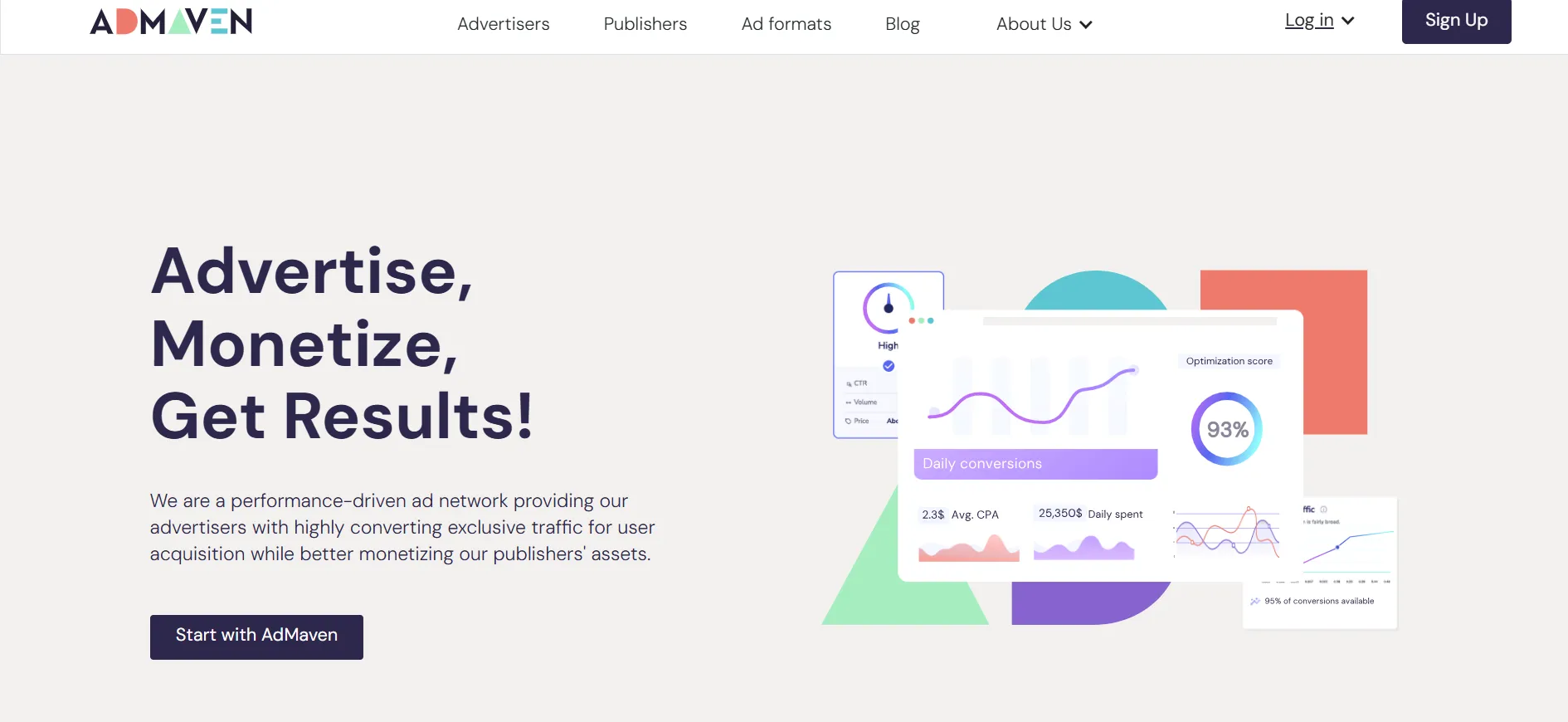
AdMaven's Content Locker monetises a link leading to gated content. Its setup guide includes the destination URL, source name and tracking identifiers. It also provides an API for creating locker links.
That is useful if your main question is, “How do I monetise access to this resource?” rather than, “How do I build a complete rewards platform?”
Keep the destination organised. A locker can keep generating clicks while the file behind it has been moved, deleted or made private. The visitor experiences that as a broken promise regardless of which part failed.
Use separate tracking labels for meaningful sources, such as a resource page and an email campaign. Otherwise, a good overall result can hide one channel where users repeatedly abandon the process.
Pros
- A direct workflow for monetising access links.
- Documented source tracking and an API option.
Cons
- Each destination must remain available and accurate.
- The tasks shown to visitors may not fit every audience.
Our verdict: Choose AdMaven for a focused link-monetisation test. Confirm what users must complete and check the final destination before sending a larger audience.
4. AdWork Media: Best for several CPA monetisation tools
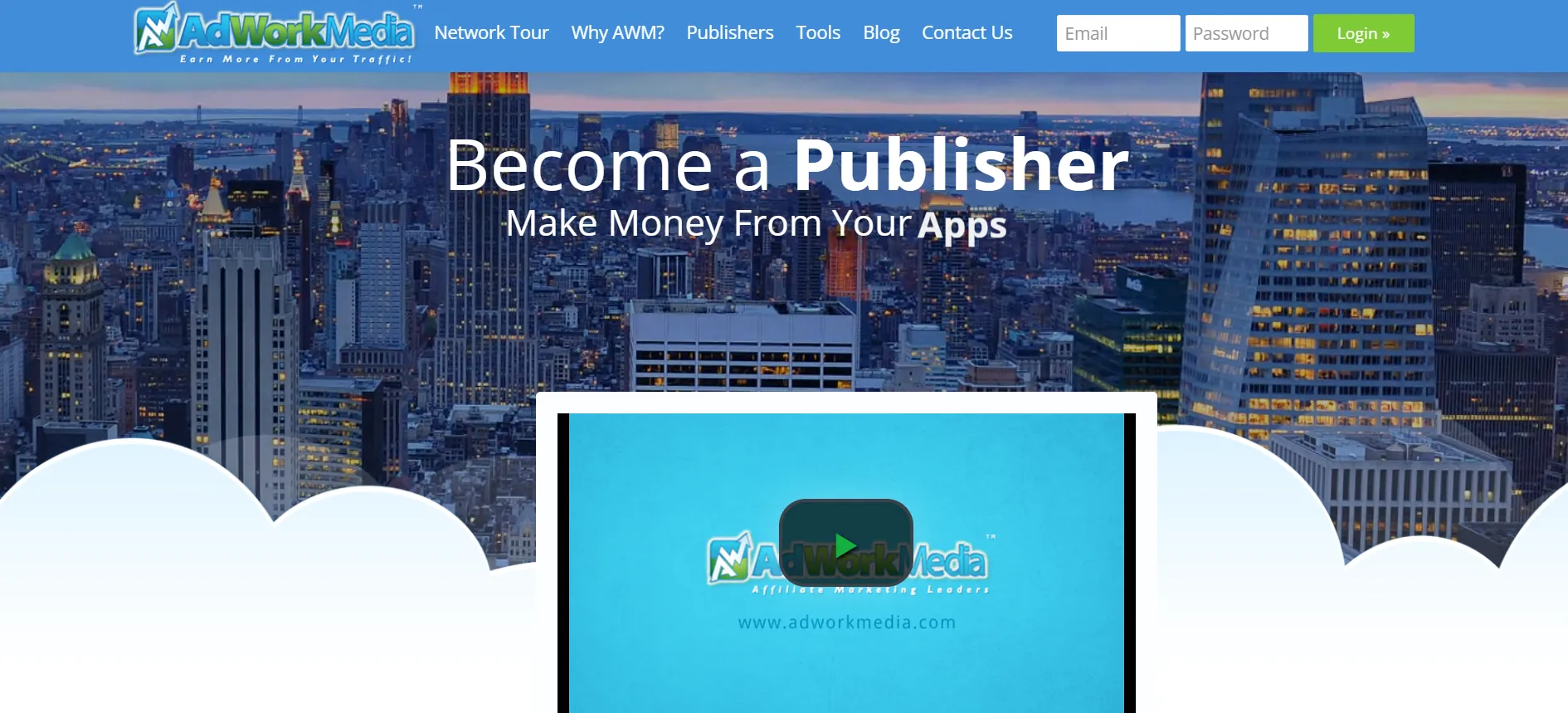
AdWork Media lists content, link and product lockers alongside offerwalls. Its mobile guidance also describes device and country targeting and server-to-server conversion notices.
This is worth investigating when the business has more than one kind of reward. A publisher may want to gate a download today and later offer account credits or an optional upgrade.
More tools also mean more decisions. Write down what happens after a conversion, what the visitor receives and which system records it. Avoid building several flows before proving that one is useful.
For account-linked rewards, ask how duplicate notices, delayed conversions and missing credits should be handled. Those operational details matter more than the number of templates in a gallery.
Pros
- A broad set of locker and offerwall tools.
- Published support for mobile targeting and conversion notifications.
Cons
- A larger integration can require more technical work.
- Campaign eligibility must match the intended incentive.
Our verdict: Shortlist AdWork Media for a site or service with several reward use cases. A single-file project may need only a small part of its toolset.
5. CPAlead: Best for publishers already comfortable with CPA offers
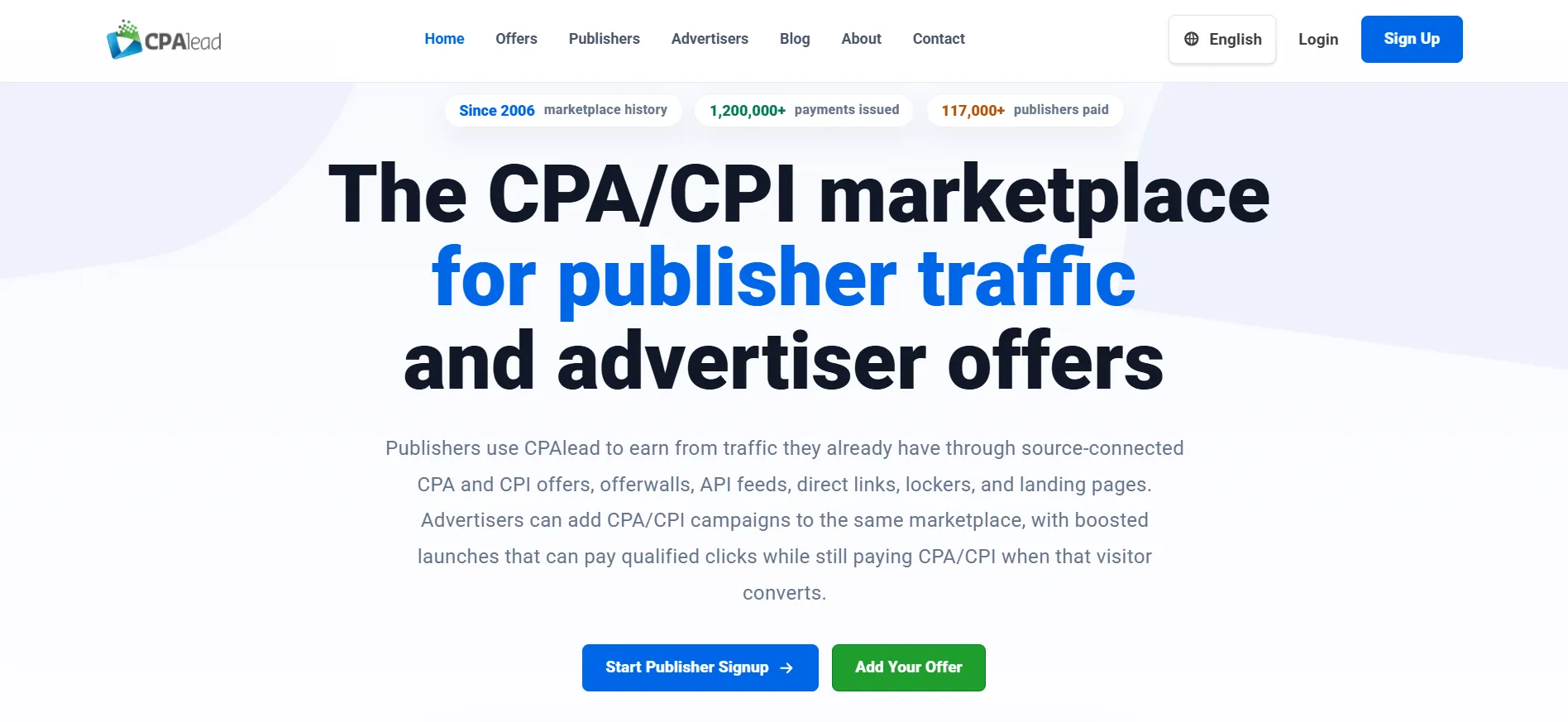
CPAlead brings lockers, offerwalls, APIs and direct promotion into a CPA/CPI marketplace. One entry condition deserves attention: its current homepage says publisher signup requires a $100 deposit, refundable after 30 days when the publisher reaches $100 in earnings. Read the full terms before paying.
That makes it a different decision from joining a service with no upfront publisher payment. Someone testing a first small audience should account for the money committed and the conditions attached to its return.
CPAlead is more relevant when you already understand your traffic and have a realistic use for its offer distribution tools. Do not confuse a campaign's advertised payout with a payment earned from every visitor.
Ask which offers allow your proposed incentive. An offer available through an API is not automatically approved for every locker or promotional claim.
Pros
- Multiple ways to distribute CPA and CPI offers.
- Published signup conditions rather than an assumption of free entry.
Cons
- The publisher deposit adds an upfront commitment.
- Refund eligibility depends on the stated conditions.
Our verdict: Consider CPAlead when you already have suitable traffic and understand CPA campaign rules. Review the deposit before investing time in the setup.
How should you compare content locker earnings?
Measure earnings per visitor sent to the locker, not just the largest payout attached to an offer.
A useful test records the number of visitors, offer starts, valid completions and successful unlocks. Separate results by source, device and country where the reporting allows it.
Consider this hypothetical example:
Locker test | Visitors | Valid completions | Net earnings |
|---|---|---|---|
A | 1,000 | 20 | $40 |
B | 1,000 | 35 | $35 |
Test A earns more, but that is not the whole story. If many more people report broken access or leave disappointed, the extra money may not justify using it.
These are illustrative figures, not network benchmarks. Compare net, confirmed earnings after adjustments rather than provisional leads alone.
Also measure what the gate replaces. If the same resource previously generated qualified leads or product purchases, those outcomes belong in the comparison.
What should you check before publishing a locker?
Start with the visitor's question: “What will I receive, and what do I need to do?”
Your page should answer that before the person enters the offer flow. Avoid vague buttons that suggest an immediate free download when another step is required.
Then check:
The resource opens correctly after a qualifying completion.
The offer's country, device and incentive rules match your traffic.
Instructions remain understandable on a small screen.
Support can investigate a completion that did not unlock access.
The promotional channel permits the destination.
Payment timing, deductions and minimums are clear.
Use network-supported testing methods. Completing your own live offers can be treated as invalid activity; CPAGrip explicitly warns against self-completion in its security guidance.
When is a content locker the wrong choice?
Skip the gate when access friction undermines the resource's purpose. A basic help page, essential account instruction or resource promised as part of a paid purchase should not acquire an unexpected advertising hurdle.
It can also be a poor fit for a trust-led professional audience that would rather pay a clear price.
You have alternatives: an optional email signup, a paid download, a sponsor-supported resource or an ordinary display placement. Choose the model that matches how people value the content.
FAQs: Best Content Locker Ad Networks
CPAGrip is our first shortlist choice for its documented mix of content, URL/file and video lockers. OGAds, AdMaven, AdWork Media and CPAlead suit different distribution and integration needs. None is guaranteed to earn the most for every audience.
Not always. Some products provide a hosted link flow. CPAGrip documents hosted URL lockers, and AdMaven offers link-based content locking. You still need a legitimate resource and permission to promote it through your chosen channel.
No. A locker gates a particular resource. An offerwall usually presents multiple offers that users can complete for rewards or credits. Some networks provide both tools.
No. The campaign must permit the intended incentive, country, device and traffic source. Confirm those rules before showing the offer behind a gate.
Not necessarily. A high-paying offer may attract fewer valid completions. Compare confirmed revenue against the number of visitors sent, alongside successful unlocks and complaints.
Do not assume so. CPAlead's current signup FAQ states a $100 publisher deposit with conditional refund terms. Review each provider's current application and payment conditions.
Quick Links:
Which content locker network should you try first?: Best Content Locker Ad Networks
Start with CPAGrip if the main need is a choice of locker formats. Compare OGAds for mobile-led distribution and AdMaven for a straightforward link flow. AdWork Media and CPAlead deserve a closer look when you need a wider CPA toolkit.
Launch one resource with clear instructions, then confirm that people receive what you promised. A content locker is worth keeping only when the earnings and the visitor experience both support it.