
AdSense is our first option for publishers starting with self-service display ads. Journey suits qualifying growing sites, while Mediavine and Raptive provide managed options with published entry criteria. Media.net and AdPushup offer further routes to compare. Choose by eligibility, service scope and net revenue after the effects on your site.
You can spend weeks comparing display ad networks and still be left with the wrong question: which one claims the highest RPM?
| Best For | A first self-service setup | Growing editorial sites | Sites with an existing ad business |
| Published entry consideration | Content and policy eligibility | 1,000 qualifying Tier 1 sessions in 30 days | $5,000 minimum annual ad revenue, plus criteria |
| Service distinction | Publisher-managed advertising | Self-supported ad management | Premium ad management |


A better question is which service suits your website now. A new blog, an established publication and a site already running several demand partners need different levels of support.
The best display ad networks are not interchangeable. Some mainly provide advertising demand. Others manage the layout, connect buyers or help optimize an existing setup.
This guide compares six options, explains their roles and highlights current entry rules where the provider publishes them. The recommendations are based on official information and practical fit, not invented earnings tests.
Best display ad networks: Quick comparison
Compare the best display ad networks based on approval requirements, traffic thresholds, ad formats, payout options, and revenue potential to find the right platform for monetizing your website and maximizing advertising earnings.
Service | Best fit | Published entry consideration | Service distinction |
|---|---|---|---|
Google AdSense | A first self-service setup | Content and policy eligibility | Publisher-managed advertising |
Journey by Mediavine | Growing editorial sites | 1,000 qualifying Tier 1 sessions in 30 days | Self-supported ad management |
Mediavine | Sites with an existing ad business | $5,000 minimum annual ad revenue, plus criteria | Premium ad management |
Raptive | Qualifying established content sites | 25,000 monthly pageviews, plus criteria | Managed layouts and service |
Content-focused publishers | Publisher acceptance and agreement | Contextual and other demand | |
AdPushup | Publishers improving an existing setup | Confirm commercial and technical fit | Revenue-optimisation service |
The thresholds are not promises of approval. Each programme has additional requirements, and current official guidance should govern an application.
How do display networks and managed services differ?
A self-service network typically gives you tools to make advertising available on your site. You still make important decisions about placement and maintenance.
A managed service may take a broader role in the advertising setup. An optimisation platform may work with demand and placements that already exist.
Those categories overlap, so ask what the proposed service actually includes. Who changes the layout? Who investigates a problem? Which partners pay you? What work remains with your team?
A larger feature list is useful only if it solves a real problem. A small publisher may value simplicity, while a larger business may need help coordinating several buyers and formats.
6 Best Display Ad Networks in detail
Explore the 6 best display ad networks, comparing their key features, ad formats, approval requirements, traffic criteria, payout methods, and earning potential to help you choose the right platform for monetizing your website and growing your advertising revenue.
1. Google AdSense: Best for a first self-service setup
AdSense's general eligibility guidance focuses on suitable content, policy compliance and control of the site rather than publishing a universal numerical traffic minimum.
That makes it a sensible first comparison for an original-content website that is ready to host advertising.
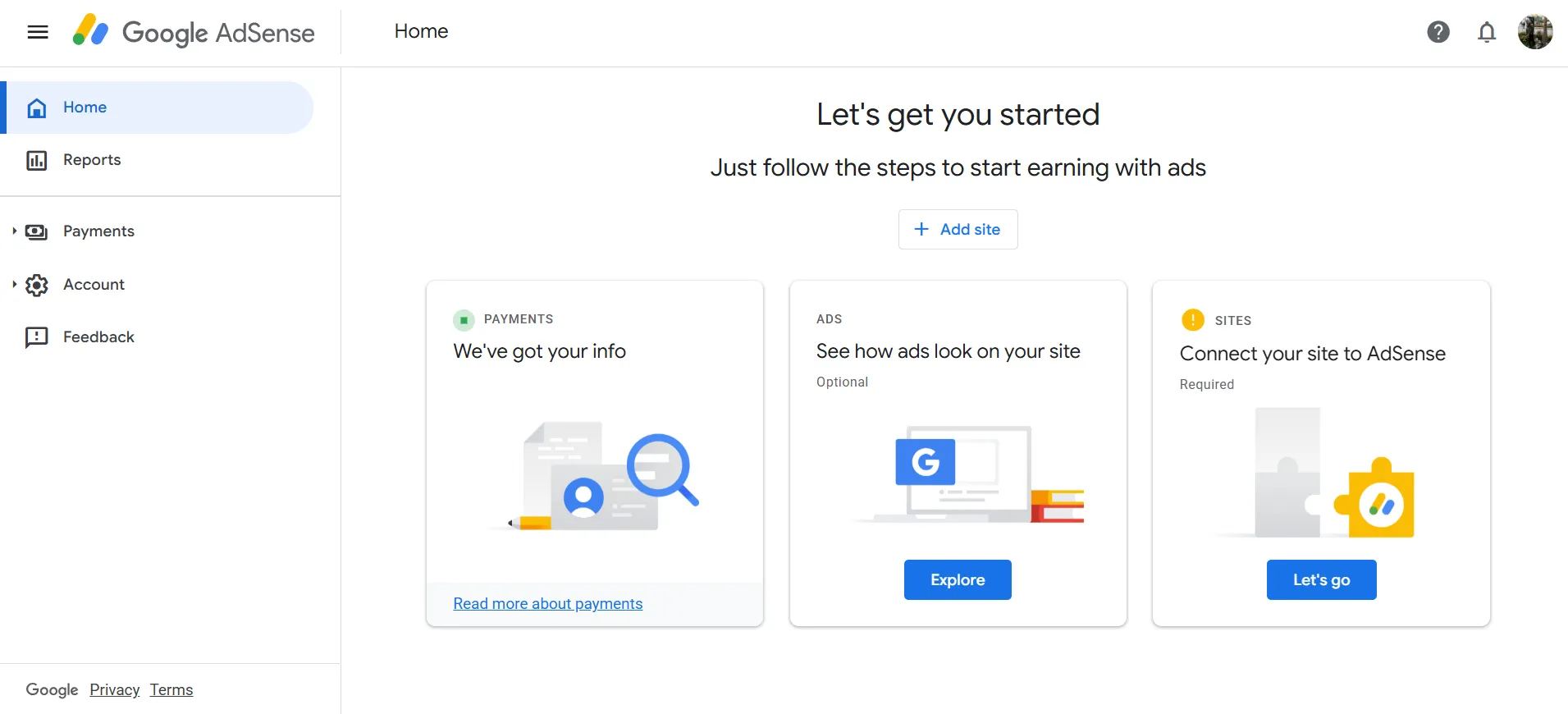
The advantage is the chance to learn what your audience and layout can support without assuming you need a managed partnership immediately.
You still need to maintain the site, follow the rules and make sensible placement decisions. Approval is not a substitute for a useful page, and a new ad slot is not automatically an improvement.
Pros
- No numerical traffic minimum in the general eligibility guidance.
- A practical starting point for learning self-service monetisation.
Cons
- Approval and policy requirements still apply.
- The publisher retains meaningful setup and maintenance work.
Our verdict: Start with AdSense when you want a conventional first advertising arrangement and are prepared to manage the basics yourself.
2. Journey by Mediavine: Best for qualifying growing sites
Journey's current requirements include at least 1,000 sessions from qualifying Tier 1 countries within a 30-day period. It also requires original content and acceptable quality and traffic standards. The programme is described as self-supported ad management.
The country qualification is important. A thousand sessions from any mix of countries should not be treated as the same threshold.
Journey is worth comparing when the site is growing and the audience matches the programme. It offers a different stage of entry from the main Mediavine arrangement.
Check what “self-supported” means for the work you will handle. A publisher who needs extensive hands-on assistance should ask about that before choosing solely on the entry number.
Pros
- A defined entry route for growing publishers.
- Access to a programme designed around editorial-site monetisation.
Cons
- The sessions must meet the stated country qualification.
- Support expectations need to match the self-supported model.
Our verdict: Compare Journey when your analytics show the right qualifying audience. Read the service model as closely as the traffic threshold.
3. Mediavine: Best for sites already earning from ads
Mediavine's main programme now states a minimum of $5,000 in annual ad revenue, alongside content, traffic, Google standing and reader-experience requirements.
This changes the application conversation. An old traffic milestone copied from another article may no longer describe the current route.
If your site already has an advertising business, evaluate what a managed arrangement could improve. That may include operational support or a more developed monetisation setup, but the proposal should explain the practical difference.
Bring current revenue records and a clear description of your audience. Also identify the parts of the reading experience you want to preserve.
Pros
- A published revenue-based entry criterion.
- A managed option for an established advertising business.
Cons
- Not the natural starting point for a site with no ad earnings.
- Meeting the revenue floor does not establish acceptance.
Our verdict: Shortlist Mediavine when the site meets the current requirements and you want a broader management relationship. Assess the proposal against the business you already have.
4. Raptive: Best for qualifying established content sites
Raptive publishes a minimum of 25,000 monthly pageviews. For sites with 25,000–99,999 pageviews, at least 50% of traffic must come from the US, UK, Canada, New Zealand and/or Australia.
At 100,000 pageviews and above, the stated share is 40%. Other requirements include content quality, analytics and a domain at least six months old.

The important point is that pageviews alone are not enough.
Review audience geography before investing time in an application. A site with a large global audience may still need to assess whether it meets the relevant country mix.
Ask how the proposed ad layout would work on your real pages, particularly short posts, tutorials and pages with valuable conversions.
Pros
- Clear public pageview and audience criteria.
- A managed service to compare once the site qualifies.
Cons
- Country mix and other conditions can restrict eligibility.
- The proposed layout still needs to suit the publication.
Our verdict: Compare Raptive when you meet the full criteria. Judge the service and layout fit rather than treating the entry threshold as the entire decision.
5. Media.net: Best for a contextual-demand comparison
Media.net's publisher programme offers contextual advertising and other monetisation demand.
It is worth investigating for a site with a clear subject and audience, especially when you want to compare a content-related approach with a general display arrangement.
Ask which products are available to your site. A broad platform description does not establish the exact format, earning model or commercial terms you will receive.
The practical test should use comparable inventory. If one provider receives a prominent position and another sits beneath a long article, the result is a placement comparison as much as a network comparison.
Pros
- A documented contextual publisher offering.
- A relevant alternative for content-focused websites.
Cons
- Acceptance and terms need direct confirmation.
- Topic relevance alone does not guarantee strong revenue.
Our verdict: Put Media.net on the shortlist when your content focus is clear. Request a specific proposal and compare it using consistent page conditions.
6. AdPushup: Best for an optimisation discussion
AdPushup positions its service around ad-revenue optimisation. It is a different kind of comparison from choosing a basic first ad tag.
That makes it relevant when the site already has meaningful advertising activity and you can identify what needs improvement.
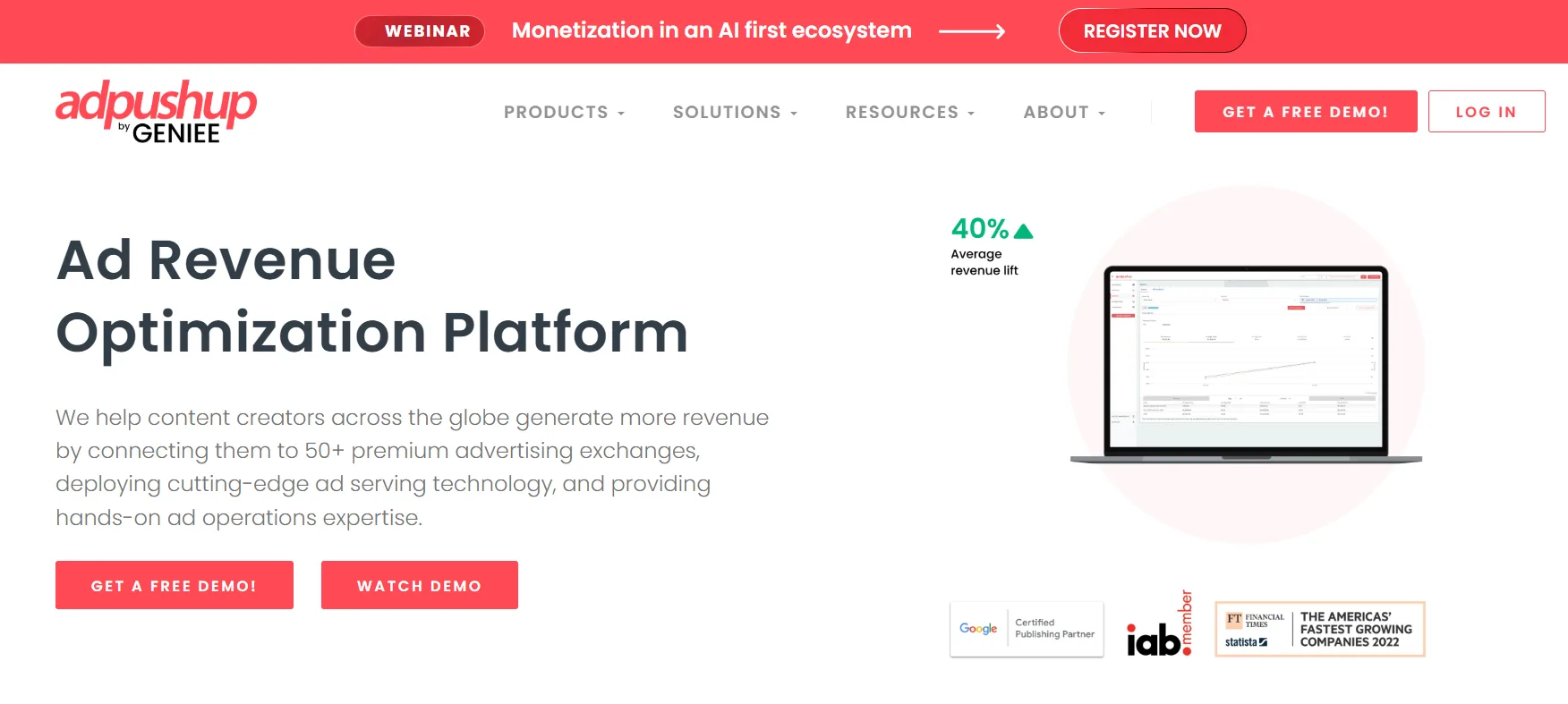
Prepare a description of the existing setup: placements, partners, revenue, technical constraints and the work consuming your team's time. This gives the discussion a concrete starting point.
Ask what will change, which fees or revenue shares apply and how improvement will be measured. A proposal should distinguish revenue created by the service from revenue the site was already earning.
Pros
- A service aimed at improving an advertising setup.
- Relevant when optimisation and operational complexity are real needs.
Cons
- May be unnecessary for a very early-stage website.
- The commercial benefit depends on the specific arrangement.
Our verdict: Compare AdPushup when you have an established baseline and a clear optimisation problem. Agree on the measurement method before judging uplift.
How should you compare entry requirements?
Read the metric exactly as written.
Sessions, users, pageviews and annual revenue measure different things. A site with 10,000 visitors does not automatically have 10,000 qualifying sessions or meet a pageview threshold.
Country conditions also matter. A global total can hide whether the audience fits a programme's application rules.
Make a simple application note with:
The required metric and period.
Your measured result for that same period.
Any qualifying country share.
Content and domain conditions.
The expected support and service model.
This avoids applying based on a headline number while missing a condition that changes the decision.
Why can two sites earn different display RPMs?
The audience, advertiser demand, device mix and available inventory differ. The same provider can therefore produce different results on different sites.
A page with visitors researching a purchase may attract different demand from a page used briefly for a simple task. A long article also creates different placement opportunities from a short answer.
Seasonality and traffic-source changes can further affect the comparison. A network does not control every factor behind the dashboard.
Use other publishers' results as questions to investigate, not as a forecast. Your own representative baseline is more useful for deciding whether a switch helped.
What does a fair switching test look like?
Record the current revenue and important site outcomes before changing providers.
Keep the content, audience mix and other major site changes as stable as practical. If a redesign, traffic spike and ad migration happen together, attribution becomes difficult.
A hypothetical site moving from $400 to $460 in monthly net ad revenue has gained $60. If the change also adds $30 in costs and several hours of work, the gross gain overstates its value.
Compare:
Net revenue after fees and adjustments.
Revenue per consistent unit of traffic.
Loading and layout behaviour.
Reader complaints.
Subscription, affiliate or product income.
The work needed to maintain the arrangement.
A higher ad figure is useful only if it improves the publishing business overall.
What should you ask before signing?
Clarify exclusivity, notice periods, payment terms and control over placements. Ask whether the agreement covers all inventory or only selected areas.
For a managed service, identify who handles technical incidents and how quickly a troublesome placement can be disabled. For self-service tools, confirm what support is available.
Also discuss sensitive page types. A checkout, member area or important lead form may need exclusions.
Keep the final agreement and implementation plan together. Knowing who owns each part of the setup makes later changes much easier.
FAQs: Best Display Ad Networks
AdSense is our first comparison for an original-content site starting with self-service ads. The site must still meet approval and policy requirements.
Journey states at least 1,000 sessions from qualifying Tier 1 countries within 30 days, alongside content and traffic-quality conditions. A worldwide session total alone does not establish eligibility.
The current main-programme application page states at least $5,000 in annual ad revenue, plus other criteria. Use the official application rules rather than an older traffic figure.
That is its published minimum, but additional requirements apply, including audience geography, content, analytics and domain age. Reaching the pageview figure does not guarantee approval.
Not necessarily. An optimisation service may manage or improve an existing advertising setup. Ask which demand, technical work and support are included.
No. Compare a realistic proposal against your own net revenue and site outcomes. Another publisher's RPM is not a guaranteed result for your audience.
Quick Links:
Which display ad service should you choose?: Best Display Ad Networks
Choose the stage and service model that fit your site. AdSense offers a first self-service comparison; Journey supports qualifying growing publishers. Mediavine and Raptive suit eligible sites considering managed advertising, while Media.net and AdPushup provide other demand and optimisation routes.
The best display ad network is the one that earns its place in your business. Check eligibility, agree on the work and measure the net result.