
MGID is our first shortlist choice for publishers comparing teaser-style native widgets. Taboola suits a broader content-recommendation discussion, while RevContent focuses on flexible native placements.
AdNow and Adsterra provide further widget options. Choose by ad quality, placement control and net revenue, not headline click-through rate alone.
| Best For | Publishers comparing several widget positions | Editorial sites considering recommendations and recirculation | Publishers wanting flexible native placements |
| Relevant Product | Native recommendation widgets | Below-article recommendations | Native monetisation widgets |
| Main decision | Placement and ad-content controls | Commercial scope and reader journey | Format footprint and contract |


You reach the end of an article and see a row of images with short headlines. Some lead to more stories on the site. Others lead to paid promotions.
That is the experience many publishers mean when they search for teaser ad networks. The word “teaser” is not used consistently, so this guide focuses on sponsored image-and-headline recommendations and related native widgets.
A widget can earn money from readers who are ready to explore something else. It can also crowd out your own articles or put questionable claims next to carefully written reporting.
The best teaser ad networks give you a workable commercial product without weakening the reason people trust your site. These five options are compared using their official publisher information and practical fit.
Best teaser ad networks: Quick comparison
Compare the best teaser ad networks based on ad formats, targeting options, traffic requirements, payout thresholds, and earning potential to find the right platform for monetizing your website and boosting audience engagement.
Network | Best fit | Relevant product | Main decision |
|---|---|---|---|
MGID | Publishers comparing several widget positions | Native recommendation widgets | Placement and ad-content controls |
Taboola | Editorial sites considering recommendations and recirculation | Below-article recommendations | Commercial scope and reader journey |
RevContent | Publishers wanting flexible native placements | Native monetisation widgets | Format footprint and contract |
AdNow | Sponsored-content widget comparison | Targeted content recommendations | Creative quality and payment conditions |
Adsterra | A native widget alongside other formats | Native Banners | Design, placement and audience fit |
The comparison concerns publisher monetisation. Advertiser campaign pricing is a separate subject.
What is a teaser ad network?
A teaser-style ad uses a short headline and visual to encourage someone to open a promoted destination. In publisher roundups, the term often overlaps with native recommendation widgets.
“Native” refers to how the placement fits its surroundings. It should not mean hiding that the item is an advertisement.
A paid card should be recognisable as paid, even if its size and typography match the site. The destination should also deliver what the headline suggests.
This matters because teaser advertising is built around curiosity. A useful introduction can help someone find a relevant offer. A misleading promise may win a click while damaging the publisher's reputation.
5 Best Teaser Ad Networks in detail
Explore the 5 best teaser ad networks, comparing their ad formats, targeting options, traffic requirements, payout methods, and earning potential to help you choose the right platform for monetizing your website and attracting more audience engagement.
1. MGID: Best for comparing several native widget layouts
MGID's publisher product lists under-article, in-article, sidebar, header and mobile widgets. It also offers tools for internal content recirculation.
That range makes it a useful first comparison for publishers deciding where recommendations belong.

Start with the page rather than the format menu. A long feature may have a natural place for a recommendation between sections. A short news update may work better with a compact unit after the story.
Keep paid recommendations distinct from internal editorial recommendations. Both can occupy similar space, but they create different outcomes: one earns advertising revenue, while the other may keep a reader on your site.
Ask how you can control categories, placements and unwanted creatives. Those controls matter when a news, health or finance article is surrounded by paid promotions.
Pros
- Several documented widget positions.
- A product that also addresses internal recirculation.
Cons
- More placement choices can lead to unnecessary ad density.
- Revenue and on-site engagement may pull in different directions.
Our verdict: Start with MGID if you want a structured comparison of native widget layouts. Choose a limited placement and measure what it does to the whole session.
2. Taboola: Best for a broader recommendation strategy
Taboola's publisher onboarding material describes recommendations below articles and the use of editorial recommendations to support engagement.
That makes it relevant for an editorial business thinking beyond a single isolated ad slot.
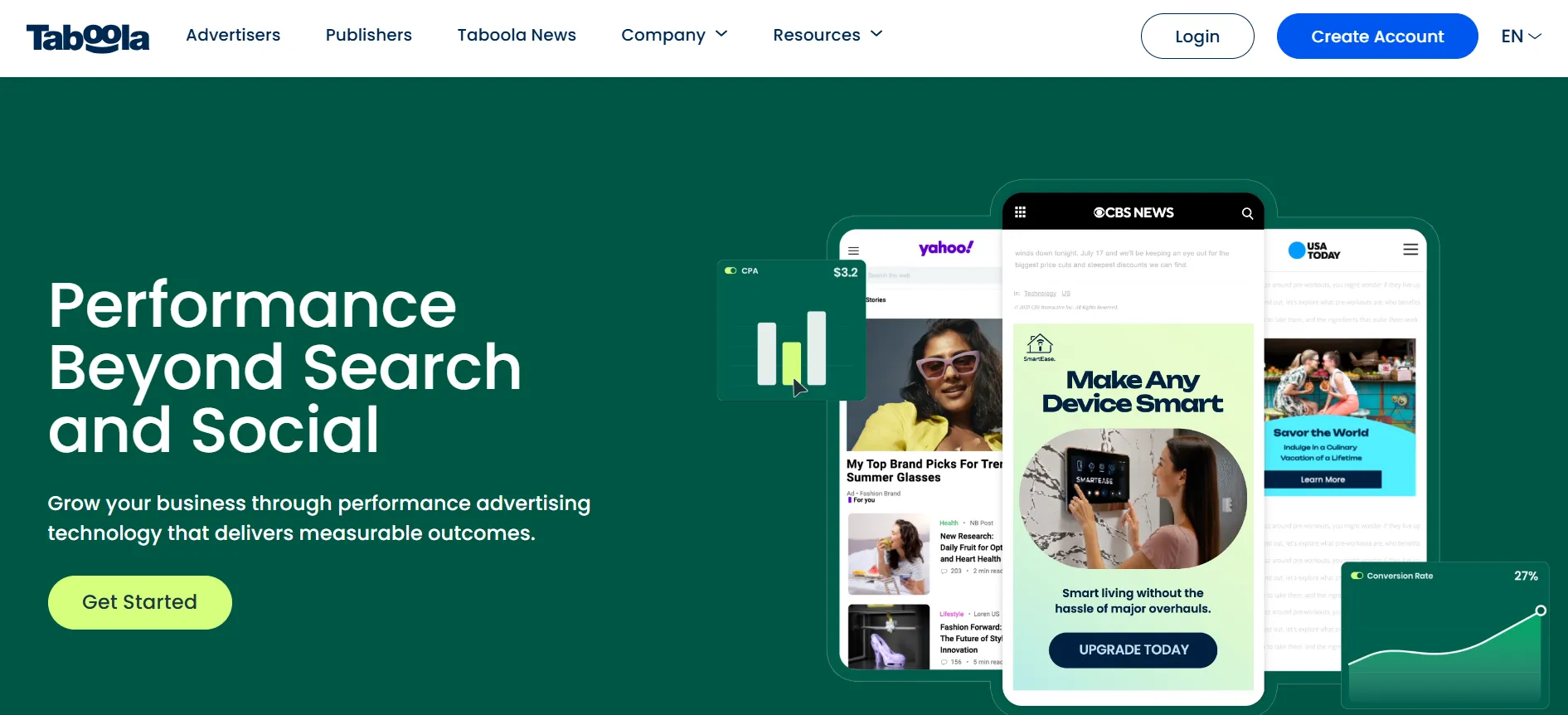
The useful discussion is about the balance of paid recommendations and continued reading. A visitor who opens another article may create a subscription opportunity or another pageview. A paid outbound click produces a different kind of value.
Ask what the proposed agreement covers. Clarify placement commitments, contract length, exclusivity where applicable and the controls available to the editorial team.
Also review the actual appearance on your site. A layout that works on a broad desktop screen may feel excessive beneath a short mobile article.
Pros
- A publisher workflow built around content recommendations.
- Relevant to a wider engagement and monetisation discussion.
Cons
- Commercial scope needs careful review.
- A recommendation feed can occupy substantial page space.
Our verdict: Compare Taboola when recommendations are a strategic part of your publishing business. Assess the proposed arrangement against both advertising revenue and retained readership.
3. RevContent: Best for a flexible native-placement discussion
RevContent's publisher page emphasises flexible contracts and formats that do not require a feed unit. It also describes account management as part of its proposition. These are provider statements to evaluate in a specific proposal.
This is a useful distinction if you want native monetisation without assuming that a large recommendation feed must dominate the page.
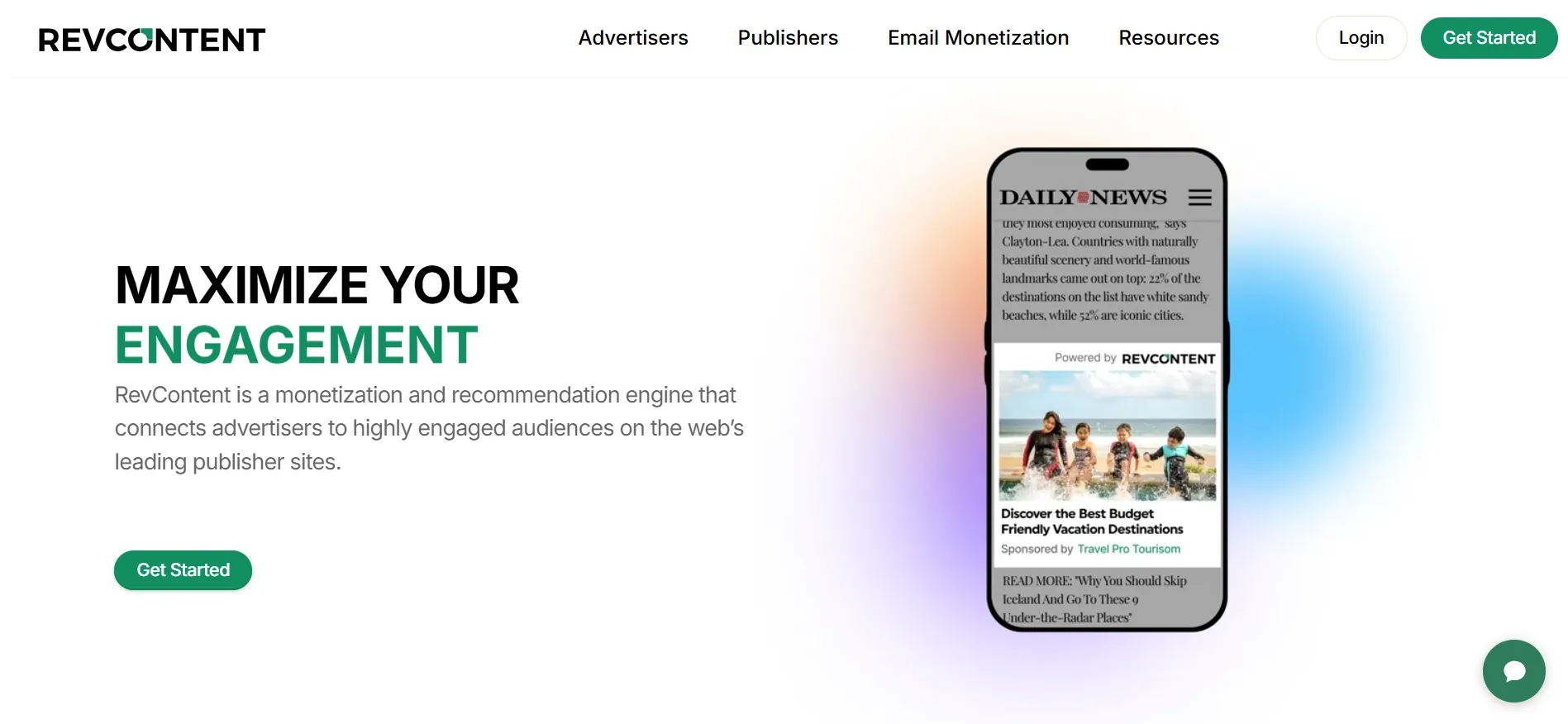
Bring representative pages to the discussion. Include your shortest article, a long guide and a mobile view. Ask the provider to explain where the advertising would sit on each.
Then establish what you can change after launch. A compact format is more useful when you can also respond to an unsuitable creative or a placement that conflicts with navigation.
Pros
- A published emphasis on flexible arrangements.
- An option to discuss native placements beyond a feed-led layout.
Cons
- Exact terms and controls depend on the agreement.
- Marketing claims about speed need testing on your pages.
Our verdict: Shortlist RevContent if page footprint and contract flexibility are important. Judge the actual proposal rather than assuming every site receives the same setup.
4. AdNow: Best for a straightforward widget comparison
AdNow offers targeted sponsored-content recommendations for publishers. Its public page advertises weekly payments starting from $20, subject to the applicable method and account conditions.
That gives smaller publishers a concrete payment detail to investigate alongside the widget itself.
The first decision should still be creative fit. Preview the kinds of promotions likely to appear for your audience and ask how to report or restrict unsuitable material.
Do not treat a low threshold as proof that earnings will arrive quickly. A site can remain below the threshold for a long time if visitors rarely engage or the traffic is not valuable to available advertisers.
Track settled revenue alongside the effect on your own recommended articles.
Pros
- A focused sponsored-content widget proposition.
- A published payment starting point to confirm.
Cons
- Payment speed depends on earnings and applicable conditions.
- Creative suitability needs direct inspection.
Our verdict: Compare AdNow for a contained native-widget trial. Keep the test small enough to review the ads and reader response properly.
5. Adsterra: Best for native banners beside an existing setup
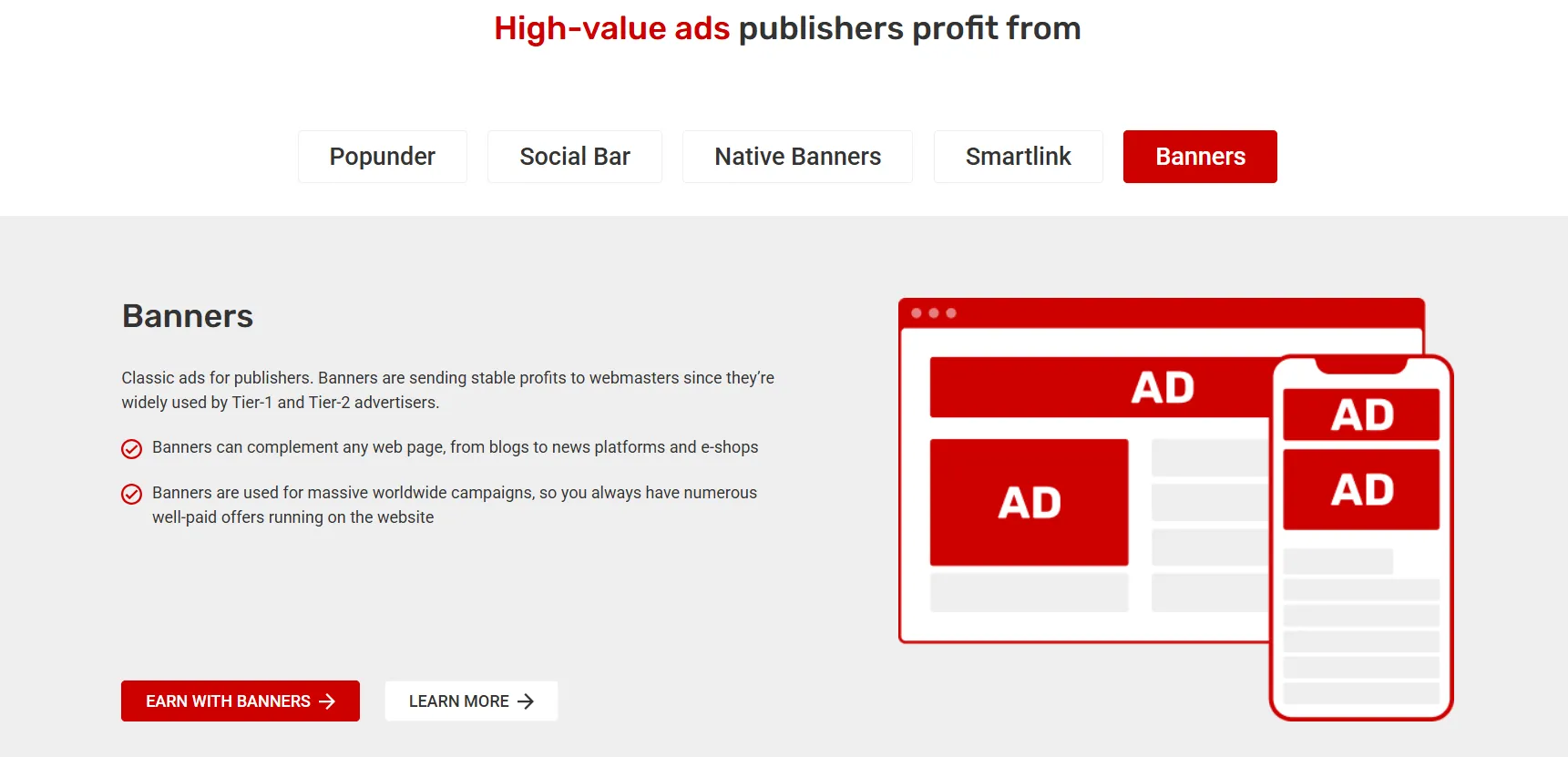
Adsterra's Native Banners product lets publishers adjust elements such as slot size, colours and font size. It is distinct from the company's conventional banners and Social Bar formats.
This makes it worth evaluating when you want a native-style recommendation unit within a broader publisher account.
Design flexibility should make the layout coherent, not make advertising indistinguishable from editorial content. Retain a clear commercial label and avoid copying a news headline style so closely that readers misunderstand the destination.
Start with the native unit alone if that is what you want to assess. Adding popunders or other formats at the same time makes it difficult to identify which change affected revenue or complaints.
Pros
- Documented options for matching the unit to the layout.
- A native format separate from other publisher products.
Cons
- Styling can blur the distinction between ads and editorial links.
- Enabling several formats at once complicates evaluation.
Our verdict: Consider Adsterra for a controlled Native Banners test. Make the commercial nature clear and evaluate the unit independently.
Why is CTR not enough to choose a network?
Click-through rate shows how often impressions lead to clicks. It does not tell you whether the clicks are valuable, whether earnings are confirmed or whether readers are satisfied.
Here is a hypothetical comparison:
Widget | Impressions | Clicks | Net revenue |
|---|---|---|---|
A | 10,000 | 100 | $20 |
B | 10,000 | 60 | $24 |
Widget A has a higher CTR, but Widget B earns more in this example. Neither result proves which experience readers prefer.
Use net revenue per thousand widget impressions for a like-for-like placement comparison. Also monitor revenue per session and visits to your own recommended content.
These figures are examples only. They are not rates measured on any of the listed networks.
How should you compare paid recommendations with internal links?
Treat them as competing uses of the same attention.
A paid card may produce immediate revenue when a visitor leaves. An internal recommendation may lead to another useful article, a newsletter signup or a purchase later.
Do not assume one is always better. A website with a deep archive has different opportunities from a small single-topic resource.
Test the position and mix while keeping the surrounding page stable. If you replace a successful “read next” section, record the change in internal article visits rather than only the new widget's earnings.
The decision should reflect the site's business model. Subscription-led publishers may value a returning reader differently from a business funded mainly by advertising.
What should you ask about creative quality?
Ask how unwanted ads are reviewed, how categories can be restricted and how quickly a reported creative can be investigated.
Look beyond the thumbnail. A sensible headline can lead to a poor landing page. Ask for the supported way to review destinations without generating invalid clicks.
For a site with a defined editorial standard, write down unacceptable themes before launch. Share them with the provider and confirm which restrictions can actually be applied.
Also distinguish a provider's moderation claim from your own review. “Ads are moderated” does not mean every approved campaign fits your brand or audience.
How should you run a useful teaser-ad test?
Choose one page type and one placement first. Record the old layout's revenue and engagement over a representative period.
Then track:
Widget impressions and confirmed revenue.
Internal recommendation clicks.
Reader complaints or unexpected redirects.
Mobile layout and loading behaviour.
Newsletter, subscription or product conversions.
Time spent managing the setup.
Avoid drawing conclusions from a single viral day. A sudden change in countries, devices or acquisition channels can change results even when the widget stays the same.
Keep a simple rollback plan. If a placement obscures content or introduces unsuitable promotions, you should know how to disable it quickly.
FAQs: Best Teaser Ad Networks
MGID is our first shortlist option for its documented variety of native widget positions. Taboola, RevContent, AdNow and Adsterra are useful comparisons depending on your site's layout and commercial needs.
The terms overlap but are not identical. This guide uses teaser ads to mean short image-and-headline promotions in recommendation-style placements. Native advertising is a broader category.
Potentially, subject to the providers' agreements and placement rules. Check technical compatibility and total ad density before combining them.
There is no reliable universal winner. The headline, image, placement and audience affect CTR, and a higher CTR does not necessarily produce higher net revenue.
No. Short articles, sensitive topics and conversion pages may need different treatment. Choose placements that preserve the purpose of each page.
Earnings depend on eligible demand, traffic, placement and user activity. Use your own net revenue and impression data rather than treating a network case study as an expected result.
Quick Links:
Which teaser ad network should you choose?: Best Teaser Ad Networks
Compare MGID for layout variety, Taboola for a broader recommendation strategy and RevContent for a flexible native-placement discussion. AdNow and Adsterra are further options for a focused widget test.
Keep the unit that adds useful revenue without making readers question what they are clicking. A good teaser introduces a relevant destination; it should not need a misleading promise to earn attention.