
If you've never heard of Marisa Murgatroyd or Experience Product Masterclass before landing here, this guide starts from zero. No assumed knowledge of course-creation jargon, no skipped context. By the end you'll know exactly what EPM teaches, what it costs, and whether joining the waitlist is worth your email address.
Quick answer up front: enrollment isn't open right now, and the program runs as a once-a-year cohort, so if anything below sounds like a fit, the waitlist is the only way in when the doors reopen.
https://liveyourmessage.com/epmev/waitlist/
Now the full picture.
Who Is Marisa Murgatroyd?
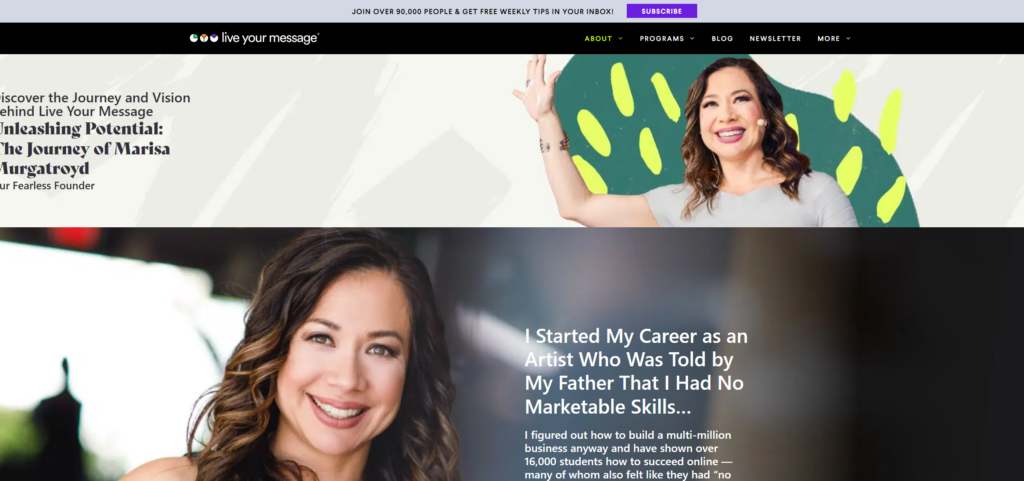
Murgatroyd is the founder of Live Your Message, a company she's run for over a decade focused on helping coaches, consultants, and educators turn their knowledge into online products. Before building courses, her background was in marketing and copywriting, which shows up in how EPM is structured: it treats course creation as a persuasion and behavior-design problem, not just a content problem.
She also built Xperiencify, a course delivery platform used both inside EPM and independently by other creators, which gives her some credibility beyond just being a course-about-courses seller. The software exists because the teaching method needed a tool that didn't already exist elsewhere.
What Problem Is EPM Actually Solving?
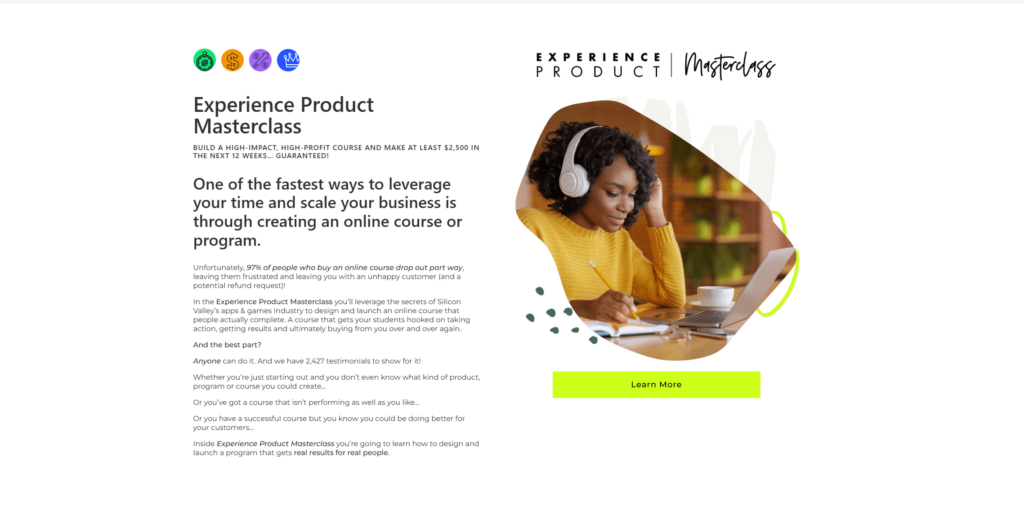
Here's the number that anchors the entire program: most self-paced online courses see completion rates around 3 percent. Ninety-seven out of a hundred buyers never finish what they paid for. That's brutal for the student, but it's arguably worse for the person selling the course, since unfinished courses don't generate results, results don't generate testimonials, and testimonials are what sell the next round of the same product.
EPM's whole premise is that this is fixable through design, not motivation. Instead of assuming students need more willpower, the program treats low completion as a structural flaw, the same way a poorly designed app has a high drop-off rate regardless of how good the underlying idea is.
The Five-Module Breakdown
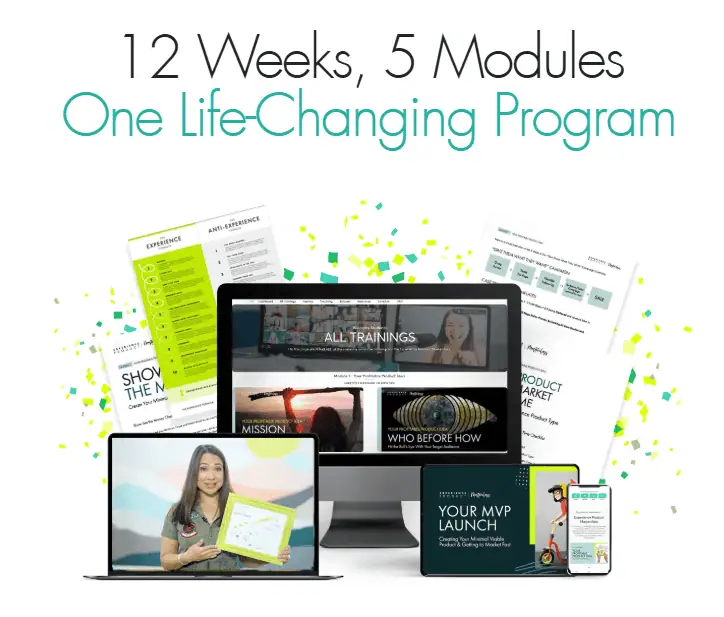
Idea and Validation. Before any content gets built, you nail down a specific promise: what result does a student get, and how do you know people actually want that result before you spend weeks building toward it.
Designing the Journey. This is where the gamification method actually gets applied. Content gets reorganized around milestones, small wins, and a visible sense of progress, instead of a flat list of video lessons in a folder.
Building the Material. With the structure set, you create the actual lessons, using templates so the format doesn't have to be reinvented from scratch for every module.
Getting It in Front of People. Launch templates, email sequences, and promotional frameworks drawn from patterns across years of student launches, not generic marketing theory.
Running It Long-Term. The final piece covers the operational side: coaching cadence, support systems, and how to keep the course running smoothly once the initial launch excitement fades.
Every student gets Xperiencify alongside the training, so the platform running your course uses the same points-and-unlocks logic you just spent weeks learning to design.
The Guarantee, Explained Simply
Murgatroyd backs EPM with a specific promise. Complete the coursework, launch your product, and apply the marketing steps as taught, and if you haven't made at least $2,000 within 12 weeks, she personally covers the shortfall.
This isn't a refund policy. It's an outcome guarantee, which is a meaningfully bigger commitment from the company's side. The condition is full participation, not just paying the tuition, so it rewards people who actually do the work rather than functioning as a no-risk safety net for passive buyers.
What It Costs and Why
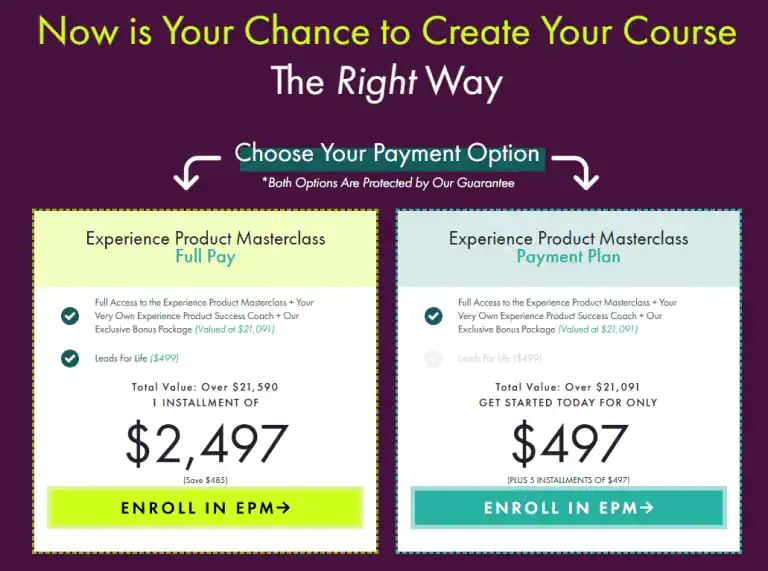
The last confirmed cohort priced EPM at $2,497 for a one-time payment, or a six-installment plan for people who prefer to spread the cost. There's no discount code system since Murgatroyd doesn't run promotional pricing on the core program.
For context, that price sits above most self-paced course-creation alternatives, many of which run $200 to $500. The gap covers things a cheaper course typically doesn't include: a personal success coach, live group calls, a proprietary software platform, and a financial guarantee tied to a specific dollar outcome. Whether that gap is worth it depends on whether you'd actually use those pieces or whether you're disciplined enough to launch with a cheaper, self-paced alternative on your own.
What Past Students Say
Independent review platforms, not just the company's own testimonial page, show a fairly consistent pattern. Average ratings land in the 4-star range across more than a hundred reviews. The most common praise centers on finally finishing a course after buying many that were never completed, and on the coaching relationship keeping people accountable through the harder weeks.
The negative reviews, a smaller but real cluster, mostly cite price relative to expectations, or underestimating how much independent effort is still required even with a coach checking in. No coaching structure replaces doing the actual work, and a few students clearly expected the process to be easier than it turned out to be.
Is This Right for You? A Quick Self-Check
Ask yourself these questions before joining the waitlist:
Do I already have expertise or experience I could package into a course or coaching program?
Have I tried building a course before and struggled with people not finishing it?
Am I willing to commit 10 to 12 weeks of consistent effort, not just enrollment?
Can I comfortably afford $2,497, or the installment equivalent, without it being a financial strain?
If you answered yes to most of these, EPM is likely a strong fit. If you answered no to the first question specifically, meaning you don't yet know what you'd teach, spend a few weeks getting clarity there first. The program assumes you're refining a direction, not discovering one from a blank page.
How the Coaching Layer Prevents EPM's Own Dropout Problem
A program built around fixing course completion would look pretty bad if it had a low completion rate itself. That's likely why the coaching structure is as heavy as it is. Each student gets a personal success coach, not a shared support inbox, who tracks progress against milestones and follows up proactively rather than waiting to be asked.
Group coaching calls add a second layer. Hearing someone else's stuck point get solved live often answers a question a student hadn't thought to ask yet, and it normalizes the fact that everyone hits a rough patch somewhere in a 10 to 12 week program. Past students consistently point to this structure, more than the video lessons themselves, as the reason they finished when previous courses fizzled out.
What Support Looks Like If Something Goes Wrong
A fair question before spending $2,497 on anything: what happens if you get stuck, or life interrupts the 10 to 12 week window. EPM's support structure runs through the assigned success coach first, who's meant to catch problems early rather than after they've derailed your progress, plus the weekly group calls where broader technical or strategic questions get answered live.
What's less clearly spelled out in the public marketing is exactly how much flexibility exists if you fall seriously behind schedule due to something outside your control. The guarantee ties to completing the coursework within the program timeline, so it's worth asking directly, once you're in contact with their team, what accommodation exists for extended circumstances rather than assuming standard flexibility applies.
Pros and Cons
Pros
- Simplifies complex product concepts for true beginners
- Explains waitlist strategy for maximizing early demand
- Provides actionable framework for launching new products
- Builds foundational knowledge before advanced product training
Cons
- May feel too basic for experienced professionals
- Limited depth on execution beyond waitlist theory
Final Thoughts
EPM earns its price by solving a specific, expensive problem: courses that get bought and never finished. The structure, the included software, and the outcome guarantee all point at that one issue directly rather than trying to be a general business course.
The only real obstacle right now is timing. Enrollment is closed, and it won't reopen without notice to anyone who hasn't joined the list first:
https://liveyourmessage.com/epmev/waitlist/
If the self-check above landed mostly on yes, that's the one step worth taking today.
Frequently Asked Questions
It's an annual cohort-based course that's currently closed for enrollment. Join the waitlist at https://liveyourmessage.com/epmev/waitlist/ to get notified the moment it reopens.
The last cohort was priced at $2,497 paid in full, or split into six installments. Pricing can change, so confirm the current rate when enrollment reopens.
Yes, if you complete the coursework, launch your product, follow the marketing steps, and still haven't earned $2,000 within 12 weeks, Murgatroyd personally covers the difference.
You don't need a fully formed idea, just a general direction, since the first module is designed to help validate and refine your concept rather than create one from scratch.
Despite sharing a word in the name, they're completely unrelated brands. EPM is only sold through Live Your Message's own website.