
Affiliate reviews are the backbone of this business.
If you can write a review that ranks on Google AND convinces the reader to click your affiliate link, you have a money-making machine.
The problem? Most affiliate reviews are terrible. They are either generic, obviously AI-generated, or they fail to actually help the reader make a decision.
I have been writing affiliate reviews since 2012. And now I use ChatGPT to help me write them in half the time — without losing the quality and personal touch that makes them convert.
In this article, I will walk you through my exact process, with real prompts you can steal and use today.
Why Most Affiliate Reviews Fail to Convert
Before I share the prompts, let me explain why most reviews fail.
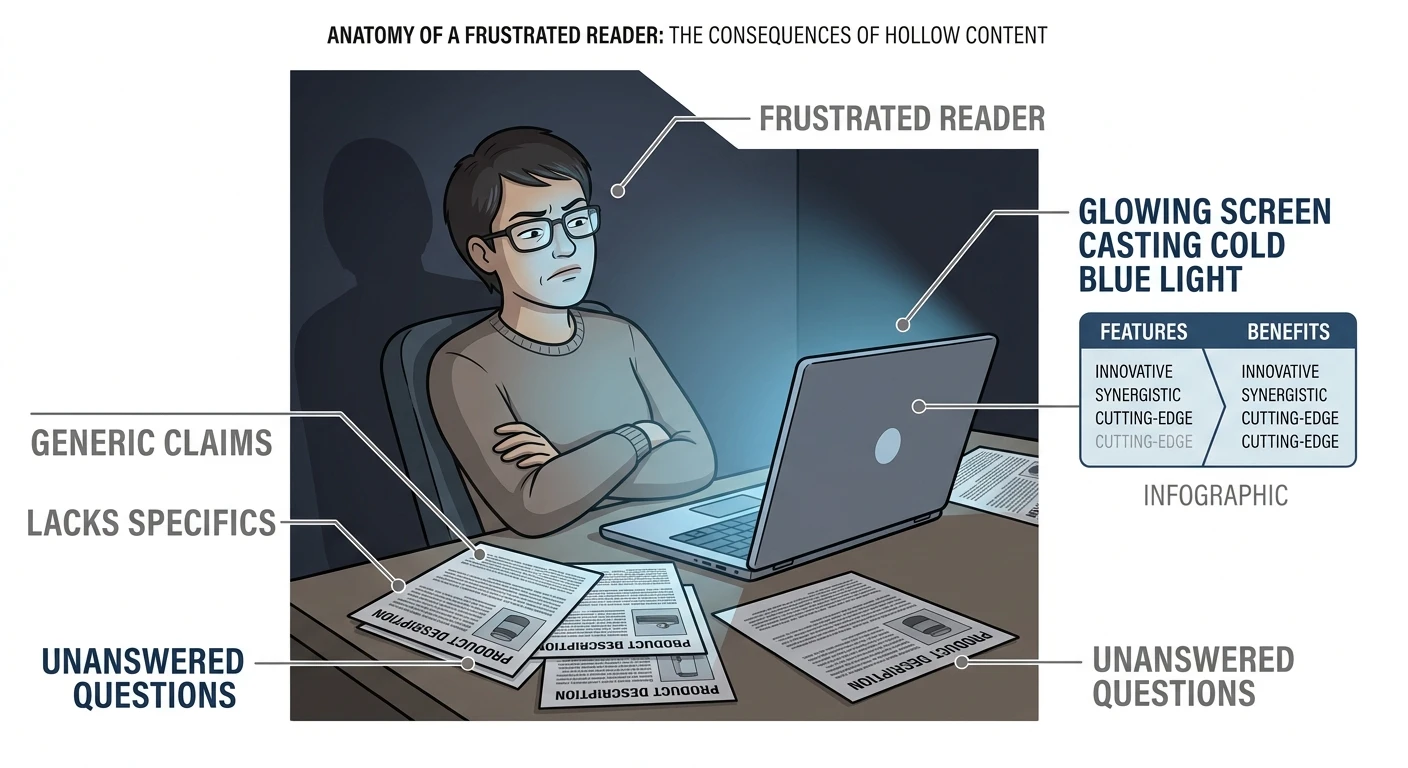
They describe the product instead of evaluating it. Readers do not want to know what a product does. They want to know if it is worth their money for their specific situation.
They have no structure that guides the reader to a decision. A good review is a decision-making tool. A bad review is a product page dressed up as a blog post.
They lack personal experience and proof. Google knows this. Readers feel it. If your review reads like you never actually used the product, nobody trusts it.
ChatGPT alone cannot fix these problems. But combined with your own experience and these prompts, it absolutely can.
Step 1: Build Your Review Foundation With This Prompt
Before writing a single word, I build the structure.
Prompt #1 — Review Outline:
“You are an expert affiliate marketer writing a product review for [Product Name]. The target reader is [describe your audience]. Write a detailed review outline with H2 and H3 headings that covers: what the product is, who it is for, key features, pricing, pros and cons, comparison with alternatives, and a clear verdict. The tone should be honest, conversational, and persuasive without being salesy.”
Run this prompt and then review the outline before writing anything. Adjust the headings to match your own experience and the specific angle you want to take.
Step 2: Write the Introduction With a Hook
The introduction is the most important part of any affiliate review. If readers bounce in 10 seconds, your conversion rate is zero.
Prompt #2 — Introduction:
“Write an introduction for an affiliate review of [Product Name]. Open with a relatable problem that [target audience] faces. Introduce [Product Name] as a potential solution. Do NOT make it sound like an advertisement. Make it conversational and honest. Keep it under 150 words.”
The key instruction here is “do NOT make it sound like an advertisement.” Without this instruction, ChatGPT tends to write introductions that read like a sales page — and readers leave immediately.
Step 3: Write the Features Section With Honest Evaluation
This is where most AI-written reviews fall apart. They describe features without evaluating them.
Prompt #3 — Feature Section:
“Write a section about the top 5 features of [Product Name]. For each feature, follow this structure: (1) Name the feature, (2) Explain what it does in plain English, (3) Explain WHY it matters to [target audience], (4) Note any limitations or downsides. Be honest — include both strengths and weaknesses. Do not use marketing language.”
The structure of Name → Explain → Why it Matters → Limitation is what makes features sections convert. It shows the reader you understand them, not just the product.
Step 4: Write the Pricing Section
Pricing sections are where affiliates lose conversions because they are vague or outdated.
Prompt #4 — Pricing Section:
“Write a clear pricing section for [Product Name] that explains the different plans available: [list the plans and prices you have manually verified]. For each plan, explain: who it is best for, what is included, and whether it offers value for money. Mention if there is a free trial or money-back guarantee. Add a note recommending the best plan for beginners.”
Always manually verify the current pricing before you use this section. Never publish AI-generated pricing without checking the official website.
Step 5: Pros and Cons — The Most Trusted Section
Readers scroll directly to pros and cons. This section alone can make or break your conversion rate.
Prompt #5 — Pros and Cons:
“Based on the features and pricing of [Product Name], write a balanced pros and cons list for an affiliate review. Include at least 5 pros and 4 cons. The cons should be genuine and specific — not vague complaints. The pros should focus on results and outcomes for the user, not just features.”
The instruction to make cons “genuine and specific” is critical. Vague cons like “steep learning curve” feel fake. Specific cons like “the analytics dashboard does not show month-on-month comparison by default” feel real.
Step 6: Add the Verdict Section
The verdict is your recommendation. This is where your conversion happens.
Prompt #6 — Verdict:
“Write a final verdict section for a review of [Product Name]. The verdict should: summarize who the product is best for, clearly state whether you recommend it and why, include a specific call to action that mentions the current offer or free trial, and feel like genuine advice from someone who has used the product. Do not be vague — take a clear position.”
Take a clear position. Readers who reach the verdict are ready to decide. Do not say “it depends” — that is a conversion killer. Say “I recommend this for X type of person because Y.”
Step 7: Write the FAQs
FAQs help you rank for People Also Ask boxes and capture long-tail traffic.
Prompt #7 — FAQs:
“Write 6 frequently asked questions and answers for a review of [Product Name]. The questions should be the kind of questions a potential buyer actually asks before purchasing — pricing, refunds, comparisons with alternatives, hidden costs, and who it is not right for. Make the answers conversational and specific.”
My Complete Review Structure (Template)
Here is the structure I follow for every affiliate review:
H1 Title — Include year, product name, discount or verdict signal
Affiliate Disclaimer — Required by FTC
Quick Summary Box — Rating, price, best for, trial availability
Introduction — Hook + problem + solution setup
What Is [Product Name] — Simple explanation, who it is for
Key Features — 5–7 features with evaluation, not just description
Pricing Section — All plans, verified manually
Pros and Cons — Balanced, specific
Comparison With Alternatives — 2–3 competitors with brief comparison
Who Should Use It / Who Should Not
My Verdict — Clear recommendation with CTA
FAQs — 5–7 questions
This structure works. I have used it on hundreds of reviews across multiple affiliate sites. It consistently produces better conversion rates than shorter or less structured reviews.
Common ChatGPT Prompting Mistakes to Avoid
Asking for “a complete review in one prompt.” You will get a generic mess. Always write section by section.
Not specifying the audience. ChatGPT writes for everyone by default. Specify who your reader is every time.
Using the output without editing. I edit every single section. I add my real experience, my screenshots, my personal recommendation. AI is the scaffolding — you are the building.
Forgetting to verify facts. ChatGPT can hallucinate pricing, features, and statistics. Always check every factual claim against the official product website.
Conclusion
ChatGPT is an incredibly powerful tool for writing affiliate reviews — if you use it correctly.
The key is treating it as a co-writer, not a ghostwriter. You bring the experience, the verdict, and the trust. ChatGPT brings the speed and structure.
Use the 7 prompts above on your next affiliate review. You will cut your writing time in half and end up with a more structured, conversion-focused piece than you could have produced by writing manually from scratch.
FAQs
Technically yes, but the results will be generic and unlikely to convert. The best affiliate reviews require you to feed ChatGPT specific product knowledge, personal experience, and audience context to produce content that actually drives sales.
Aim for between 2,000 and 3,500 words for most SaaS and digital products, while physical product reviews can be shorter. The goal is to answer every question a potential buyer has, not to hit an arbitrary word count.
There is no legal requirement to disclose the use of AI for affiliate content, but you are legally required to disclose your affiliate relationship. Focusing on creating genuinely useful content matters most for both Google rankings and reader trust.
The verdict section and the pros and cons section tend to drive the most conversions because readers who scroll to these areas are already in decision mode. Make sure both sections are clear, specific, and confident to maximize click-throughs.
Add personal experiences, use contractions naturally, and include specific details only someone who has actually used the product would know. Varying your sentence structure and doing a thorough personal editing pass are what ultimately make AI-assisted content feel authentic.