
Affiliate marketing income is one of the most searched and most misrepresented topics in the entire online business space.
You will find screenshots of $50,000 months and claims of passive six-figure income everywhere you look. But what does the actual data say — not from the gurus, but from real publishers doing the work every single day?
This report surveyed over 500 active affiliate marketers across niches, traffic sources, and experience levels. What follows is the most honest income breakdown you will find anywhere in 2026.
The Headline Numbers You Need to Understand First
Before breaking down the segments, here are the overall income figures from the survey:
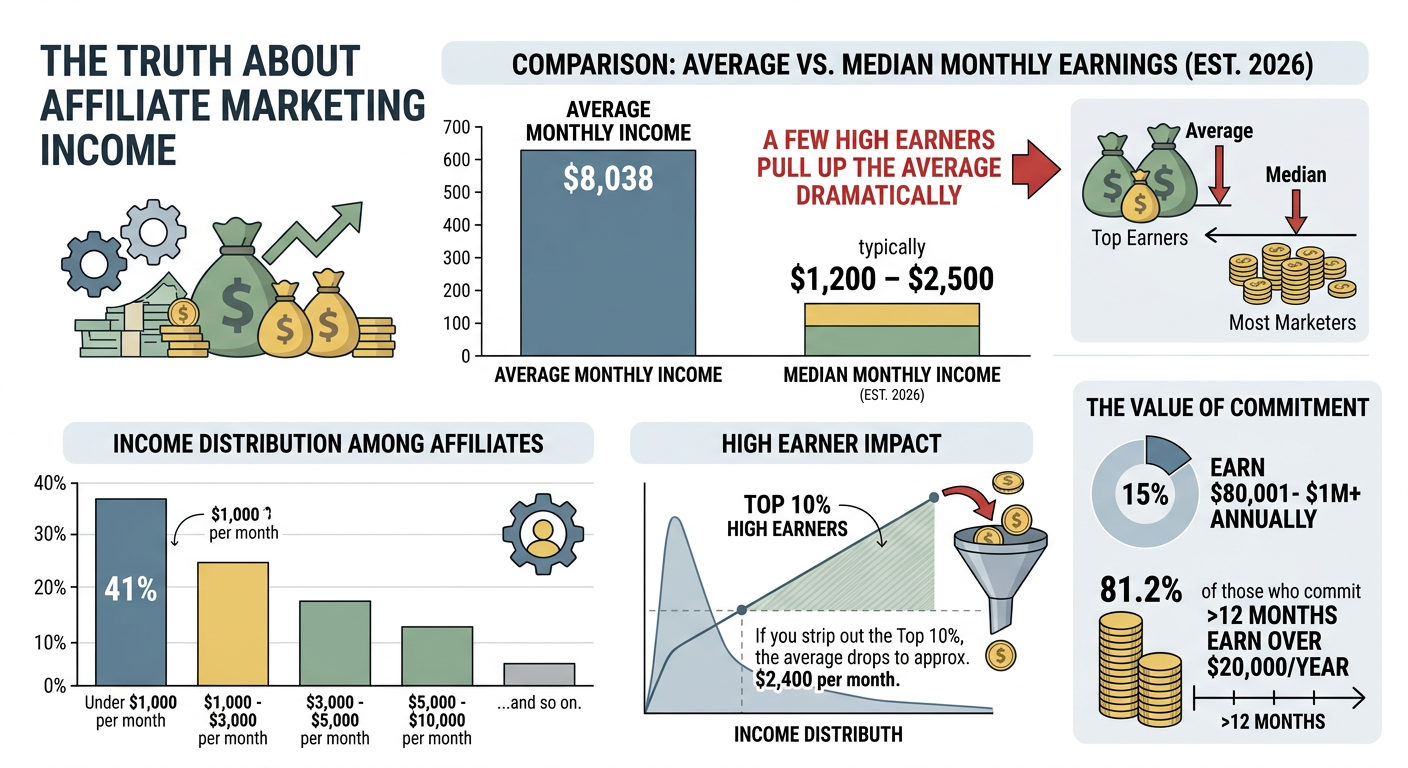
The average affiliate marketer earns approximately $8,038 per month in 2026
The median income sits at just $1,200 to $2,500 per month — significantly lower than the average
41% of affiliates earn under $1,000 per month
15% earn between $80,001 and $1 million or more annually
81.2% of those who commit for more than 12 months earn over $20,000 per year
The gap between the average and the median is the most important story here. A small number of high earners pull the average up dramatically. If you strip out the top 10% of earners, the average monthly income drops to around $2,400.
That is still a meaningful income for many people — but it is a very different number than what most affiliate marketing content promotes.
Income Breakdown by Annual Earnings Tier
Annual Earnings Range | % of Affiliates |
Under $0 (net loss after tools/ads) | 8% |
$1 – $9,999 | 33% |
$10,000 – $24,999 | 18% |
$25,000 – $49,999 | 14% |
$50,000 – $99,999 | 12% |
$100,000 – $499,999 | 11% |
$500,000+ | 4% |
The 8% operating at a net loss are almost exclusively running paid traffic campaigns against offers with poor funnel economics. The lesson: if you are paying for traffic, your conversion math must be airtight before you scale.
How Income Varies by Experience Level
This is the data most beginners want to see, and it is both encouraging and sobering.
Experience Level | Average Monthly Income |
Less than 6 months | $0 – $300 |
6 to 12 months | $300 – $1,500 |
1 to 2 years | $1,500 – $4,000 |
2 to 4 years | $4,000 – $10,000 |
4+ years | $10,000 – $50,000+ |
The jump between years two and four is the most significant in the data. This is where affiliates who have built a library of content, a ranking presence, and an email list start seeing compounding returns.
The first year is almost always an investment, not a payday. 74% of affiliates who now earn over $5,000 per month reported earning under $500 in their first six months.
How Income Varies by Niche
Niche is the second biggest income determinant after experience. The survey data confirms this clearly.
Niche | Average Monthly Income |
$7,000 – $15,000 | |
Personal Finance | $6,500 – $12,000 |
E-learning and Online Courses | $5,500 – $10,000 |
Health and Wellness | $3,000 – $7,000 |
Travel | $2,500 – $6,500 |
Fashion and Beauty | $1,500 – $4,500 |
Food and Lifestyle | $800 – $2,500 |
General Retail | $500 – $2,000 |
SaaS dominates not because it is easy to rank for — it is highly competitive — but because the commission structures are fundamentally different. A SaaS affiliate earning 30% recurring on a $300/month product earns $90 every single month that customer stays subscribed. That income stacks in a way that one-time retail commissions simply cannot match.
How Income Varies by Traffic Source
The survey broke down earnings by primary traffic source and the results carry a clear message.
Primary Traffic Source | Average Monthly Income |
Email (owned list) | $9,200 |
YouTube | $7,800 |
SEO / Organic Search | $5,400 |
Paid Search (PPC) | $4,100 (before ad spend) |
$3,600 | |
Social Media (Instagram, Pinterest) | $2,100 |
Podcasts | $1,900 |
Email and YouTube consistently outperform every other traffic source. Email because the audience is pre-sold on trust, and YouTube because the long-form review format is where buyer decisions actually get made.
The paid search number is misleading without accounting for ad spend. Affiliates running PPC campaigns reported average monthly gross earnings of $4,100 but average monthly ad spend of $2,600 — leaving a net of $1,500. Profitable at scale, but it requires constant optimisation.
The Income Ceiling: What Separates $2,000/Month Affiliates From $20,000/Month Affiliates
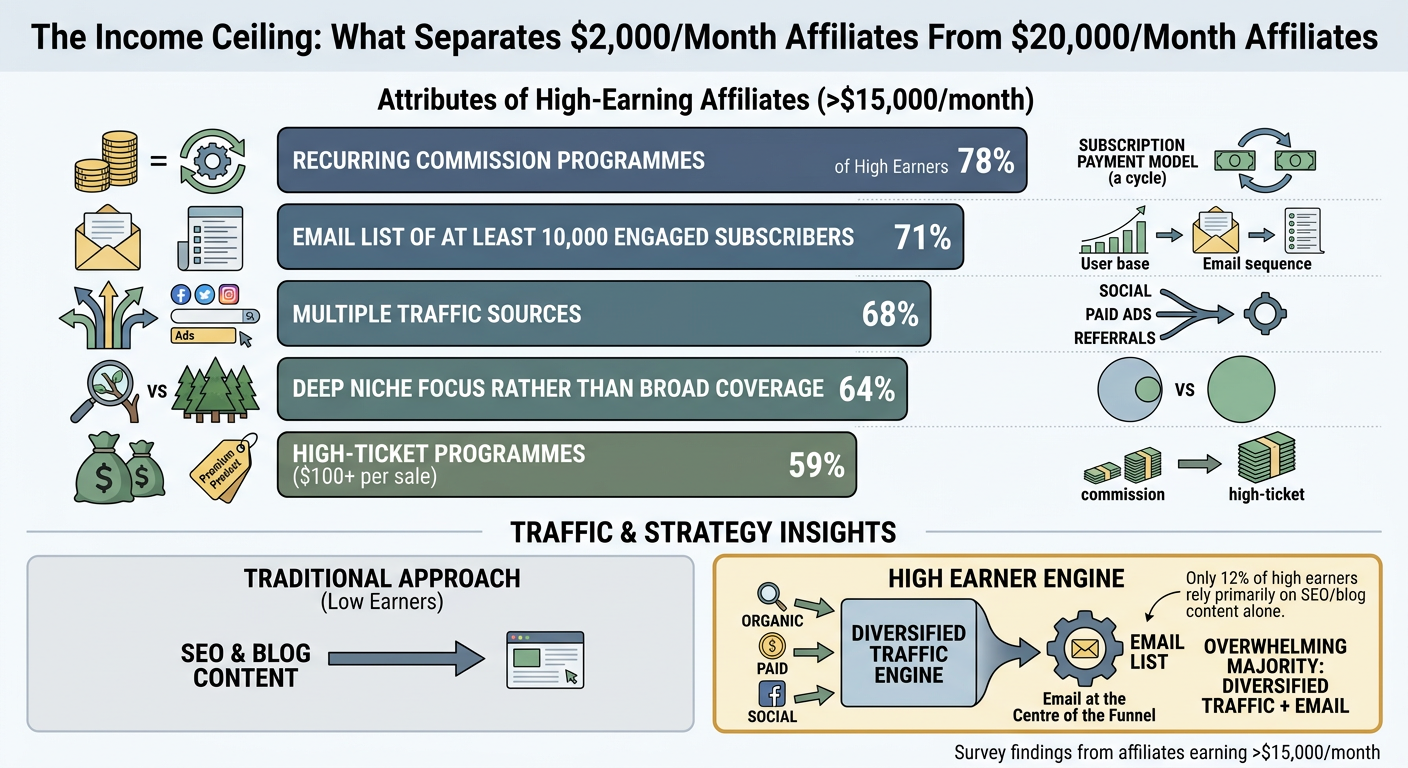
The survey asked affiliates earning above $15,000 per month what they attributed their income to. The top five answers were:
Recurring commission programmes (mentioned by 78% of high earners)
Email list of at least 10,000 engaged subscribers (71%)
Multiple traffic sources (68%)
Deep niche focus rather than broad coverage (64%)
High-ticket programmes with at least $100 per sale (59%)
Only 12% of high earners said they relied primarily on SEO and blog content alone. The overwhelming majority had built a diversified traffic engine with email at the centre of the funnel.
What the Survey Tells Us About Part-Time vs Full-Time Affiliates
Not everyone pursuing affiliate marketing wants to do it full time, and the income data reflects this honestly.
Part-time affiliates (under 20 hours per week) earn an average of $1,200 to $3,500 per month
Full-time affiliates (30+ hours per week) earn an average of $6,000 to $14,000 per month
Affiliates who also run their own products or services alongside affiliate income earn significantly more — averaging $18,000 to $25,000 per month
The last point matters more than most people realise. The highest-earning affiliates in 2026 are not purely affiliates. They are content creators or educators who have built authority in a niche and monetise through a mix of affiliate commissions, their own digital products, and sometimes brand partnerships. Affiliate income is a major revenue stream — not the only one.
The Honest Summary
If you are thinking about affiliate marketing as a path to income, the honest version of this data is:
Year one is mostly an investment in skills, content, and audience building. Expect under $500/month.
Year two is where momentum starts to build. Expect $1,000 to $4,000/month if you have been consistent.
Year three and beyond is where the compounding kicks in. The affiliates who get here and stay consistent are doing very well.
The 41% earning under $1,000 are not failing because affiliate marketing does not work. They are largely in their first year, or they have not committed to a specific niche and traffic strategy.
The data is clear: this model works for the people who treat it seriously.
Key Takeaways
The average affiliate marketer earns $8,038/month but the median is far lower at $1,200 to $2,500
81.2% of affiliates who commit for 12+ months earn over $20,000 annually
SaaS and software are the highest-earning niches due to recurring commission structures
Email lists and YouTube produce the highest average income of any traffic source
The income gap between year one and year three is dramatic; consistency is the most important variable
The average affiliate marketer earns around $8,038 per month, but this figure is skewed upward by top earners. The median income for active affiliates sits closer to $1,200 to $2,500 per month.
Yes, but it typically takes more than a year of consistent effort to reach full-time income levels. Data from 500+ publishers shows that 81.2% of affiliates who stay committed beyond 12 months earn over $20,000 annually.
Most affiliates begin seeing meaningful income between 6 and 18 months after starting. The first 6 months are generally an investment period where little to no revenue is generated.
SaaS and personal finance are the highest-earning niches for affiliate marketers. SaaS is particularly lucrative because recurring commission structures allow earnings to compound steadily over time.
Yes, audience size matters far less than audience quality and trust. A small, highly engaged email list or a YouTube channel built around buyer-intent content can consistently outperform accounts with much larger but less targeted social followings.