
Google Ads is our starting point for reaching people actively searching for a service. LinkedIn suits B2B campaigns with a clear professional audience. Microsoft Advertising provides another search option, while TikTok and Taboola offer discovery-led routes. Compare qualified enquiries and customers, not form submissions alone.
| Best For | Existing search demand | Defined B2B audiences | An additional search channel |
| Lead journey | Search to enquiry or eligible lead form | Professional targeting and lead forms | Search ad to website enquiry |
| Main check | Search intent and qualification | Buyer role and sales readiness | Incremental qualified demand |


A full spreadsheet of leads can still leave a sales team with nobody useful to call. Some contacts want a free download. Others cannot buy the product, live outside the service area or never expected a sales call.
That is why the best ad networks for lead generation need to do more than deliver names and phone numbers. The audience, promise and follow-up must fit the same buying journey.
This list compares platforms where businesses buy advertising to generate enquiries. It does not rank companies selling contact databases or affiliate networks paying publishers for leads.
The recommendations draw on official product information and practical campaign requirements. They are not a claim that we spent money testing every platform. There is no universal cheapest network, and availability depends on the advertiser, country and product.
5 Best ad networks for lead generation: Quick comparison
Platform | Best fit | Lead journey | Main check |
|---|---|---|---|
Google Ads | Existing search demand | Search to enquiry or eligible lead form | Search intent and qualification |
LinkedIn Ads | Defined B2B audiences | Professional targeting and lead forms | Buyer role and sales readiness |
Microsoft Advertising | An additional search channel | Search ad to website enquiry | Incremental qualified demand |
TikTok Ads | Offers that benefit from demonstrations | Video discovery to lead capture | Creative fit and lead quality |
Taboola | Content-led customer discovery | Publisher placement to landing page | Placement and enquiry quality |
These are editorial starting points, not a ranking by measured conversion rate. A local repair business and an enterprise software company should not expect the same winner.
What makes an ad network useful for lead generation?
A useful platform connects the right audience with an offer they understand and gives you enough information to judge what happened afterwards. The first conversion is usually an enquiry. The business result may be a booked appointment, accepted application or completed sale.
Define those stages before comparing prices. Otherwise, one platform may count newsletter subscribers while another counts people requesting a quotation.
Decide what a qualified lead means for your business. It might require a serviceable postcode, relevant company size or a need that your team can actually meet. Use only questions that help make that decision.
5 best ad networks for lead generation in detail
1. Google Ads: Best starting point for active demand
Google Ads is worth considering first when potential customers already search for the service you sell. A relevant search can reveal a specific need, although it does not prove that the person is ready or able to buy.
Google also provides lead form assets that allow eligible advertisers to collect contact details directly from an ad. Its documentation explains eligibility requirements, privacy-policy requirements and options for moving leads into other systems. Check those conditions before planning around the feature. Source: Google lead form assets.
The main decision is how closely the campaign matches the enquiry you want. Someone seeking emergency assistance needs a different page from someone researching a service for next year.
Separate those intentions where possible. Show the service area and the next step clearly. If a quotation requires an inspection, say so rather than suggesting that every visitor will receive an instant final price.
Pros
- Useful starting point when customers already search for your service.
- Eligible advertisers can consider a form within the advertising journey.
- Search themes give a practical basis for organising landing pages.
Cons
- A relevant search can still come from someone researching rather than buying.
- Form availability is conditional, and contact collection needs a follow-up process.
Our verdict: Start with Google Ads when existing demand is clear. Judge the campaign by qualified enquiries and sales, not by how many forms it can collect.
2. LinkedIn Ads: Best for a clearly defined B2B buyer
LinkedIn is a strong comparison when the audience is defined by professional characteristics. It is especially worth examining when a broad consumer audience would leave the sales team filtering out many unsuitable enquiries.
LinkedIn describes targeting by attributes such as job title, industry, company and seniority. Its Lead Gen Forms can use pre-filled profile information, and its advertising tools include reporting and conversion measurement. Source: LinkedIn lead generation.
Professional relevance does not equal purchase intent. A person downloading a report may fit your ideal customer profile without wanting a demonstration or contract discussion.
Match the follow-up to the request. A guide download can lead to a useful resource and an optional next step. A demo request deserves a direct response about the product. Treating both as urgent sales opportunities can waste effort and disappoint the reader.
Pros
- Professional attributes can help define a B2B audience.
- Pre-filled forms can simplify the enquiry process.
- Suitable to evaluate for distinct offers such as reports and demonstrations.
Cons
- A relevant job title does not establish buying authority or current need.
- Easy form completion can produce contacts who are interested only in the resource.
Our verdict: Choose LinkedIn for a well-defined professional audience and a clear offer. Track whether leads progress to meaningful conversations, not simply whether their titles look impressive.
3. Microsoft Advertising: Best for testing another search channel
Microsoft Advertising is worth comparing when a business wants another source of search-driven enquiries. Treat it as a separate audience and campaign, even if the offer and landing page are already proven elsewhere.
Microsoft's official training material covers search advertising and campaign imports. Importing can help with setup, but it does not demonstrate that the imported settings or results will suit the new channel. Source: Microsoft Advertising fundamentals.
Before launch, review the imported campaign rather than assuming that everything carried across as intended. Check targeting, budgets, destinations and conversion measurement.
Use the same business definition of a qualified enquiry across channels. This makes the comparison useful even when the number of clicks differs. Also remove duplicate contacts from your reporting, so a returning prospect does not appear to be a new customer opportunity each time.
Pros
- Another search option for businesses with a clear service offer.
- Campaign import tools can help with setup.
- Can be compared against an existing search campaign using shared qualification rules.
Cons
- Results from another platform do not predict performance here.
- Imports still require a careful settings and tracking review.
Our verdict: Test Microsoft Advertising as an additional source of qualified demand. Avoid assuming either cheaper leads or equal reach before your own data supports it.
4. TikTok Ads: Best for offers that can be explained on video
TikTok is worth considering when a short demonstration can make the service or product easier to understand. It is a different starting point from search: the person may discover the offer while watching content rather than looking for a supplier.
TikTok offers lead-generation campaigns and describes lead-quality optimisation using information about outcomes further along the customer journey. Confirm the features available for your market and account before building the campaign. Sources: TikTok lead generation and lead quality optimisation.
The video should explain the actual offer. If the next step is a consultation, say what the consultation covers. Do not imply that submitting contact details guarantees acceptance, a job, a discount or a particular result.
Follow-up context matters here. Someone may remember the demonstration but not recognise the business name in a later message. Make the identity and purpose of the response clear.
Pros
- A demonstration can help people understand an unfamiliar offer.
- Lead-generation tools provide a route from interest to enquiry.
- Deeper outcome feedback can support a focus on quality.
Cons
- A compelling video can attract curiosity without a strong buying need.
- The campaign needs suitable creative and a clear follow-up message.
Our verdict: Consider TikTok when showing the offer is more persuasive than describing it in a short text ad. Evaluate qualified conversations and customers after the initial response.
5. Taboola: Best for content-led lead generation
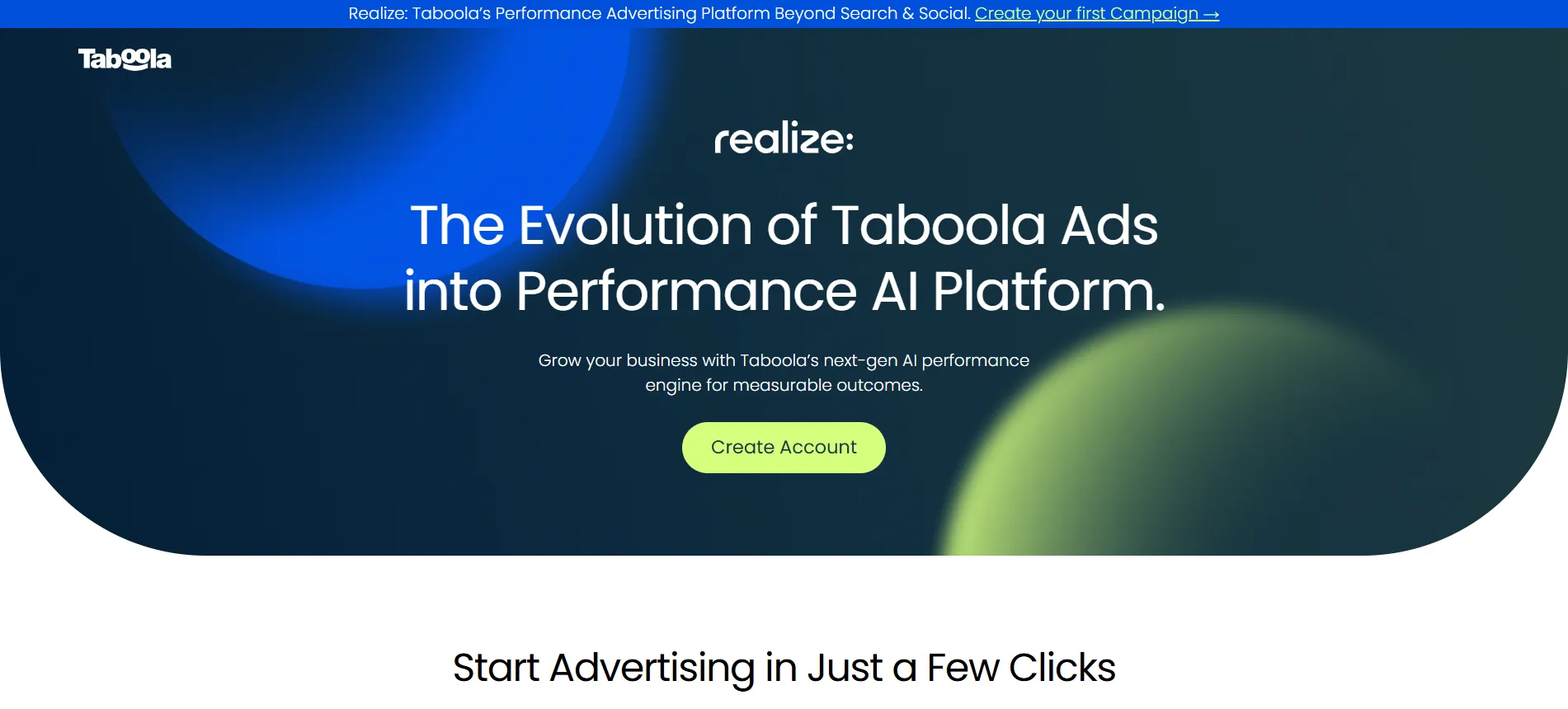
Taboola is worth evaluating when potential customers need an explanation before they are ready to enquire. Examples might include a detailed service, an unfamiliar product category or a decision that benefits from a useful comparison.
Taboola presents its advertiser platform as Realize. Its official page describes placements across publisher properties and several creative formats, including display and vertical video. This makes it an option to investigate beyond search and social advertising. Source: Taboola Realize.
The landing page has an important job. It should answer the question raised by the ad and then explain why a person might want to contact the business.
A headline that attracts broad curiosity can create expensive traffic if the page never establishes a relevant need. Be specific about the service, audience and next step. Clearly identify promotional content rather than making an advertisement appear to be independent reporting.
Pros
- Worth testing for offers that need explanation before an enquiry.
- Publisher placements provide another route to discovering customers.
- Several creative formats offer room to test the message.
Cons
- Reading an article is not the same as wanting a sales conversation.
- The landing page and placement mix require close attention.
Our verdict: Compare Taboola when you have a strong explanatory page and a measured path from reading to enquiry. Do not use article clicks as the final success measure.
Should you use a lead form or your own website?
Use the route that gives people enough context to make an informed enquiry. A short form can suit a straightforward request. A more complex service may need a page explaining eligibility, pricing factors or what happens next.
Reducing friction is useful only if the remaining information is sufficient. Removing every qualifying question may increase submissions while increasing the sales team's workload.
A practical test compares both the conversion rate and the proportion of leads accepted by the team. Record reasons for rejection, such as an unsupported location or a request for a different service. Those reasons can guide better copy and targeting.
Keep questions proportionate. Collecting extra personal information just because a form allows it does not make a lead more valuable.
How should you compare cost per lead?
Compare cost per qualified lead and customer alongside the initial cost per form submission. A low headline CPL can hide a weak campaign.
Consider this hypothetical example, which is not a platform benchmark. Campaign A spends $600 and collects 120 enquiries. Its initial CPL is $5. Only 12 meet the business's qualification rules, making the cost per qualified lead $50.
Campaign B also spends $600 but collects 60 enquiries. Its initial CPL is $10. If 24 qualify, the qualified-lead cost is $25.
Campaign B looks more expensive on the first metric and better on the second. You still need sales results before deciding which is more profitable.
Allow comparable time for leads to progress. A campaign launched yesterday should not be judged against one whose enquiries have had weeks to become customers.
What should you prepare before launching?
Prepare a working follow-up system before paying for enquiries. Decide who receives a new lead, how it is assigned and what response the person should expect.
At a minimum:
Define a qualified lead in terms the marketing and sales teams both understand.
Test the form and confirm that the enquiry reaches the correct person.
Keep the original campaign source with the lead record.
Record duplicates and unsuccessful outcomes consistently.
Explain what contact the person is requesting and how their information will be used.
Use suitable consent and privacy controls for the market and campaign.
Review the first enquiries with the sales team. If the same misunderstanding keeps appearing, repair the advertisement or form instead of simply buying more traffic.
Frequently asked questions: Best Ad Networks for Lead Generation
Google Ads is a useful starting point for existing search demand. LinkedIn suits clearly defined B2B audiences. Microsoft Advertising, TikTok and Taboola provide other routes. The best choice depends on which produces qualified enquiries and customers for your offer.
LinkedIn is worth comparing when professional attributes help identify the buyer. Search advertising can also work when people already look for the solution. Define the buyer and buying stage before choosing a platform.
There is no universal good CPL. The acceptable cost depends on qualification, close rate and the value left after serving the customer. Compare campaigns using consistent definitions and sufficiently mature results.
Neither is always better. A native form can simplify submission, while a website can provide more context. Compare lead quality and downstream outcomes as well as form completion.
This guide covers platforms for running advertising campaigns. It does not recommend buying contact lists. You still need an offer, a suitable capture process and a plan for responding to enquiries.
Yes, where the business and campaign meet platform requirements. Start with a focused offer, a serviceable audience and a budget you can evaluate. Expanding before tracking and follow-up work makes it harder to understand the results.
Quick Links:
Which lead-generation platform should you choose?
Choose the platform that matches how your customers discover and evaluate the offer. Begin with one clear campaign and follow the enquiry through to a business result.
The best ad networks for lead generation are useful only when the whole process works. Clear advertising, sensible qualification and reliable follow-up will tell you more than a large lead count.