Adsterra is our first comparison for utility campaigns with a clear install or trial goal. PropellerAds, RichAds and Clickadu explicitly address utilities, while ExoClick lists VPN/software advertising. Choose by compatible devices, successful activation and paid use. A low install cost is useful only when the software delivers value after installation.
A utility app usually promises to solve a practical problem. It might organise files, provide a security feature or help someone complete a task more easily.
| Best For | Defined install or trial campaigns | A focused software acquisition test | Granular source optimisation |
| Offers | Utility advertising and conversion tracking | Utilities and mobile acquisition | Software traffic and automated controls |
| Purpose | Activation after the initial event | Event quality | Device and placement differences |



The advertising should make that purpose just as clear.
If the creative wins a click by creating confusion, the install numbers can look healthy while the business struggles with abandoned trials and disappointed users. Better acquisition starts with a useful product and an accurate explanation.
This guide covers the best utilities ad networks for advertisers and affiliates promoting software. Here, “utilities” means software tools, not electricity, water or gas providers. It also does not mean ad SDKs for monetising a utility app.
5 Best utilities ad networks: Quick comparison
Quickly compare five leading utility ad networks to understand their differences and identify the best fit for your website.
Network | Best fit | Relevant offering | Main check |
|---|---|---|---|
Adsterra | Defined install or trial campaigns | Utility advertising and conversion tracking | Activation after the initial event |
PropellerAds | A focused software acquisition test | Utilities and mobile acquisition | Event quality |
RichAds | Granular source optimisation | Software traffic and automated controls | Device and placement differences |
Clickadu | Comparing several ad formats | Tools and utilities category | Installation journey |
ExoClick | Additional software inventory | VPN/software advertiser solutions | Inventory suitability |
The recommendations are based on documented product fit. They do not imply that every type of software, creative or installation flow will be approved.
What should a utility advertiser measure?
Measure whether the user successfully reaches the feature the advertisement promised.
For some products, installation is a meaningful first step. For others, the useful outcome is account setup, successful first use, a trial or a subscription.
Separate those stages. A download can fail to install. An installation can remain unopened. A trial can end without payment.
If you are an affiliate, confirm exactly which event earns commission. A network tracking a download does not prove that the advertiser will accept it as a payable conversion.
This distinction should shape the campaign before you select bids or formats.
5 best utilities ad networks in detail
Get a closer look at the 5 best utilities ad networks, including their key features, ad formats, and earning opportunities.
1. Adsterra: Best for a clearly defined conversion flow
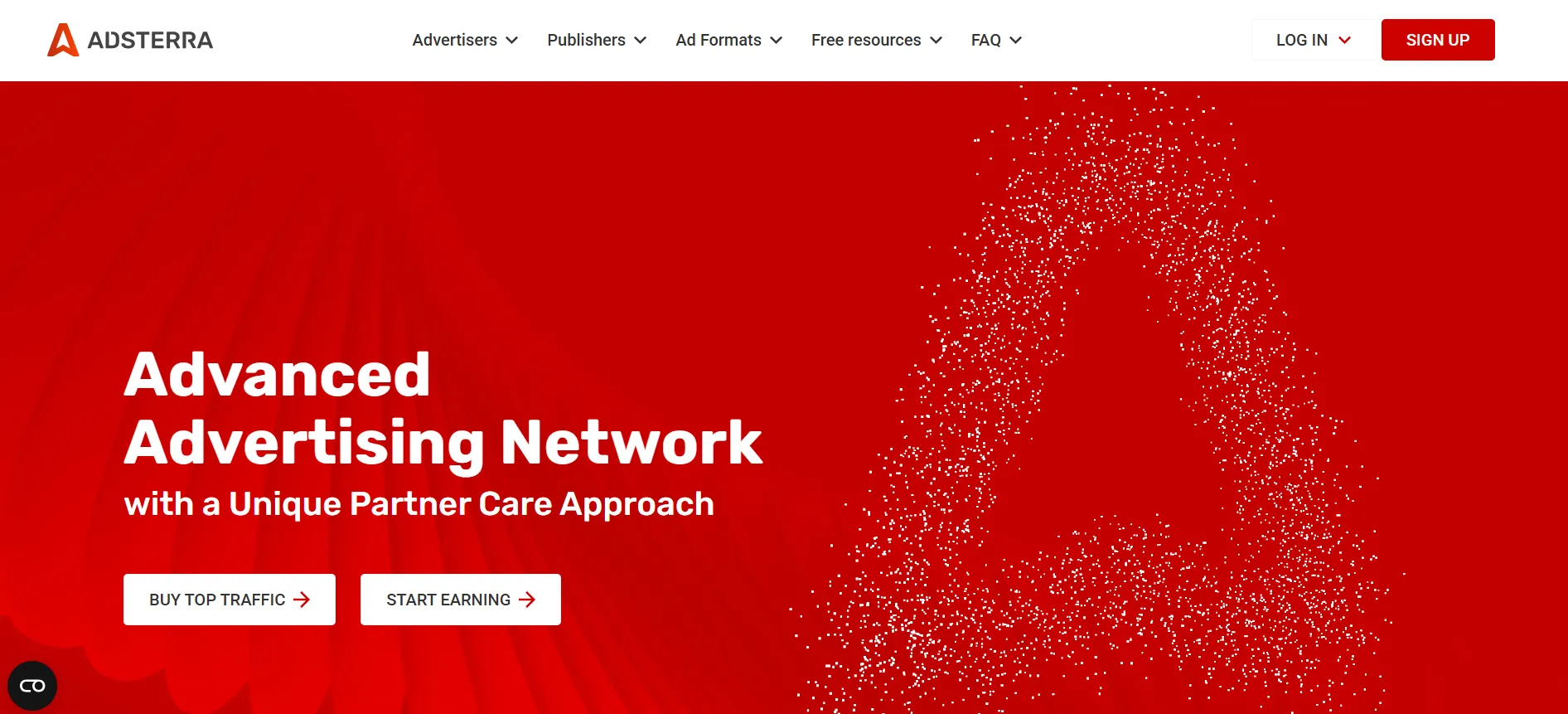
Adsterra lists utilities, antivirus products and software among its advertiser use cases. Its advertiser page documents server-to-server tracking and formats including Social Bar and in-page push. Adsterra advertiser solutions
That makes it a relevant first comparison when the acquisition flow is simple enough to measure precisely.
For example, decide whether the goal is a completed install or an activated trial. Those events may have different values and different delays.
Keep the advertisement close to the real product benefit. A file-management tool should show or describe file management, rather than borrow the appearance of an operating-system warning.
Review each format separately. A placement that generates curiosity may need a different explanation from one that introduces the app in more detail.
Pros
- Explicit utility and software relevance.
- Documented conversion tracking and multiple formats.
Cons
- Initial conversions may not translate into continued use.
- Creative can attract the wrong users if the benefit is unclear.
Our verdict: Start with Adsterra when you can define the useful event and explain the product honestly. Compare activation and paid use alongside acquisition cost.
2. PropellerAds: Best for a focused software acquisition test
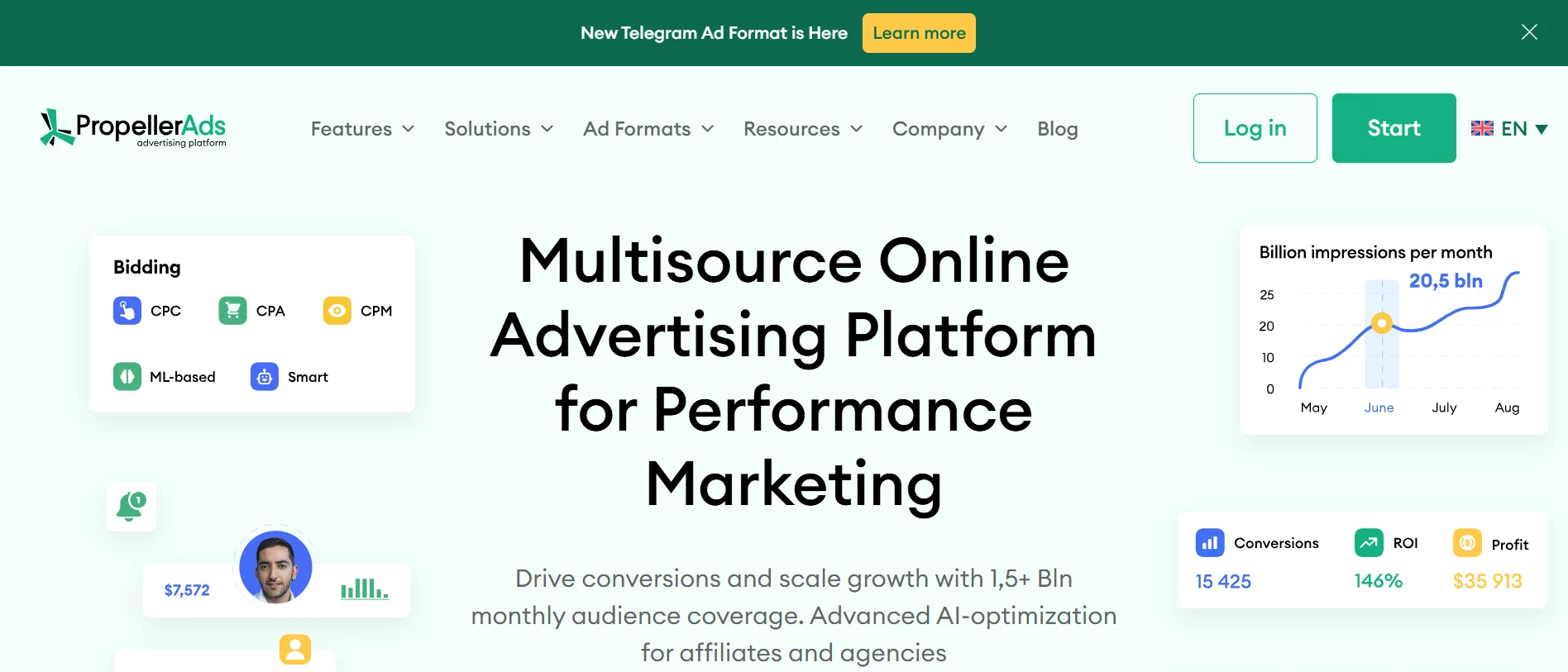
PropellerAds includes antivirus, cleaner and VPN apps within its utilities proposition. Its platform also describes mobile acquisition and conversion-focused optimisation. PropellerAds platform
The practical starting point is one product and one audience segment.
A broad campaign across unrelated devices can hide compatibility problems. A person using an unsupported platform may still click, but cannot become a useful customer.
Map the journey before launch: advertisement, landing page or store, installation, onboarding and first useful action. Identify which stages your tracking can observe.
Then choose a conversion signal that reflects business value. Optimising for the easiest available event can create volume without creating customers.
Pros
- Software utilities are an explicit advertiser category.
- Relevant to a measured acquisition campaign.
Cons
- Device compatibility can narrow the useful audience.
- Weak event definitions can misdirect optimisation.
Our verdict: Compare PropellerAds for a controlled utility campaign. Get the post-install measurement right before increasing reach.
3. RichAds: Best for device and source-level optimisation
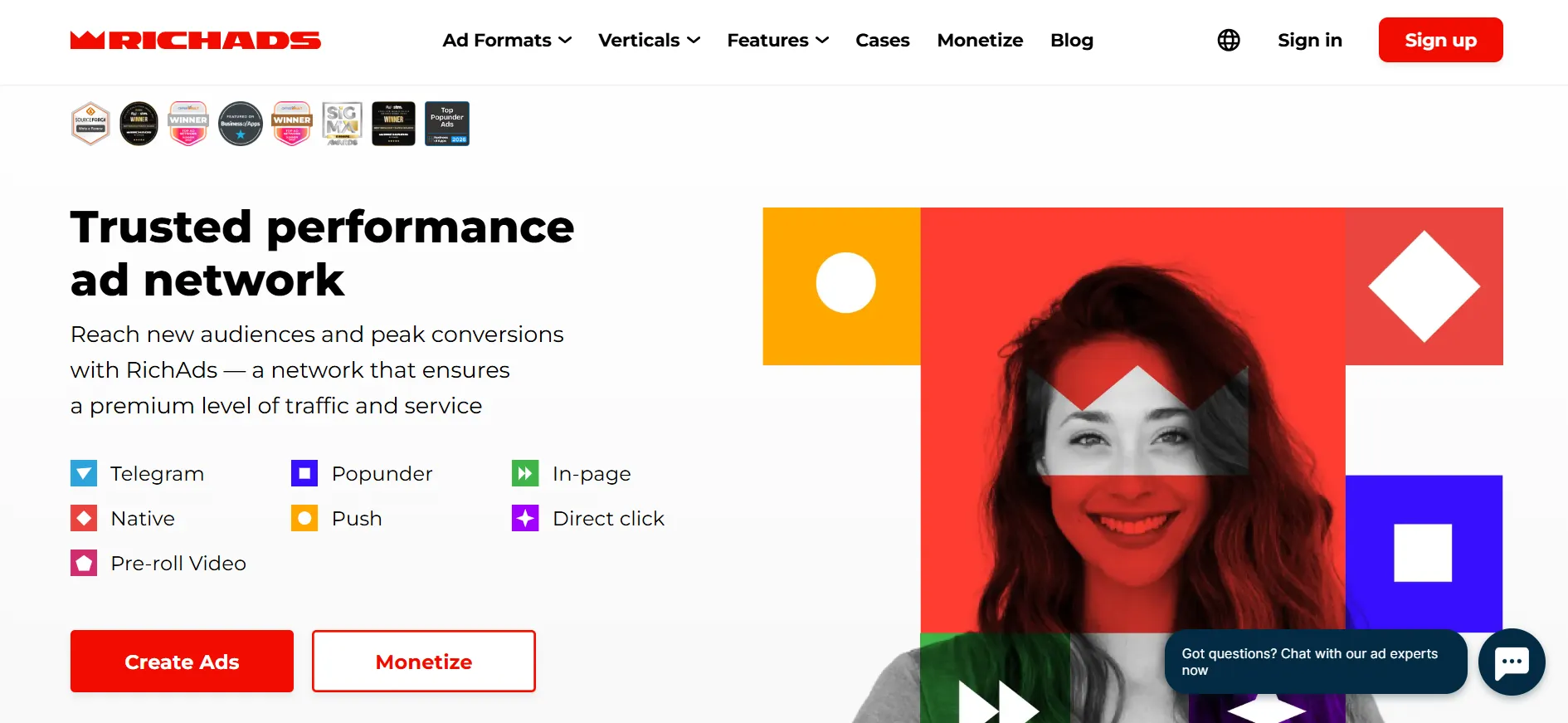
RichAds' software page lists antivirus products, cleaners, VPNs and browser extensions. It describes micro bidding and automated rules alongside push, pop and in-page advertising. RichAds software traffic
This is useful when the same product behaves differently across audience segments.
A browser extension, for example, needs a compatible browser and installation route. Sending everyone to the same download page can make the campaign look weaker than the actual offer.
Use granular reporting to investigate that problem. Separate a poor traffic source from a broken destination or unsupported environment.
Set automation rules carefully. A source with delayed conversions should not be judged by the same immediate threshold as one with a fast install event.
Pros
- Several software categories are explicitly named.
- Controls for differentiated bids and campaign rules.
Cons
- Granular optimisation requires accurate data.
- Rules can stop useful traffic if conversion delays are ignored.
Our verdict: Shortlist RichAds when you need more control over source and device differences. Fix compatibility before using bid changes to address poor results.
4. Clickadu: Best for testing the advertising format
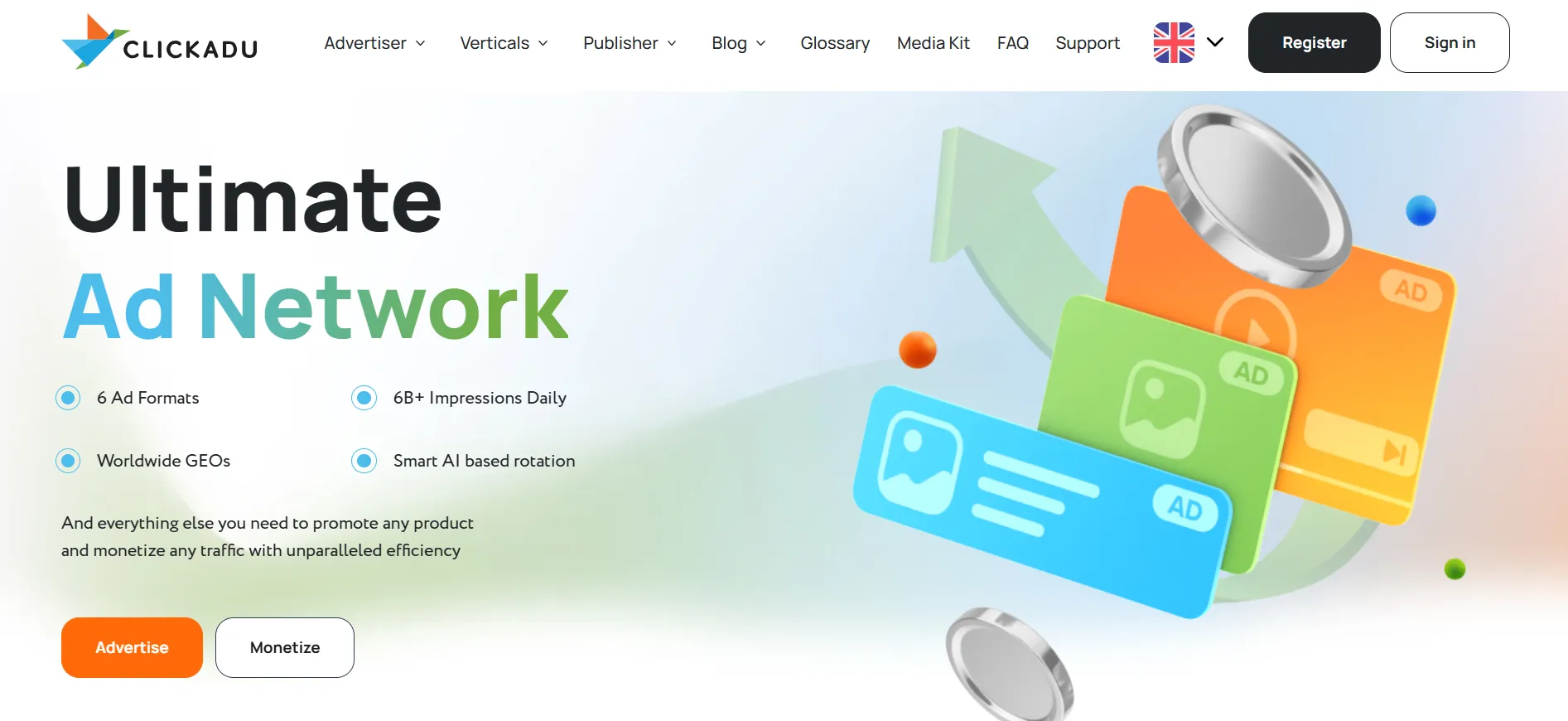
Clickadu names tools and utilities among its advertiser verticals. Its advertiser page describes banners, popunders, in-page push and video pre-roll, with available buying models depending on the format. Clickadu advertiser information
The format should support the explanation.
A simple tool may be understood from one clear image. A more involved application may need a demonstration showing what changes after installation.
Do not confuse format impact with product value. A large placement can produce attention without helping the visitor decide whether the software suits their task.
Check the final handoff on mobile and desktop. A download button that opens an unexpected file or the wrong store page can undermine the entire test.
Pros
- Explicit tools and utilities positioning.
- Multiple formats for different explanations.
Cons
- Each format needs suitable creative and measurement.
- Installation friction can be mistaken for poor traffic quality.
Our verdict: Include Clickadu when comparing how to introduce the software. Keep the product and conversion definition constant while testing formats.
5. ExoClick: Best for an additional software traffic source
ExoClick includes VPN/software in its advertiser solutions and documents several formats and targeting tools. ExoClick advertiser products
This makes it a relevant candidate for software advertisers seeking an additional inventory comparison.
The key decision is placement suitability. Ask whether the available audience and context match the tool's purpose and the brand's requirements.
Start with a clear explanation of the task the software solves. Do not assume that a landing page built for another source will communicate enough context here.
Use a bounded test and review downstream behaviour. If users install but fail to complete the first useful action, examine both expectations and onboarding before buying more visits.
Pros
- A documented software advertising category.
- Additional formats and inventory to evaluate.
Cons
- Placement context needs review.
- Results from another network may not transfer.
Our verdict: Compare ExoClick as a measured alternative, with inventory selection and post-install results central to the decision.
Should you pay attention to CPI or paid conversion cost?
Both can be useful, but they describe different stages. CPI is cost per install. Paid conversion cost measures how much advertising spend is required to generate a paying customer.
A hypothetical campaign spends $500 and produces 1,000 installs. Its CPI is $0.50. If only ten people pay, its paid customer acquisition cost is $50.
Another campaign spends $500 for 500 installs, with 25 paying users. Its CPI is $1, but paid acquisition costs $20.
The more expensive install produces the cheaper customer in this example. These figures are illustrations, not network benchmarks.
Also inspect retention, refunds and service costs. A paid trial that is immediately cancelled may have less value than it first appears.
For a free product, define the alternative business outcome clearly. It might be retained usage or another legitimate monetisation event, rather than a subscription.
What should a software landing page show?
Show the actual task, supported environment and next step. Visitors should understand what they are installing and why it helps.
Useful information includes:
Supported devices, operating systems or browsers.
The main feature demonstrated accurately.
What the free version or trial includes.
The price and renewal conditions, if applicable.
The source of the download.
Help, cancellation or removal guidance.
Avoid fake virus scans, invented storage warnings and disguised system buttons. A claim about the visitor's device should not be fabricated to create urgency.
If the product requires permissions, explain the relevant functionality in plain language. Unexpected steps during installation can undermine the promise made by the advertisement.
The page should make the decision easier, not simply push the visitor towards a button.
How can you find where a utility campaign is losing users?
Break the acquisition journey into stages.
A large drop before the destination loads suggests a different problem from a large drop after installation. The first may involve the landing experience or traffic; the second may involve expectations or onboarding.
Review:
Clicks reaching the intended destination.
Eligible visitors reaching the correct download route.
Completed installations.
First launches.
Completion of the promised task.
Trial, purchase or retained use.
Use a small set of meaningful events rather than tracking everything without a purpose.
Test the experience on representative devices. A campaign can be technically live while sending some users to a page they cannot use.
Keep product changes in the campaign log. An onboarding update can improve activation without any change in traffic quality.
How should affiliates evaluate utility offers?
Read the offer conditions before choosing the traffic source. Confirm the permitted countries, devices, formats and acquisition event.
Also ask how rejections are handled. If the advertiser accepts only new users or verified installations, your early tracking total may exceed payable conversions.
A hypothetical $2 commission is not worth $2 for every tracked event if some events are rejected. Use the accepted earnings from a consistent period when calculating your effective payout.
Review the software itself. An attractive commission should not distract from unclear pricing, misleading claims or an installation journey you would not be comfortable explaining to a reader.
Keep the affiliate role transparent and use the approved creative. Do not invent a security problem to make the offer seem necessary.
When should you increase the budget?
Increase spending after you can explain why the campaign works and confirm that the result holds beyond the initial event.
Look for a repeatable pattern across a useful sample, not one cheap installation or one profitable day.
Before expanding, verify:
Conversion tracking is reliable.
Accepted outcomes support the acquisition cost.
The product works on the targeted devices.
Refunds or rejected events are accounted for.
Support and delivery can handle additional users.
Expand one dimension at a time where practical. A new country, format or device group is another test, not simply more of the same traffic.
Keep a loss limit for that expansion. Previous success reduces uncertainty, but it does not remove it.
Frequently asked questions: Best Utilities Ad Networks
Adsterra is our first comparison for a defined install or trial campaign. PropellerAds, RichAds, Clickadu and ExoClick offer additional software-related routes. Choose according to product approval, device fit and accepted outcomes.
No. “Utilities” here means software tools and applications. Energy-service lead generation involves a different audience, offer and set of requirements.
There is no reliable universal winner. CPI varies with the app, device, country, creative and campaign. A low CPI can still lead to expensive paying customers.
Some networks explicitly describe software or extension advertising, including RichAds. Confirm acceptance of the exact extension, installation route and claims before buying traffic.
No. Advertise a genuine feature and use an accurate demonstration. Do not invent scan results or imitate a system alert to obtain a click.
This guide covers buying traffic to acquire users. Monetising an app means earning revenue from its existing users through ads, subscriptions or another model. The platforms and measurements can differ.
Quick Links:
Which utilities ad network should you choose?
Choose a network that accepts the actual software and lets you measure a useful outcome. Compare the installation journey and post-install behaviour as carefully as the price of traffic.
The best utilities ad networks help a real tool reach people who can use it. Start with one compatible audience, explain the product clearly and expand when accepted results support the spend.