
OpenAI rolled out a dedicated teen experience for ChatGPT this week. The update adds several new safety features aimed at younger users. It also tries to make the AI feel less like a person and more like a tool.
Teen accounts can now turn off the human sounding voice response. OpenAI says this helps reduce the chance that teens see the chatbot as a real companion rather than software.
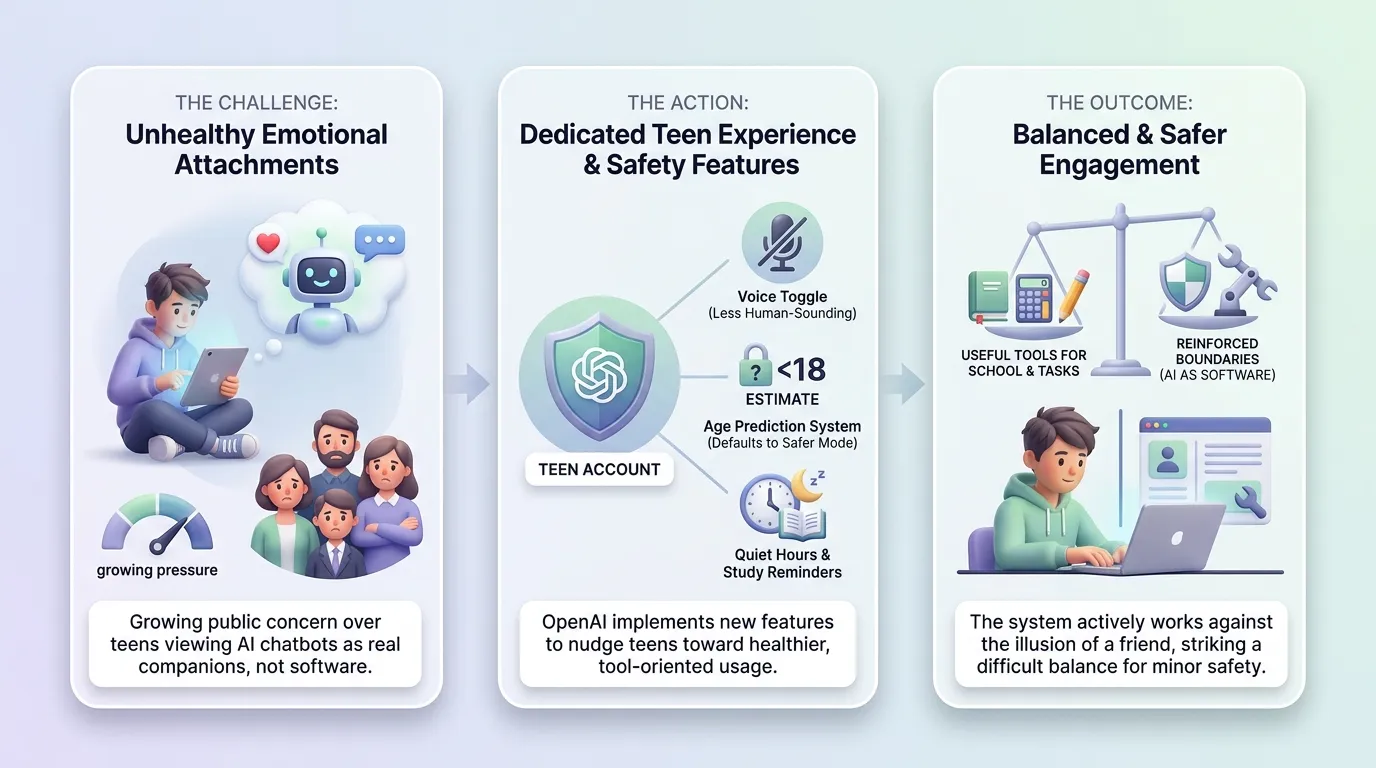
The update also adds quiet hours and study time reminders. These features nudge teens toward healthier usage patterns instead of open ended, all hours chatting.
A core piece of this rollout is an age prediction system. ChatGPT will estimate whether an account likely belongs to someone under 18 based on usage patterns.
If there is any doubt, the system defaults to the safer teen experience automatically. OpenAI explained the reasoning behind this system in its own post: https://openai.com/index/our-approach-to-age-prediction/
BBC covered the launch and noted the voice toggle is one of the most requested safety features from parents and child safety advocates. You can watch OpenAI's safety head explain the reasoning here: https://www.youtube.com/watch?v=CMLIiF-v77c
This move comes after growing public pressure on AI companies to protect younger users. Reports of teens forming unhealthy emotional attachments to chatbots have raised alarms among regulators and parents alike.
OpenAI's safety team says these changes are meant to strike a balance. Teens still get useful tools for schoolwork and daily tasks. But the system actively works against the illusion that the AI is a real friend or companion.
The rollout also ties into a broader industry trend. Companies building consumer AI products are under pressure to prove they can protect minors without shutting them out entirely. Getting this balance right is difficult.
Too many restrictions frustrate legitimate teen users. Too few restrictions expose kids to real psychological risks. OpenAI's age prediction system is its biggest bet yet on solving that problem at scale.
Quick Links: