
The Biggest Traffic Shift Nobody Is Talking About Loudly Enough
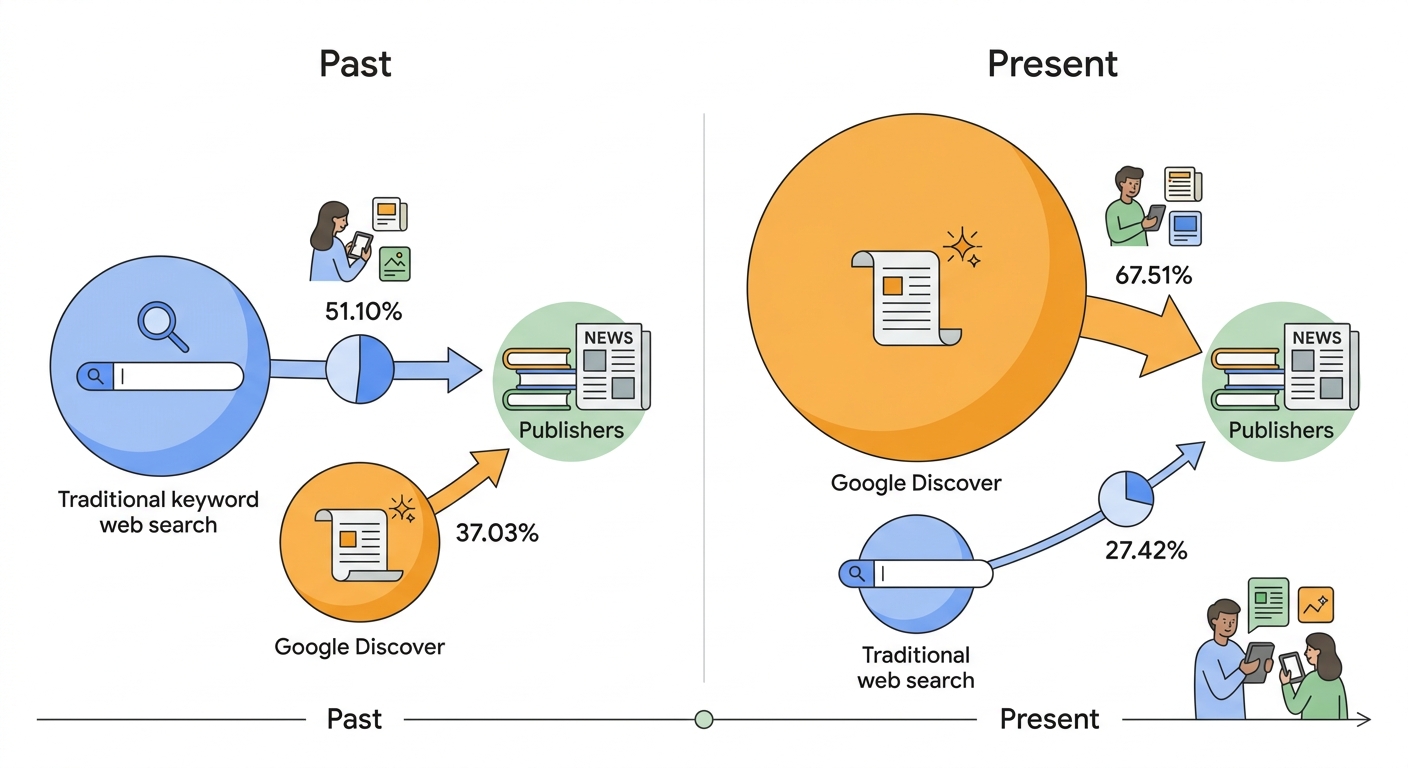
Something quietly enormous happened in the relationship between publishers and Google over the past two years, and a new analysis of over 400 news and media websites has now put hard numbers on it. Google Discover — the algorithmically curated content feed that lives on the Google app and Chrome new tab page — has overtaken traditional web search as the dominant source of Google traffic to publishers.
Two years ago, traditional web search sent 51.10% of Google referrals to publishers. Today that number has collapsed to just 27.42%. Discover, meanwhile, has climbed from 37% to 67.51% of all Google referrals in the same period.
Google Discover's share has nearly doubled in two years, climbing from 37.03% in 2023 to 67.51% today. Traditional web search has plummeted from 51.10% to just 27.42% over the same period, according to NewzDash analysis of over 400 news publishers worldwide.
This is not a niche finding about news sites. It is a structural signal about how Google is distributing content discovery, and affiliate publishers who are still building exclusively for keyword rankings are optimising for a channel that is steadily shrinking in relative terms.
Why Discover Behaves Completely Differently From Search
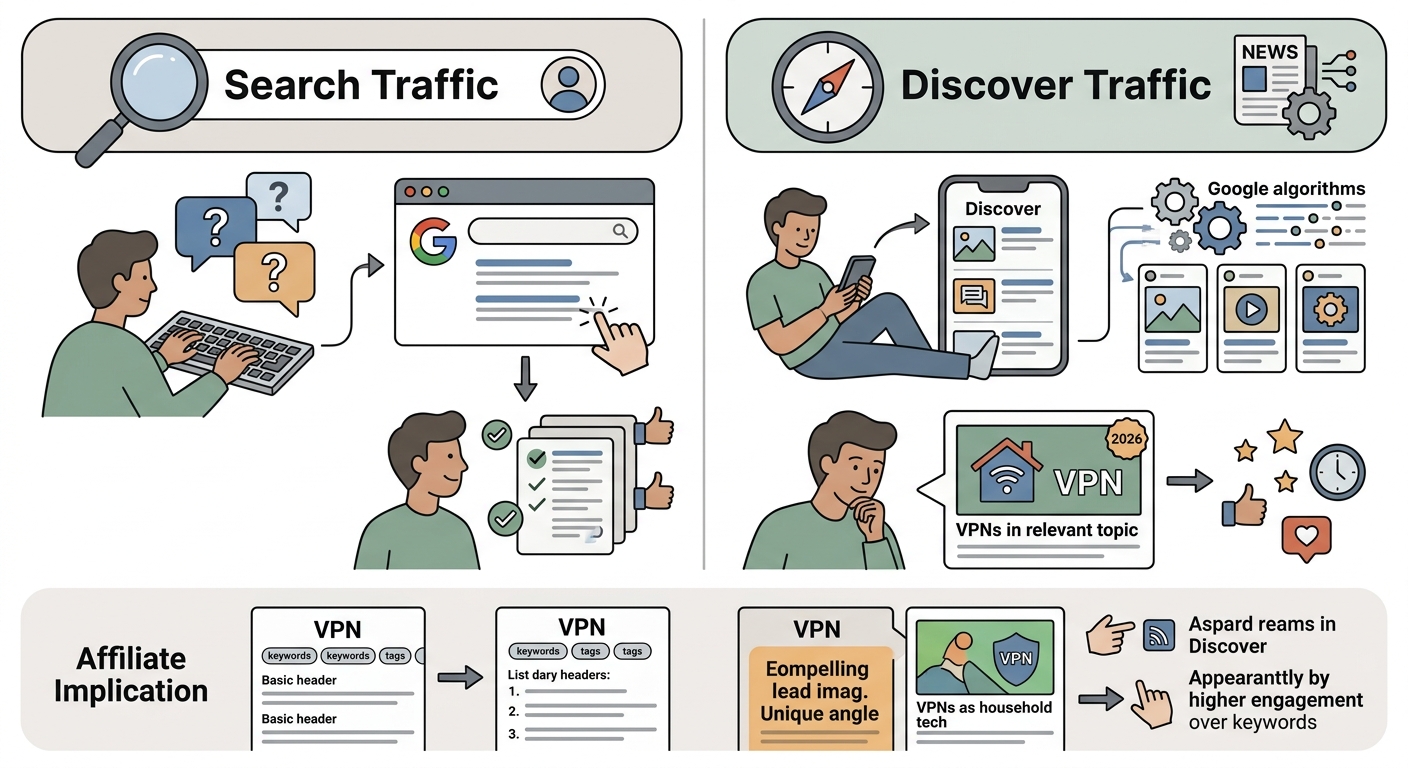
Search traffic responds to intent. Someone has a question, they type it, they click. The content that wins search is the content that best answers the query. Discover traffic responds to interest. Google decides, based on your past behaviour, that you would probably find this content interesting — and it serves it to you before you even ask.
The content that wins Discover is the content that earns engagement from an identifiable audience, signals a clear topical identity, and generates the kind of click-through and time-on-site behaviour that tells Google's system this content genuinely interested people.
For affiliate publishers, this has a very concrete implication. A “best VPN for streaming” article optimised for exact keyword match might rank well in search but never appear in Discover. A genuinely compelling, fresh-angle take on why VPNs are becoming a household necessity in 2026— with a strong headline that stops the scroll — is exactly the kind of content Discover rewards. The format, the angle, and the headline matter far more than keyword placement.
The Discover Data Bug Every Publisher Needs to Know About
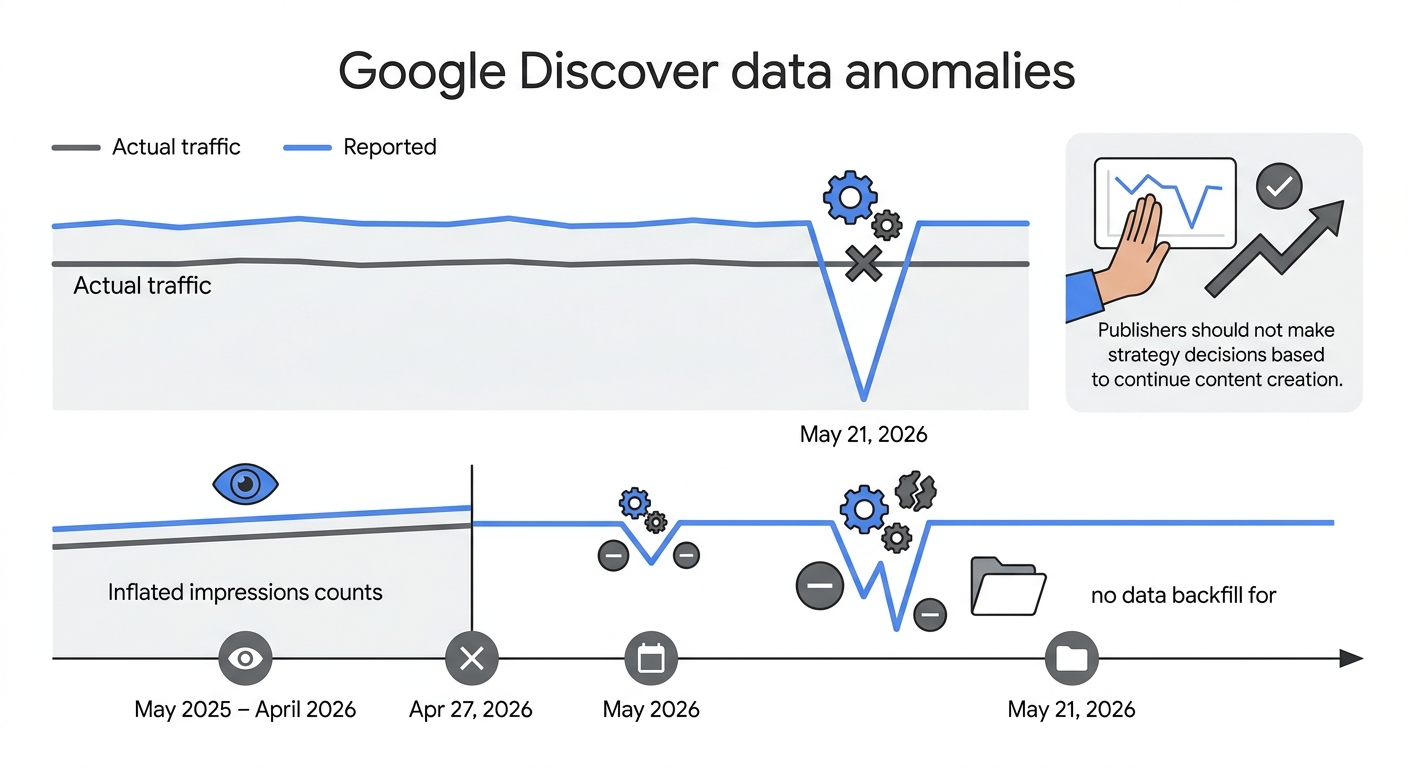
A logging error caused a decrease in clicks and impressions on the Discover performance report for data on May 21, 2026, according to Google. The company clarified that this issue affects data logging only and the underlying traffic was not affected. This follows a similar logging error on May 7 and 8, 2026, and a separate year-long reporting error that inflated impression counts from May 2025 until April 27, 2026.
If you reviewed your Discover performance in Search Console this week and saw a dip on May 21, that dip is not real. Do not make content or strategy decisions based on it. Google has acknowledged the logging error but offered no backfill. A publisher reviewing May 2026 performance will see artificial gaps that reflect nothing real about actual audience behaviour.
Publisher Profiles in Discover Are Now a Ranking Factor
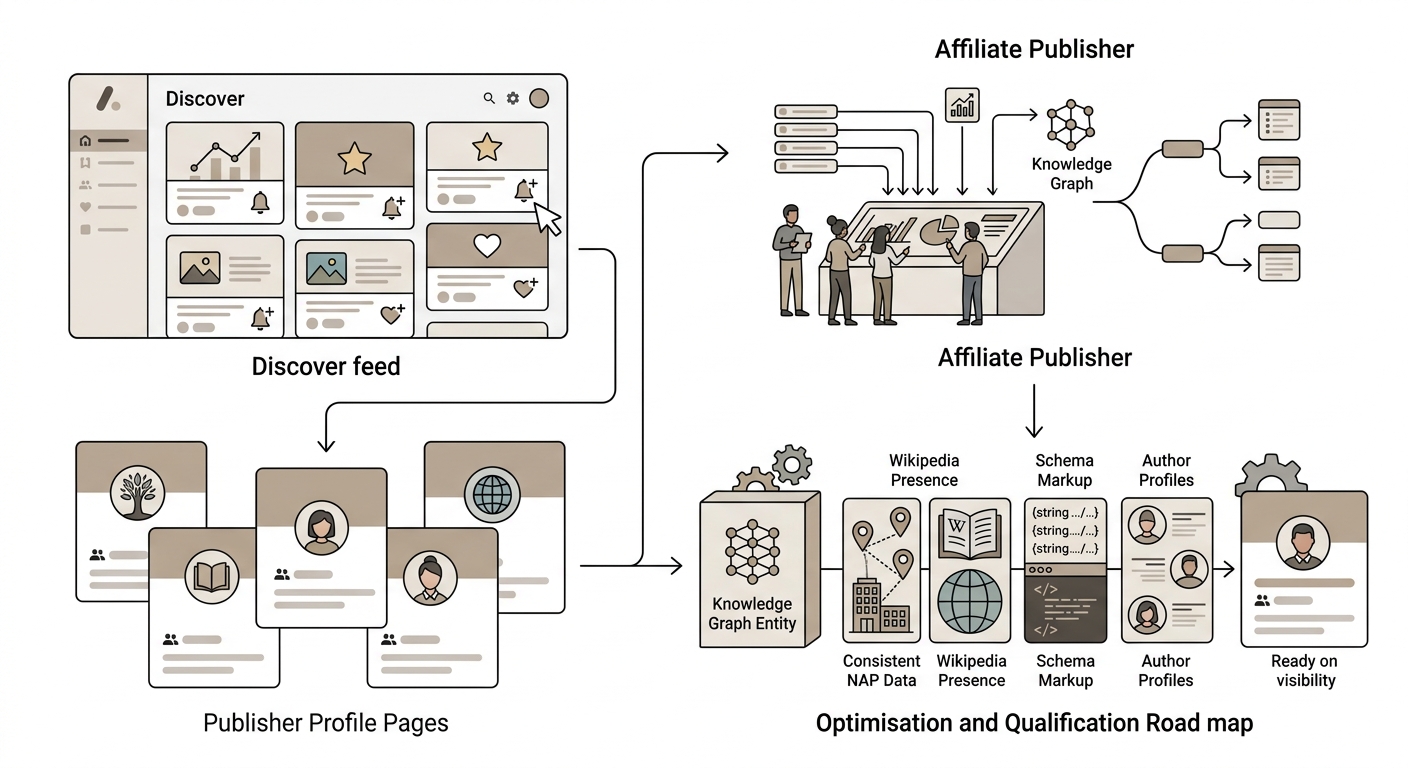
A separate but related development: Google has been quietly rolling out publisher profile pages in Discover — essentially a follow system that allows users to subscribe to specific publishers inside the Discover feed, similar to how social platforms work. Since introducing publisher follows and profile pages to Discover last year, the feature has started appearing more broadly across Discover for publishers, creators, and social-first accounts.
Publishers who have a Knowledge Graph entity and regularly publish content are generally eligible for a profile page — and because Google does not currently provide a direct way to find publisher profiles, there is a decent chance your brand already has one even if you have never seen it.
For affiliate publishers this is an underrated priority. If your site has an established Google Knowledge Graph entity, check whether you already have a Discover publisher profile. If you do, optimise it. If you do not, building the entity signals — consistent NAP data, Wikipedia presence, schema markup, author profiles — that qualify you for one should be on your technical roadmap right now.
What Winning in Discover Actually Requires
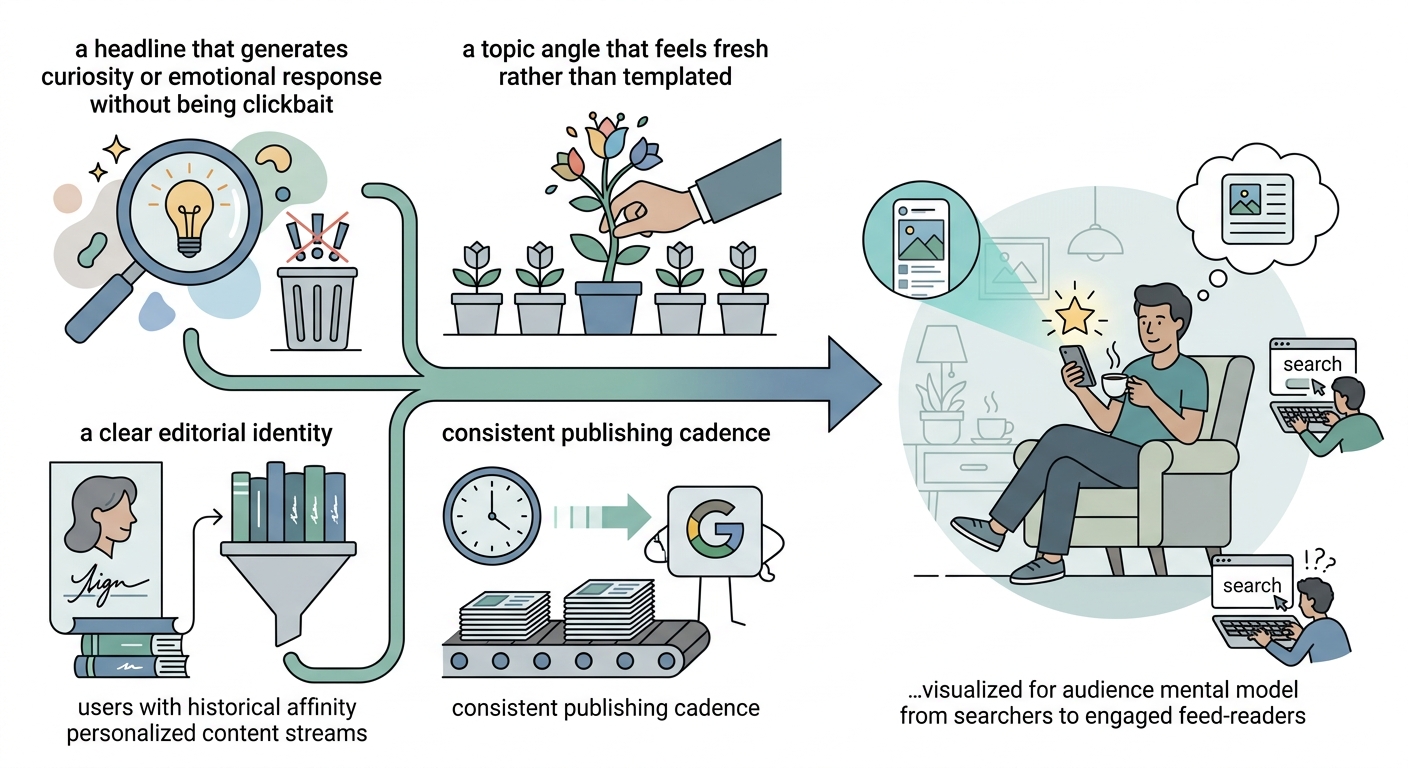
Content that wins Discover traffic has four consistent characteristics: a headline that generates curiosity or emotional response without being clickbait, a topic angle that feels fresh rather than templated, a clear editorial identity so Google can match your content to users who have historically engaged with similar material, and consistent publishing cadence that signals to the algorithm that your feed is active and reliable.
The simplest framework: write your next article for a specific reader who is not actively searching for information but would immediately find it interesting if it appeared in their morning feed. That shift in audience mental model changes what you write and how you write it in ways that keyword targeting alone never does.
💬 Reddit — r/SEO and r/juststart discussions on Discover traffic strategy: 🔗https://www.reddit.com/r/SEO/search/?q=Google+Discover+traffic+2026
🐦 X/Twitter — publishers sharing Discover traffic data and headline strategies: 🔗https://x.com/search?q=Google+Discover+publisher+traffic+2026&f=live
💬 Quora — how to get affiliate content into Google Discover: 🔗 https://www.quora.com/search?q=how+to+get+content+in+Google+Discover+affiliate
Quick Links: