
The days of writing a 1,500-word “Top 10 Products” article, throwing in some keywords, and watching it rank are gone. Not going. Gone. The affiliate content model that worked from 2018 to 2023 has been systematically dismantled by Google's AI Overviews, AI Mode, and the shift toward trust-based ranking signals. If your content strategy has not adapted, you are not just missing out — you are actively losing ground to competitors who have.
Search, ads, AI Overviews, and AI Mode are all moving away from strict keyword control and toward intent, trust, and source preference — meaning SEO now overlaps with PR, newsletters, founder branding, and community. Generic affiliate-style content gets squeezed when users can choose trusted sources, because low-identity content loses ground.
That phrase — “low-identity content” — is important. It means content that could have been written by anyone, for anyone. No point of view. No unique data. No real experience. Search systems are increasingly able to spot it, and so are users.
What replaces it
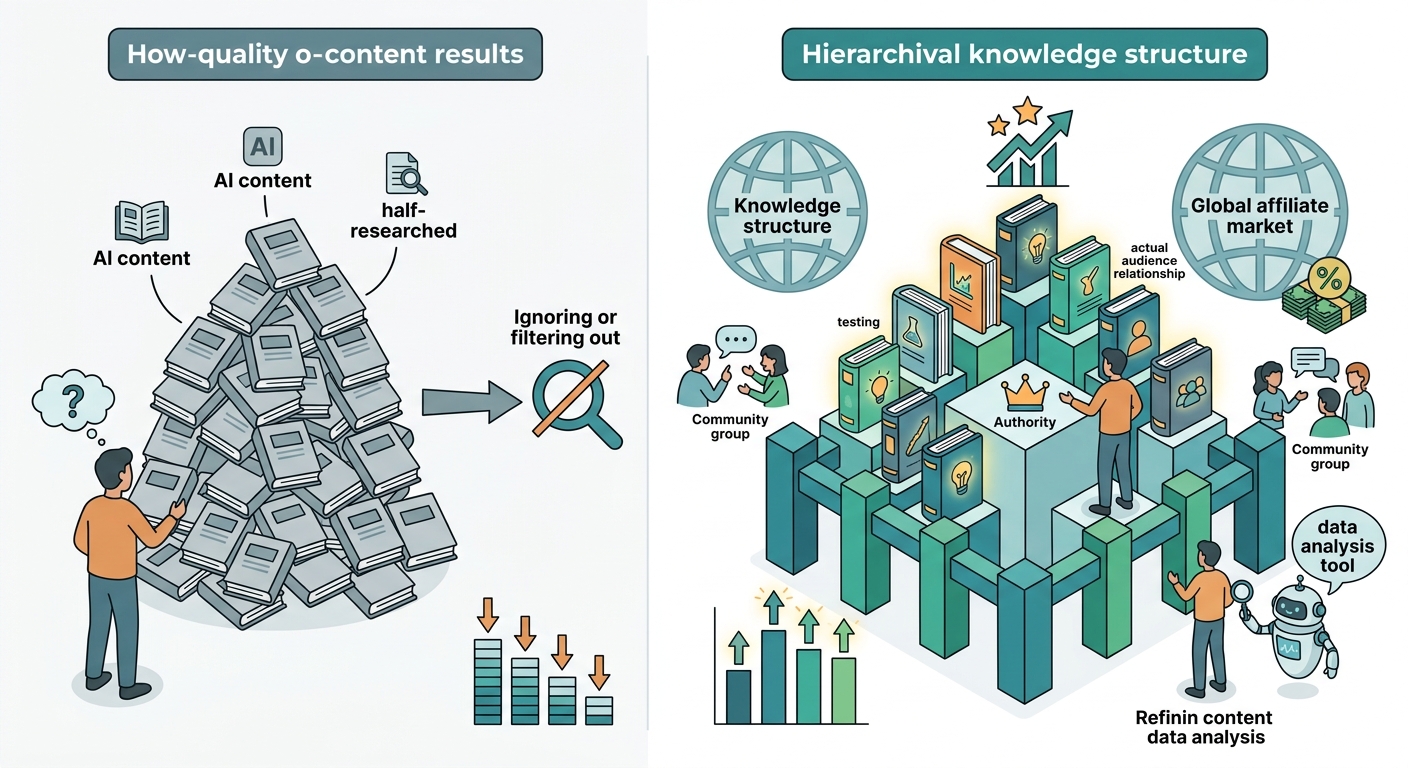
Topical authority beats random publishing. If you cover one area deeply, you are easier for both users and search systems to classify. Brand demand is now a defensive moat — direct searches, repeat visits, newsletter readership, and community attention all support search visibility indirectly. Freshness alone is weak. Freshness plus credibility performs better.
This is the playbook that is working right now. Pick a niche and go genuinely deep. Do not publish 40 half-researched articles. Publish 12 articles that are the definitive resource on each subtopic. Build something a reader would bookmark and return to, not just land on once from a search.
The biggest winners in affiliate marketing are those who use AI to work smarter — not those who use it to produce generic, low-quality content at scale. The global affiliate market is approaching $20 billion, and over 80% of brands actively run affiliate programs. The opportunity has never been bigger, but the competition for the low-effort slot has never been worse. The high-effort slot — deep expertise, real testing, honest reviews, actual audience relationships — is less crowded and more profitable than it has ever been.
The trust layer matters more than ever
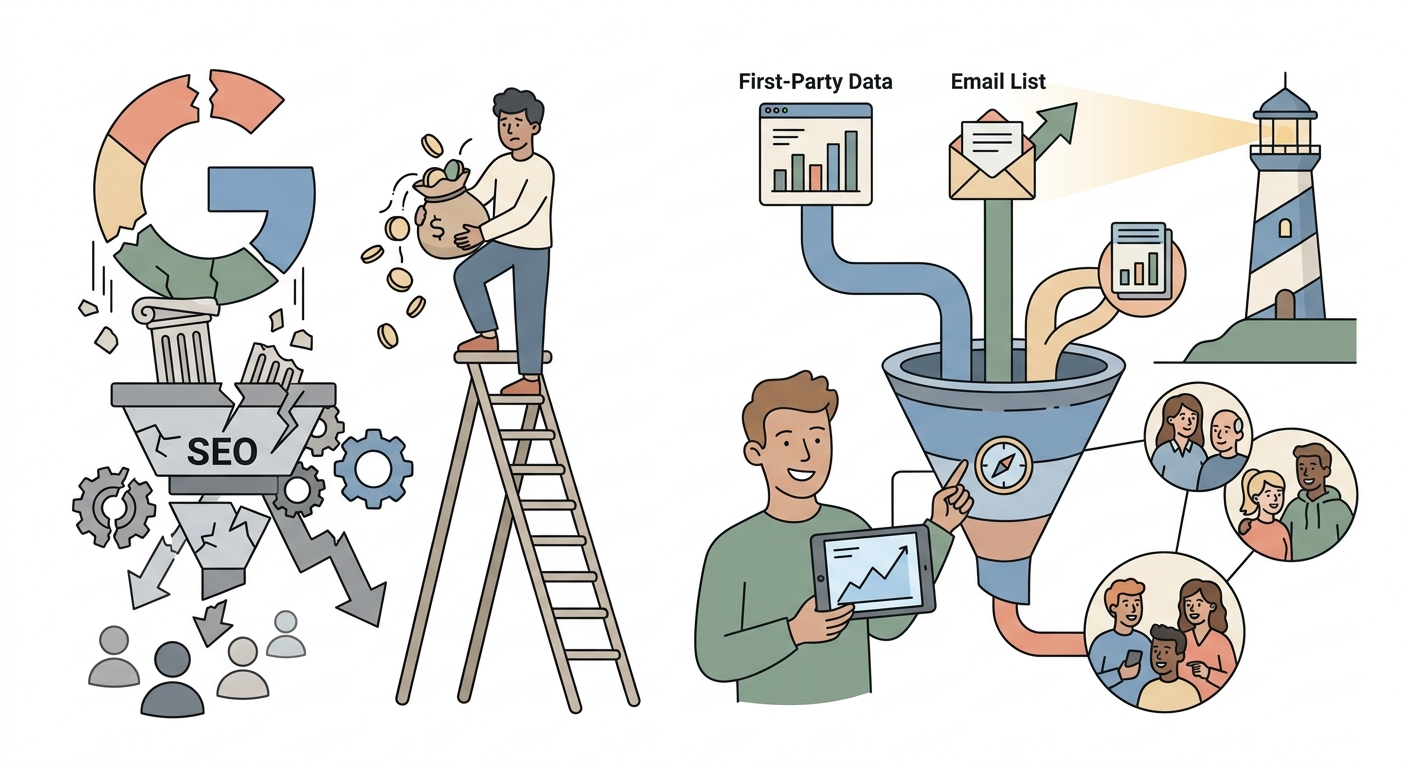
As platforms shift toward first-party data, email lists, and direct audiences, affiliates who track their performance data accurately and make data-driven optimization decisions will outperform those who rely on outdated methods. This is not just about SEO rankings. It is about building a direct relationship with readers so you are not one Google update away from losing everything.
💬 Quora insight: “Why is my affiliate site losing traffic in 2026?” is one of the most-searched questions in the affiliate marketing space on Quora right now. The highest-voted answers consistently point to one thing — Google is rewarding editorial identity, not keyword density.
🐦 Twitter/X signal: The conversation on X around affiliate marketing has visibly shifted. Three years ago the discussions were about link building. Now the threads getting the most traction are about building brands, email lists, and owned audiences. The algorithm is just catching up with what smart affiliates already knew.
The sites winning right now have a clear voice, a defined audience, genuine recommendations, and consistent publishing backed by real experience. That is the new baseline. Everything below that baseline is competing for a shrinking slice of search traffic.
Quick Links: