
Oxylabs

- Best for heavy scraping
- Premium data solutions
- Ideal for big data
- High success rates
Bright Data

- Best for big projects
- Powerful and reliable
- Great for large-scale scraping
- Ideal for enterprise use
Decodo

- Easy and affordable
- Great for small teams
- User-friendly and fast
- Perfect for beginners



Are you looking to collect product prices, customer reviews, or competitor data from sites like Amazon, eBay, Walmart, or Shopify stores?
An eCommerce scraper can help by automatically gathering the information you need, saving you hours of manual effort. Whether you're a business owner, researcher, or simply searching for the best deals, the right scraper can be a game-changer.
With so many options available, choosing the best one can be challenging. In this guide, we'll see the best Ecommerce scrapers, highlight their main features, and explain why they’re worth considering.
10 Best E-commerce Scrapers
1. Bright Data
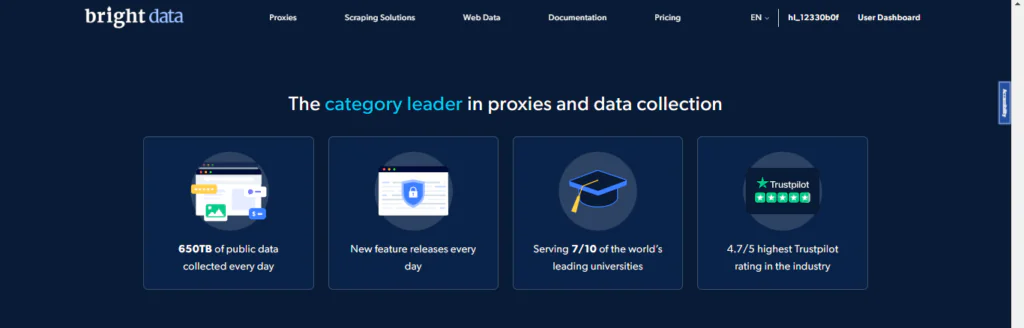
Bright Data is a leader in the web scraping industry, known for its powerful and flexible solutions. It offers a range of scraping tools designed to meet the needs of ecommerce businesses.
Bright Data provides access to the largest residential proxy network, which allows businesses to scrape data from websites without getting blocked.
This makes it an ideal choice for scraping product details, pricing information, reviews, and competitor analysis.
One of the standout features of Bright Data is its proxy network, which ensures that users can extract data anonymously and securely.
This is especially important for ecommerce businesses that need to gather sensitive data from competitors without triggering anti-scraping mechanisms.
Bright Data also provides real-time data collection, ensuring that the information is up-to-date.
Key Features
✅ Large proxy network (residential, mobile, and datacenter)
✅ Web unlocker to bypass captchas and bot detection
✅ Scraping APIs for structured eCommerce data
✅ Advanced customization with AI-driven automation
Pros
- Access to many proxies for data scraping.
- Consistently effective in gathering data.
- Can handle sites with anti-scraping tools.
- Always up-to-date information.
- Can be adjusted to specific needs.
Cons
- High cost, not ideal for small businesses.
- Can be tricky for beginners.
2. Decodo
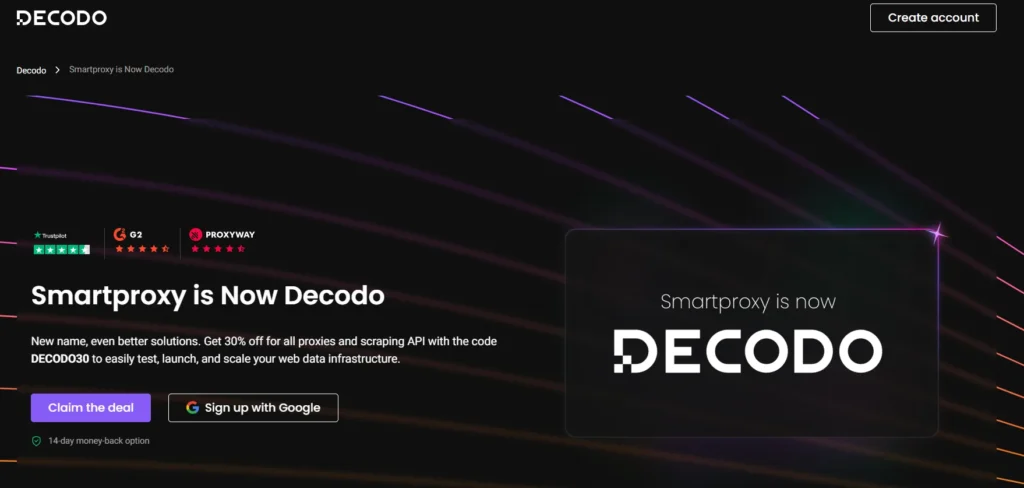
Decodo is another great ecommerce scraping tool that stands out for its simplicity and ease of use. Unlike other complex web scraping tools, Decodo offers an intuitive interface that makes it easy for businesses to set up and execute their scraping tasks.
It's a powerful option for those who want a straightforward, no-frills tool for extracting data from ecommerce websites.
The key feature of Decodo is its ability to scrape both structured and unstructured data. Whether you need to gather pricing, product specifications, or customer reviews, Decodo can handle it.
Its built-in data categorization and export options also make it easy to organize and use the scraped data in a way that benefits your ecommerce strategy.
Key Features
✅ Affordable and beginner-friendly proxy solutions
✅ Pre-built scraping APIs for Amazon, eBay, and other marketplaces
✅ Easy integration with different coding languages
✅ Reliable IP rotation to avoid getting blocked
Pros
- Simple interface, no coding needed.
- Quick to start scraping.
- Great for those with little technical experience.
- Can scrape both structured and unstructured data.
Cons
- Fewer advanced options compared to other tools.
- May struggle with sites that block scrapers.
3. Oxylabs
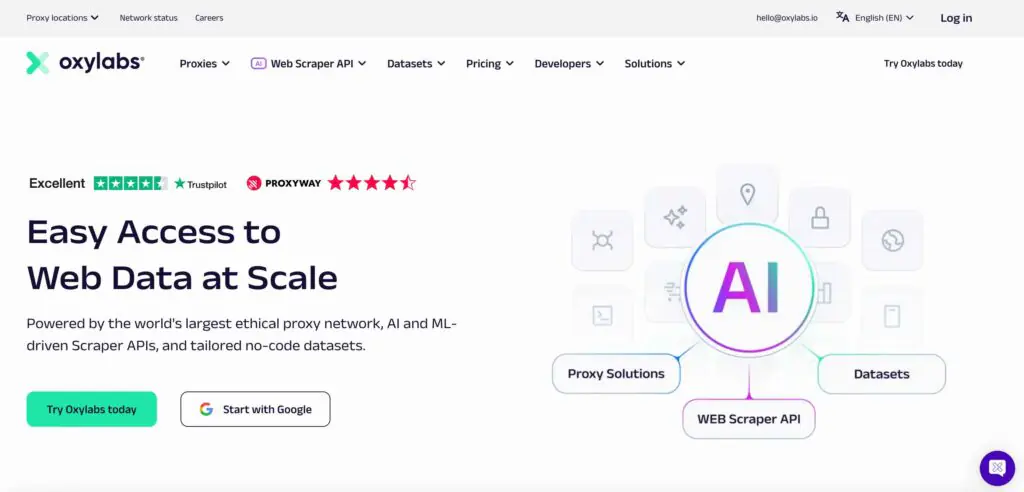
Oxylabs is another top-tier ecommerce scraper that has earned a strong reputation in the data extraction space. Known for its reliability and scalability, Oxylabs offers both residential and datacenter proxies, which help businesses extract data quickly and efficiently.
This flexibility is crucial for ecommerce companies that need to gather data from a wide range of websites, including those with strong anti-scraping measures.
Oxylabs is ideal for businesses that require large-scale data scraping. With access to over 100 million residential IPs, it offers unmatched coverage and reliability.
Additionally, Oxylabs' crawler tools can be customized to fit specific ecommerce scraping needs, whether you’re focusing on product prices, reviews, inventory levels, or competitor performance.
👉Read Detailed Oxylabs Review
Key Features
✅ High-quality residential and datacenter proxies
✅ Dedicated eCommerce Scraper API for Amazon, Walmart, etc.
✅ AI-powered anti-detection system
✅ Bulk scraping capabilities for large-scale data extraction
Pros
- Access to millions of IPs for scraping.
- Consistently high success rate in data extraction.
- Works well for large scraping tasks.
- Handles sites with anti-scraping measures.
- Perfect for large-scale data collection.
Cons
- Can be costly for smaller businesses.
- Might be difficult for beginners to use.
4. Apify
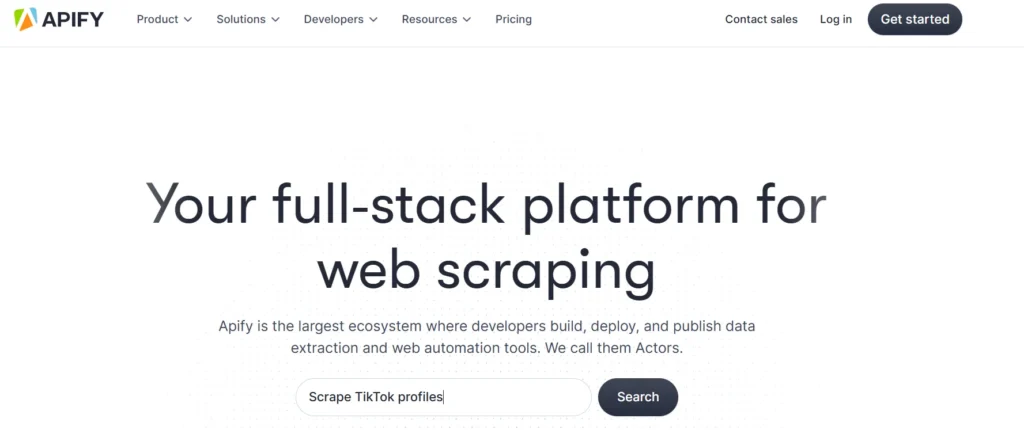
Apify is a popular web scraping platform that allows businesses to automate data collection from websites. It provides a set of pre-built tools (called actors) for common scraping tasks, which makes it easy for even non-technical users to start scraping ecommerce sites right away.
Apify’s tools are designed to be customizable, so businesses can tweak them to extract specific data based on their unique requirements.
One of the standout features of Apify is its ability to scale. Businesses can run scraping tasks on a small scale for a few products or scale up to scrape thousands of items from various ecommerce websites.
Apify’s cloud-based platform also means that businesses don’t need to worry about managing infrastructure or dealing with server maintenance.
Key Features
✅ No-code scraping with ready-made eCommerce scrapers
✅ Supports Amazon, eBay, and custom store scrapers
✅ Cloud-based automation and scheduling
✅ Exports data in multiple formats (JSON, CSV, Excel)
Pros
- Simple interface with pre-built tools.
- Can handle small or large data scraping tasks.
- Flexible to suit specific needs.
- No need to manage servers, accessible anywhere.
- Can run scraping tasks automatically.
Cons
- Free version has limited features.
- May take time to fully understand for beginners.
5. ParseHub
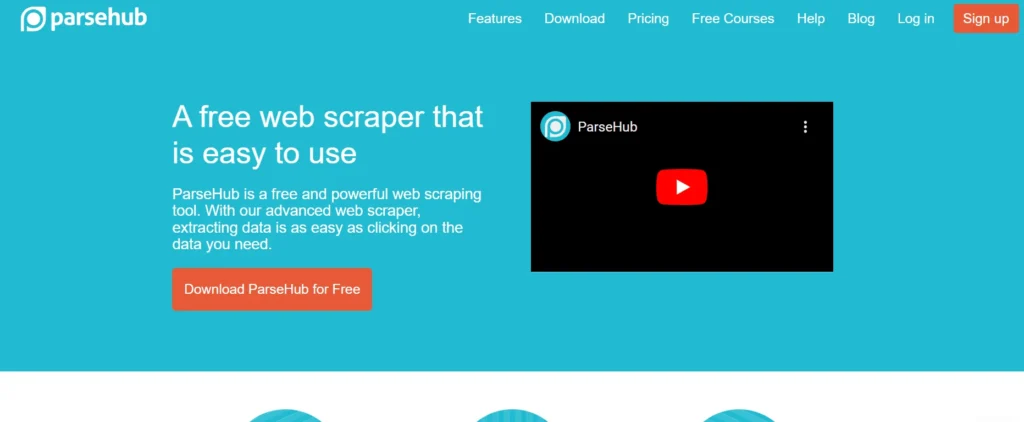
ParseHub is a powerful visual web scraping tool that allows users to extract data from websites using a point-and-click interface.
This makes it one of the best ecommerce scrapers for those who don’t have a technical background but still need to collect data from complex websites. ParseHub can handle dynamic content, meaning it can scrape data from websites that load data via JavaScript.
For ecommerce businesses, ParseHub is ideal for scraping product pages, customer reviews, price comparison sites, and more.
The visual interface makes it easy to set up scraping tasks, and the tool supports data export in multiple formats such as CSV, Excel, and JSON. This makes it a great choice for businesses looking to gather detailed product and market information quickly and efficiently.
Key Features
✅ Visual web scraper no coding needed
✅ Click-based data selection for easy setup
✅ Handles JavaScript-heavy websites
✅ Free plan available with limited runs
Pros
- Easy to use with a point-and-click interface.
- Can handle dynamic content like JavaScript.
- Allows you to adjust scraping settings.
- Supports different file formats like CSV and Excel.
- Offers a free version for basic use.
Cons
- Some features are only available in paid plans.
- Can take time when scraping a lot of data.
6. WebHarvy
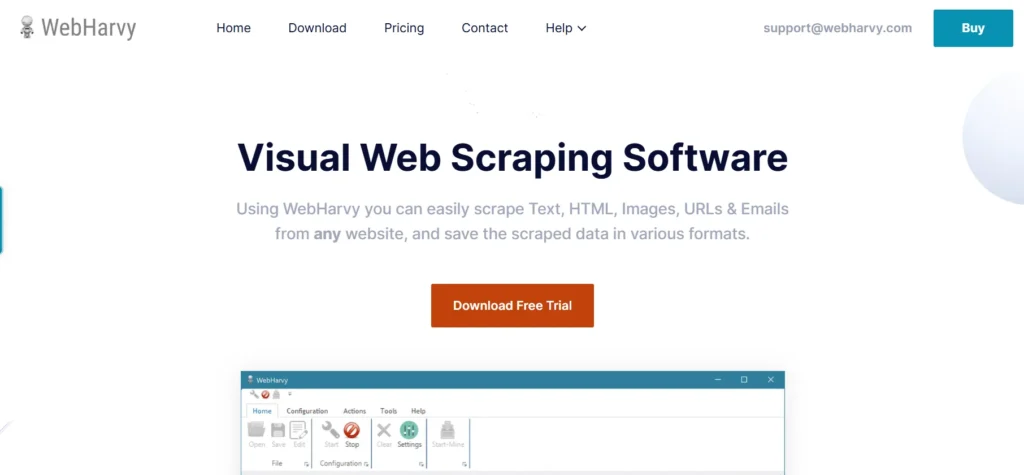
WebHarvy is a point-and-click web scraping tool designed specifically for ecommerce and other online data collection tasks. It's easy to use and doesn’t require coding skills.
One of the most useful features of WebHarvy is its ability to automatically detect patterns in the data, which allows users to scrape product listings, images, prices, and other structured data with minimal setup.
WebHarvy can be used to scrape a wide range of ecommerce websites, including popular platforms like Amazon, eBay, and Etsy.
It also supports automated scraping, which means businesses can schedule scraping tasks and have fresh data collected at regular intervals. This feature is particularly valuable for ecommerce businesses that need to monitor competitor pricing or track product availability over time.
Key Features
✅ Point-and-click scraping tool for beginners
✅ Automatically detects and scrapes data patterns
✅ Supports image and email scraping
✅ One-time purchase option (no recurring fees)
Pros
- Simple point-and-click interface.
- Finds data patterns automatically.
- Can run tasks at set times.
- Great for scraping ecommerce sites.
- Suitable for non-technical users.
Cons
- Customer service can be slow.
- Higher cost compared to some other tools.
7. ScraperAPI
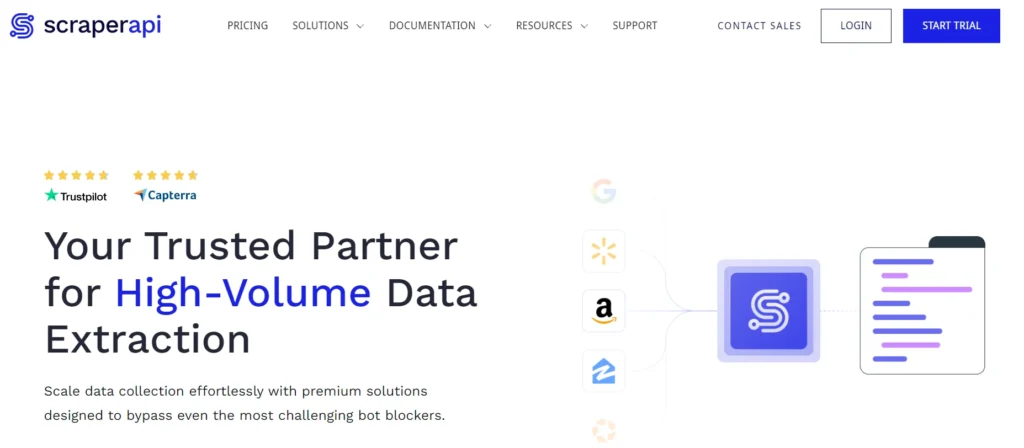
ScraperAPI is an API-based web scraping solution that makes it easy for developers to integrate web scraping into their applications.
It automatically handles proxy rotation, CAPTCHA solving, and other challenges that often arise when scraping ecommerce websites. With ScraperAPI, businesses can focus on collecting data rather than dealing with the technical aspects of scraping.
One of the key advantages of ScraperAPI is its speed and scalability. The API can handle large volumes of requests, making it suitable for ecommerce businesses that need to scrape data on a large scale.
ScraperAPI also supports scraping from JavaScript-heavy websites, which is essential for modern ecommerce platforms that rely heavily on JavaScript for dynamic content loading.
Key Features
✅ Simplifies scraping by handling proxies, captchas, and IP bans
✅ API-based approach (great for developers)
✅ Scales well for high-volume requests
✅ Supports headless browsers for complex sites
Pros
- Simple API for scraping data.
- Automatically rotates proxies and solves CAPTCHAs.
- Can handle large volumes of requests.
- Quick to integrate into projects.
- Can scrape dynamic content.
Cons
- Pricing can get high with large-scale scraping.
- Free plan has limited usage.
8. Octoparse
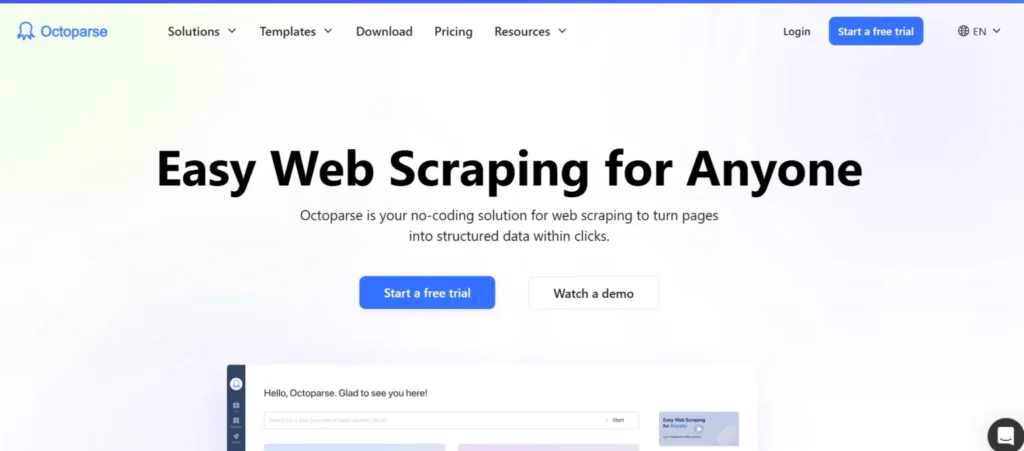
Octoparse is a popular ecommerce scraper that provides a visual web scraping interface, allowing users to extract data from websites without coding.
Octoparse’s drag-and-drop functionality makes it easy for users to create scraping workflows, even if they have no technical experience.
The tool is ideal for ecommerce businesses that need to scrape product details, pricing information, or reviews from various online stores.
Octoparse is capable of handling complex websites and can extract data from both static and dynamic pages. It also offers cloud-based scraping, which means businesses can schedule scraping tasks and access data from anywhere.
The platform supports exporting data in a variety of formats, including Excel, CSV, and database formats, making it easy to analyze and use the extracted data.
Key Features
✅ No-code, drag-and-drop web scraper
✅ Handles login, pagination, and infinite scrolling
✅ Cloud-based and local scraping options
✅ Free plan with basic features
Pros
- Easy to use with a visual interface.
- Suitable for beginners.
- Can handle both static and dynamic pages.
- Allows for remote scraping
- Supports CSV, Excel, and other formats.
Cons
- The free version has limited features.
- May take time with large data sets.
9. Helium 10 Xray
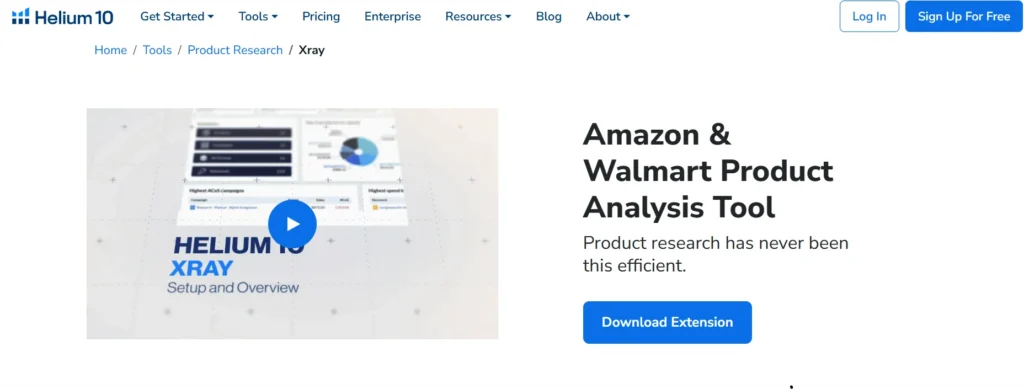
Helium 10 Xray is a powerful ecommerce tool specifically designed for Amazon sellers. It allows users to gather insights into Amazon products, including pricing, sales volume, reviews, and much more.
With Helium 10 Xray, businesses can conduct detailed competitor analysis and track product performance on Amazon, which is the largest ecommerce marketplace in the world.
One of the standout features of Helium 10 Xray is its ability to provide real-time data and in-depth analytics. This allows ecommerce businesses to make data-driven decisions about product pricing, inventory management, and sales strategies.
Helium 10 Xray also offers keyword research tools and market analysis features, making it a valuable tool for Amazon-based businesses.
👉Read Detailed Helium 10 Review
Key Features
✅ Amazon-focused product research tool
✅ Extracts sales estimates, price trends, and competition data
✅ Built specifically for Amazon sellers
✅ Part of the larger Helium 10 suite for eCommerce analytics
Pros
- Great for analyzing Amazon products.
- Provides up-to-date pricing and sales info.
- Simple to navigate and get insights quickly.
- Offers in-depth product data and trends.
- Ideal for tracking competitors’ performance.
Cons
- Limited to Amazon data.
- Some features are only available with a subscription.
10. Diffbot
Diffbot is an AI-powered web scraping tool that uses machine learning to transform unstructured data from websites into structured data.
It can be used to scrape a wide range of ecommerce websites and extract product information, reviews, pricing, and more.
Diffbot is particularly useful for businesses that need to gather data from a variety of sources, including ecommerce platforms, news sites, and blogs.
One of the most impressive features of Diffbot is its ability to automatically recognize and extract structured data from a wide range of webpages.
This means businesses don’t need to manually configure scraping rules for each site. Diffbot’s machine learning algorithms do the heavy lifting, making it a great choice for businesses that need to scale their data extraction efforts quickly.
Key Features
✅ AI-powered web scraping and data extraction
✅ Converts messy web pages into structured data
✅ Ideal for large-scale eCommerce intelligence
✅ Handles real-time monitoring and alerts
Pros
- Uses machine learning to extract data.
- Can scrape many types of sites.
- Organizes data without manual setup.
- Works well for large scraping projects.
- Can adjust settings for different needs.
Cons
- Can be costly for small businesses.
- May need technical knowledge for full use.
FAQs
An e-commerce scraper automates the collection of data from online retail platforms, including product details, prices, reviews, and inventory information.
Scraping publicly available data is generally legal. However, it’s essential to comply with the terms of service of the e-commerce platforms and local laws.
Key features include proxy rotation, CAPTCHA solving, dynamic content handling, scheduling, and scalability.
Free scrapers may work for small-scale tasks but often lack the scalability, reliability, and advanced features needed for large projects.
Quick Links:
- The Best Price Scraping Tools: Choose Your #1 Pick🔥
- The Best Facebook Scraping Tools: Which Is The Best One?
- Best Proxies for Web Scraping: Pick Your #1 Proxy ✨
- Best TikTok Scrapers: My Top Picks✅
Conclusion: Best E-commerce Scrapers
As ecommerce grows, having the right data scraping tools is crucial. Whether you're tracking competitor prices, trends, or customer reviews, the right scraper gives you an edge.
Tools like Bright Data, Decodo, Oxylabs, Apify, ParseHub, WebHarvy, ScraperAPI, Octoparse, Helium 10 Xray, and Diffbot offer powerful features for businesses.
When choosing a scraper, consider ease of use, scalability, and the type of data you need. Whether you're a large business or a startup, these tools can help you stay competitive.
Using these scrapers will help you gain insights, improve strategies, and grow your business.