
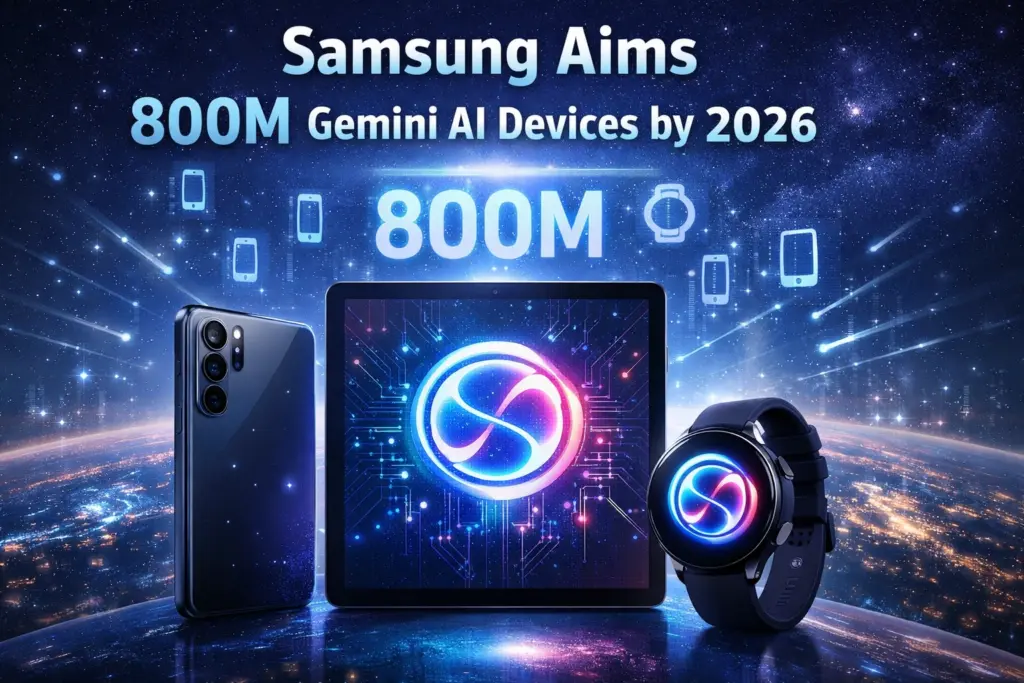
Samsung Electronics has announced an ambitious target: doubling its footprint of mobile devices equipped with Google's Gemini AI to 800 million units by the end of 2026.
This expansion will bring generative AI features — including real-time translation, advanced image editing, and proactive digital assistance — from Samsung's flagship Galaxy S series down to mid-range and budget devices across the global Android ecosystem.
The partnership between Samsung and Google is deepening as both companies compete to set the standard for on-device AI experiences.
For hundreds of millions of users in markets like India, Southeast Asia, and Africa who access the internet primarily through mid-range Android phones, Gemini at the operating system level will be their first sustained interaction with a capable AI assistant.
Also read about: Google Gemini 2.0 Pro Google Workspace Integration Rolls Out
Samsung Aims 800M Gemini AI Devices: What Does This Means
The commercial implications are significant for anyone considering audience reach.
When 800 million Samsung devices have Gemini built in — activated by default, no app download required — the percentage of the global smartphone user base interacting with AI assistants daily will jump dramatically.
For content publishers, this accelerates the timeline for when “optimising for AI citations” becomes as important as “optimising for Google search.”
Discussions on X from mobile marketing analysts point out that Gemini integration at the device level also means Google's contextual data access deepens considerably — Gmail, Photos, YouTube, and browsing history informing AI recommendations at scale.
For brands running personalised campaigns, this creates both an opportunity (more precise contextual targeting) and a challenge (users who rely on Gemini for product recommendations may never open a browser at all).
More News To Read: