
AdSense is our first recommendation for Best Blogger Ad Networks starting with advertising. Journey by Mediavine is worth comparing as an editorial audience grows. Raptive and Mediavine suit qualifying established blogs, while WordAds is an option for eligible WordPress.com sites. Choose the service that fits your blog's stage and how you want readers to experience it.
| Best For | First advertising setup | Growing editorial blogs | Established content sites |
| Published entry consideration | Content and policy eligibility | 1,000 qualifying sessions in 30 days | 25,000 monthly pageviews plus conditions |
| What to weigh | How much you want to manage yourself | Audience geography and self-support | Layout and service fit |



You put time into a blog post because you want someone to read it, use it and come back. Advertising should help fund that work.
The trouble starts when the page becomes harder to use than the advice it contains. A recipe gets buried. A tutorial shifts while someone follows a step. A product recommendation ends up competing with several unrelated distractions.
The best ad networks for bloggers offer a workable balance between earnings and the reading experience. They also have entry rules you can meet and a level of management that suits your time.
Here are seven options for different stages of a blog, from an early self-service setup to a more established publishing business.
Best blogger ad networks: Quick comparison
Compare the best ad networks for bloggers based on approval requirements, traffic thresholds, ad formats, payout options, and earning potential to find the right platform for monetizing your blog and generating consistent revenue.
Service | Best for | Published entry consideration | What to weigh |
|---|---|---|---|
Google AdSense | First advertising setup | Content and policy eligibility | How much you want to manage yourself |
Journey by Mediavine | Growing editorial blogs | 1,000 qualifying sessions in 30 days | Audience geography and self-support |
Raptive | Established content sites | 25,000 monthly pageviews plus conditions | Layout and service fit |
Mediavine | Blogs with an existing ad business | $5,000 annual ad revenue plus conditions | Full ad-management arrangement |
Blogs with a defined subject | Publisher programme acceptance | Contextual fit | |
WordAds | Eligible WordPress.com blogs | Premium or higher, custom domain and PayPal | Hosting cost and advertising controls |
Adsterra | Testing alternative ad formats | No stated entry traffic minimum | Reader experience |
The list includes ad-management services as well as ad networks because bloggers often compare them for the same decision: who should handle advertising on the site?
7 Best ad networks for bloggers in detail
Explore the 7 best ad networks for bloggers, comparing their key features, approval requirements, ad formats, payment methods, and earning potential to help you choose the right platform to monetize your blog and grow your advertising revenue.
1. Google AdSense: Best for a first advertising setup
AdSense is our starting recommendation for bloggers who want to try advertising without immediately moving to a managed service.
Its eligibility guidance centres on original content and policy compliance, rather than a published numerical traffic minimum.
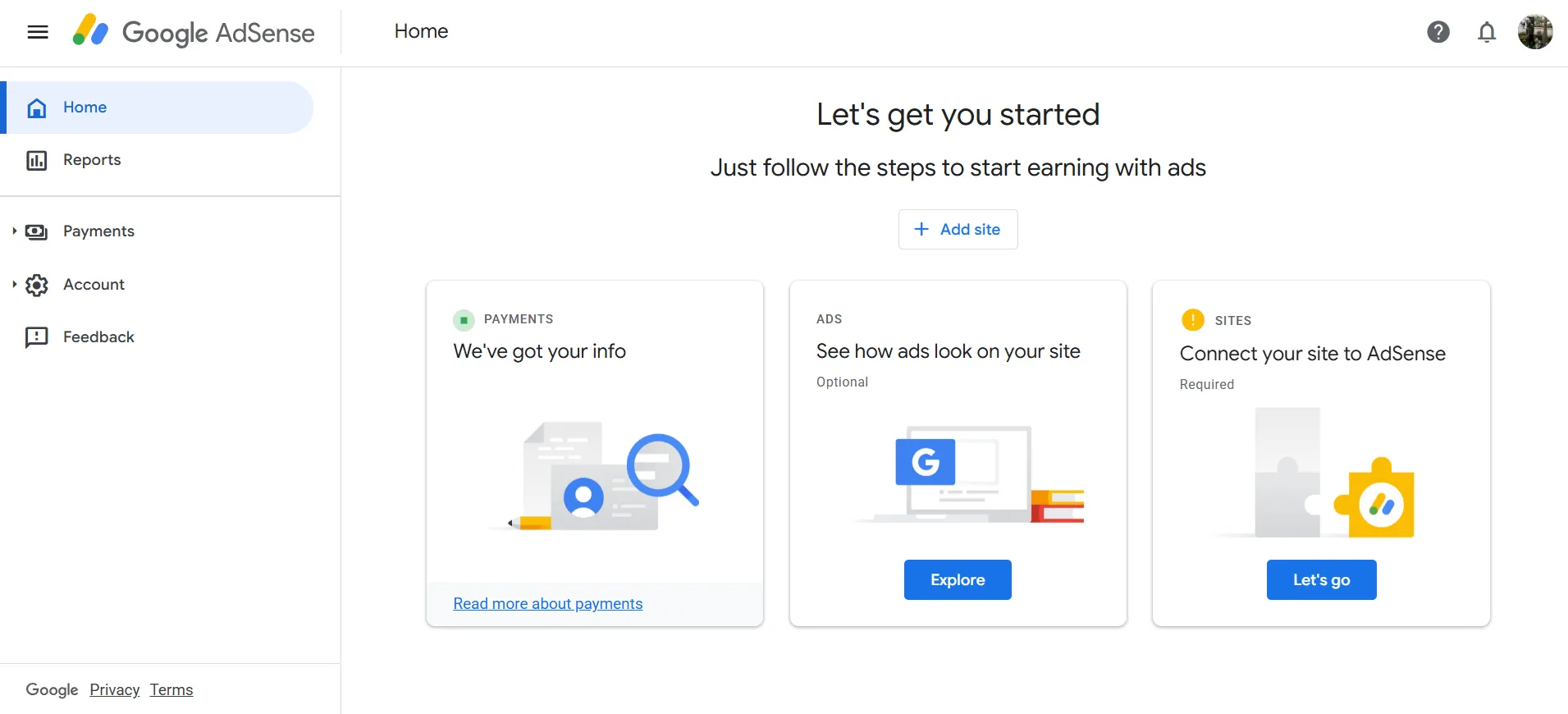
The advantage at this stage is learning. You can see how advertising fits your pages and whether it generates enough value to deserve more attention.
Keep your important content easy to reach. On a tutorial, that may mean preserving the flow between steps. On a review, it may mean keeping the comparison and buying advice readable.
Pros
- A practical entry point for original-content blogs.
- Suitable for learning how ads affect the site.
Cons
- Review and policy requirements still apply.
- You need to make sensible placement decisions.
Our verdict: Start with AdSense if you want to learn before adopting a larger advertising arrangement. Build around the article, rather than making the article work around the ads.
2. Journey by Mediavine: Best for a growing editorial blog
Journey is a self-supported ad-management option for growing publishers. Its current criteria include 1,000 qualifying Tier 1 sessions within 30 days and suitable original content.
It is worth comparing once your blog has an audience that matches the programme's requirements.
Before applying, look beyond the site's total traffic. Identify the countries, posts and sources that contribute to the qualifying audience. That is a useful exercise even if you decide to wait.
Pros
- A defined route for growing editorial sites.
- A service designed for publishers below the main Mediavine revenue requirement.
Cons
- Qualifying sessions matter more than an undifferentiated total.
- Self-supported does not mean every task is handled for you.
Our verdict: Consider Journey when your blog meets the stated requirements and you understand the service model. Ask what you will need to maintain before assuming it is hands-off.
3. Raptive: Best for qualifying established blogs
Raptive's entry point is 25,000 monthly pageviews. For sites below 100,000 pageviews, it requires at least 50% of traffic from the US, UK, Canada, New Zealand or Australia. The domain must also be at least six months old, alongside further content and technical requirements.

That makes it relevant earlier than some older comparisons suggest, but it is not open to every blog at the pageview threshold.
The decision should include the proposed ad layout. Show the provider representative posts: a long guide, a short update and any page where readers complete a task.
Pros
- A published entry route for established smaller sites.
- Clear audience and content criteria to check before applying.
Cons
- Traffic geography can be a significant restriction.
- Pageviews alone do not qualify the blog.
Our verdict: Put Raptive on your shortlist once you meet the full criteria. Ask how its approach would work on your real pages, not just on an example layout.
4. Mediavine: Best for blogs already earning from advertising
Mediavine's main programme currently requires at least $5,000 in annual ad revenue, alongside content, traffic and reader-experience standards.
That changes how a blogger should evaluate eligibility. A traffic milestone copied from an old article may no longer describe the current application route.
For an established blog, the next step is a business comparison. Review what you earn now, how much work the setup takes and what support you want from a managed arrangement.
Use a representative period. A seasonal spike may not describe the blog's ordinary performance.
Pros
- A programme focused on established publishing businesses.
- A stated revenue-based application requirement.
Cons
- Unsuitable as a default choice for a blog with no ad earnings.
- The overall agreement matters as much as the entry number.
Our verdict: Compare Mediavine if advertising already contributes meaningful revenue and you want to evaluate professional management. Bring your actual figures and questions about workload to the discussion.
5. Media.net: Best for a blog with a clear subject and audience
Media.net offers a publisher programme built around contextual advertising and other demand.
For a focused blog, that makes it an alternative worth discussing. A site about home repairs or software tutorials can explain the subjects readers come for and the context in which advertising would appear.

Do not assume a relevant-looking ad automatically produces stronger earnings. The placement still needs to work on your pages, and the commercial terms need to suit the business.
Pros
- A contextual option for topic-focused publishing.
- A useful comparison alongside broader display advertising.
Cons
- Acceptance and terms need confirmation.
- Results cannot be inferred from the blog's niche alone.
Our verdict: Consider Media.net if your blog has a clear identity and useful content. Ask what formats would run and compare the whole arrangement with your current setup.
6. WordAds: Best for an eligible WordPress.com blog
WordAds is WordPress.com‘s advertising programme. Its requirements include a public site, a Premium plan or higher, a primary custom domain and a PayPal account. Sites marked mature are excluded.
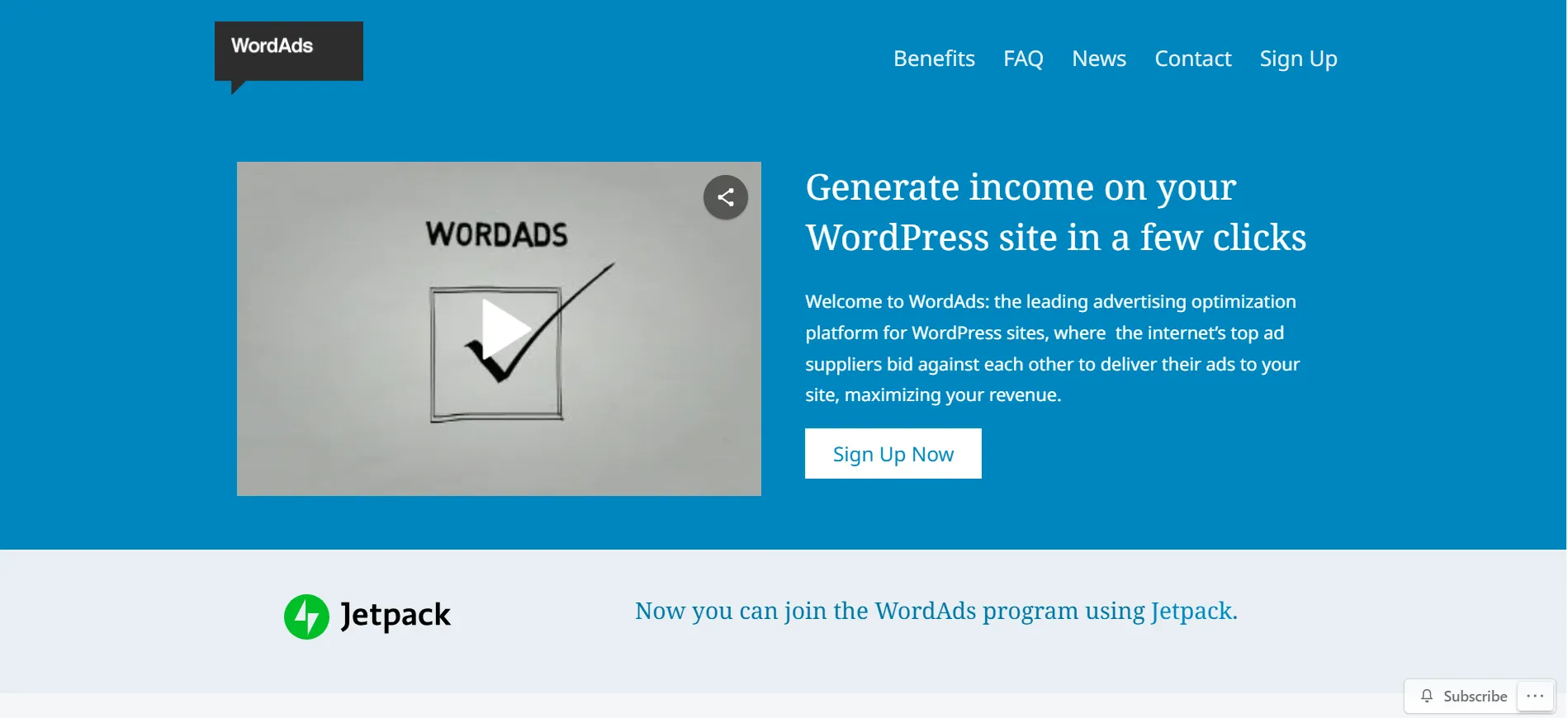
It deserves a look if you already use an eligible WordPress.com setup. The route is different from choosing a provider for a separately hosted WordPress installation.
Avoid upgrading solely because advertising sounds like an easy way to recover the cost. Estimate what the site might earn and consider the other features you would use.
Pros
- An advertising option within the WordPress.com environment.
- Clearly stated hosting and account requirements.
Cons
- Plan and domain costs belong in the decision.
- It is not an interchangeable setup for every WordPress site.
Our verdict: Compare WordAds if you already meet the hosting requirements. Treat any plan upgrade as a business expense that needs its own justification.
7. Adsterra: Best for a selective alternative-format test
Adsterra gives publishers several formats to investigate, making it an alternative for bloggers who want to test a particular placement.
It is not our default recommendation to switch on every available format across a personal or editorial blog.
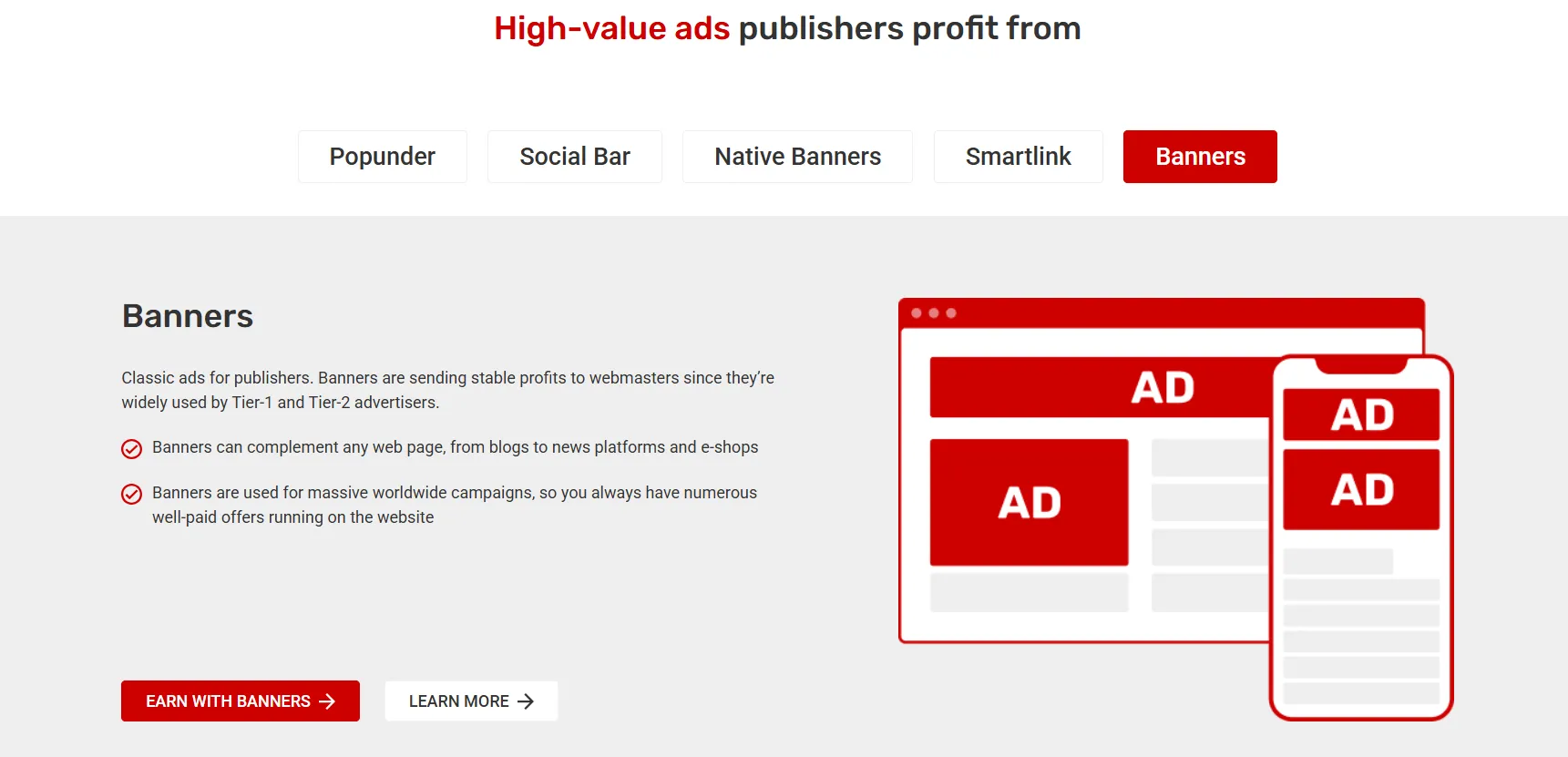
Start by looking at the relationship you have with readers. A site built around considered advice has different needs from a page used once for a quick utility.
A trial should be easy to remove if it creates confusion or gets in the way of the article.
Pros
- A broader choice of advertising experiences to investigate.
- Can be evaluated through a limited placement trial.
Cons
- Some formats may be too disruptive for a reading-led site.
- Additional ad revenue needs to be weighed against other blog income.
Our verdict: Consider Adsterra for a specific, controlled experiment. Keep the formats that support the blog and remove those that weaken the experience.
Should bloggers measure ad revenue alone?
No. Ads may sit alongside affiliate commissions, products, sponsorships and email signups. An advertising change should be judged against the business as a whole.
Here is a hypothetical monthly comparison:
Income source | Original layout | More aggressive ad layout |
|---|---|---|
Advertising | $150 | $220 |
Affiliate commissions | $250 | $150 |
Combined income | $400 | $370 |
The second layout earns more from ads but less overall. These figures illustrate the calculation; they are not results from a network test.
Keep track of the important actions on your blog. For some publishers, those are purchases. For others, they include readers joining an email list or returning to another article.
If you cannot tell what changed, keep the trial smaller and gather a clearer comparison before rolling it out.
Which blog pages need extra care?
Protect the part of the page the visitor came to use.
For a recipe, that may be the ingredients and instructions. For a software tutorial, it may be the code or download guidance. For a buying guide, it may be the comparison and recommendation.
Check mobile pages carefully. A placement that looks modest on a desktop can occupy much more of a phone screen.
Also review any page that earns through another route. A strong affiliate landing page may not benefit from additional advertising, even if the rest of the blog does.
How should you compare a managed service with a self-service network?
Ask what changes in your day-to-day work:
Who chooses and updates placements?
What can you exclude from advertising?
Who investigates problematic ads?
What are the payment terms?
Are there exclusivity or notice requirements?
What happens if you change your theme or redesign the site?
Keep a copy of the agreement and the answers. A promise that support is excellent is less useful than knowing who handles a specific problem.
The right service should solve a problem you actually have. If the existing setup is easy to run and works well, changing providers needs a clear reason.
FAQs: Best Blogger Ad Networks
AdSense is our first general recommendation for a content blog starting with ads. The right choice still depends on eligibility, format fit and the amount of management you are prepared to do.
When it meets the current qualifying-session and quality requirements. Check audience countries as well as volume. A total worldwide session count does not tell the whole story.
Its current main-programme application rule uses annual ad revenue alongside quality criteria. Evaluate that published rule rather than relying on an old traffic threshold from another article.
Often, subject to programme rules and appropriate disclosures. Measure the combined result and make the purpose of each link clear. More advertising income is not an improvement if total income falls.
No. The WordPress.com programme has specific plan, domain and account requirements. Identify your hosting arrangement before assuming those instructions apply to your site.
Not automatically. Some pages are more useful without them, especially where readers complete a task or make a valuable purchase decision. Review the role of the page before adding placements.
Quick Links:
Which blogger ad network should you choose?: Best Blogger Ad Networks
For an early-stage blog, compare AdSense first. Add Journey as your qualifying audience grows, and assess Raptive or Mediavine when you meet their current requirements.
Choose the provider that fits the way you publish and the way readers use your content. A blog needs both income and a reason for people to come back.