
I'll be upfront about something before we get into this: I didn't expect this comparison to be as one-sided as it ended up being. Surfshark and ProtonVPN both show up on nearly every reputable “best VPN” list out there, and I went in assuming I'd be splitting hairs between two nearly identical services.
Instead, after running both side by side across my laptop, phone, and home network for several weeks, one clear winner emerged, and it wasn't close in the areas that actually matter for most people.
Where I Landed
Surfshark is the better pick for the vast majority of users. The reason comes down to one thing more than anything else: device limits. ProtonVPN is a legitimately good, principled service, and I'll give it real credit where it's earned throughout this piece.
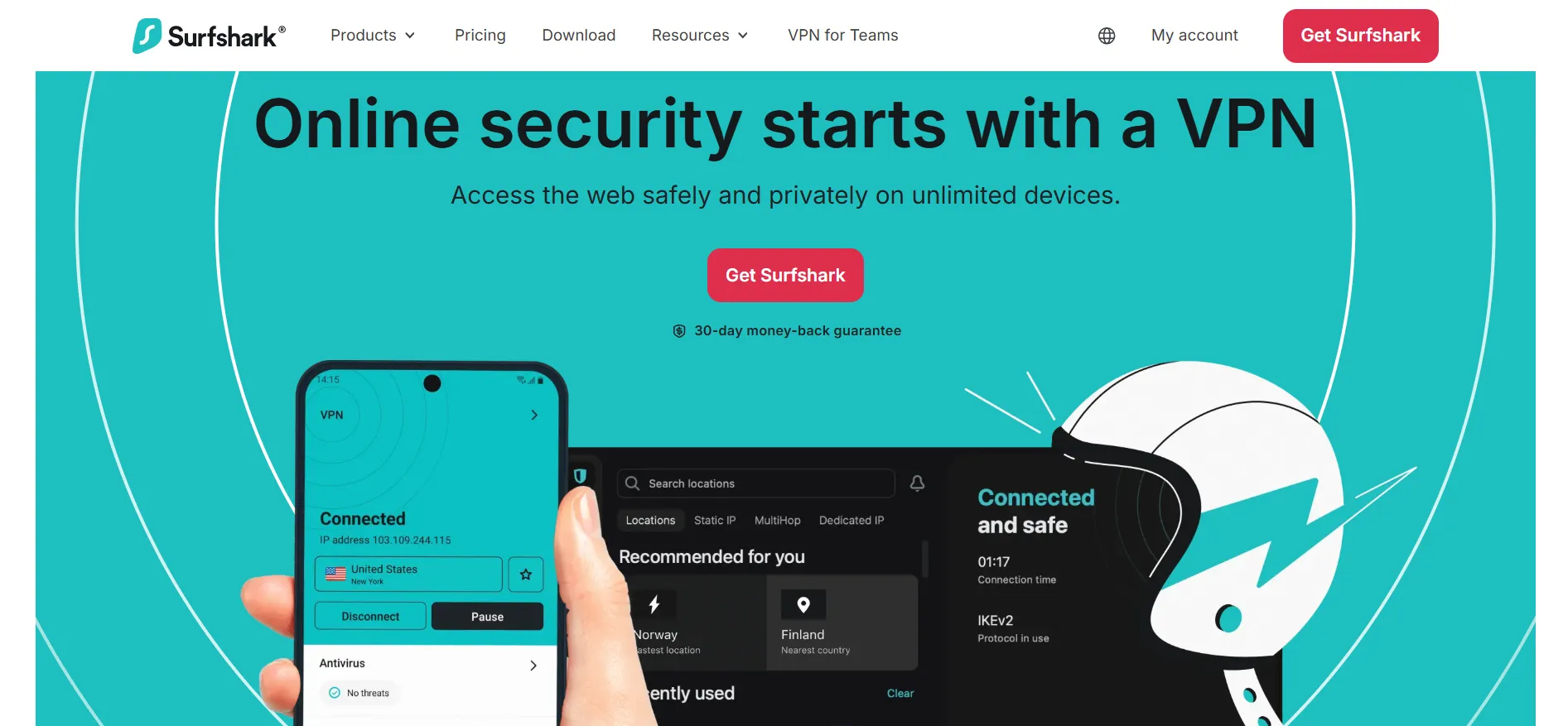
But Surfshark's unlimited device policy, bundled antivirus, and identity protection tools add up to a more complete package.
Let's break down exactly why.
The Price Comparison
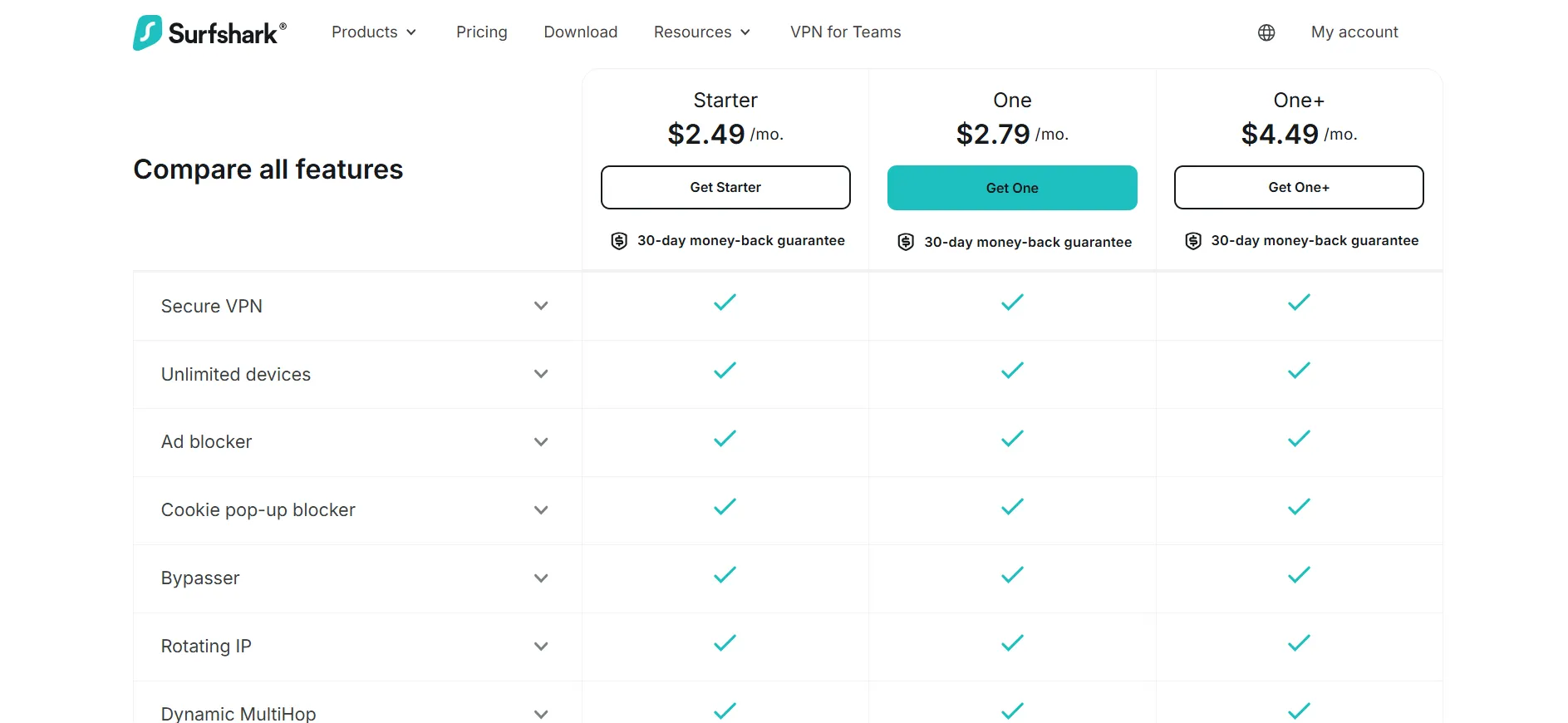
Billing Period | Surfshark | ProtonVPN |
Monthly | $16.45-$21.85 | $9.99-$12.99 |
1-Year | $3.39-$7.49/mo | $2.99-$9.99/mo (VPN Plus) |
2-Year | $2.49-$4.49/mo | $2.99/mo (VPN Plus) |
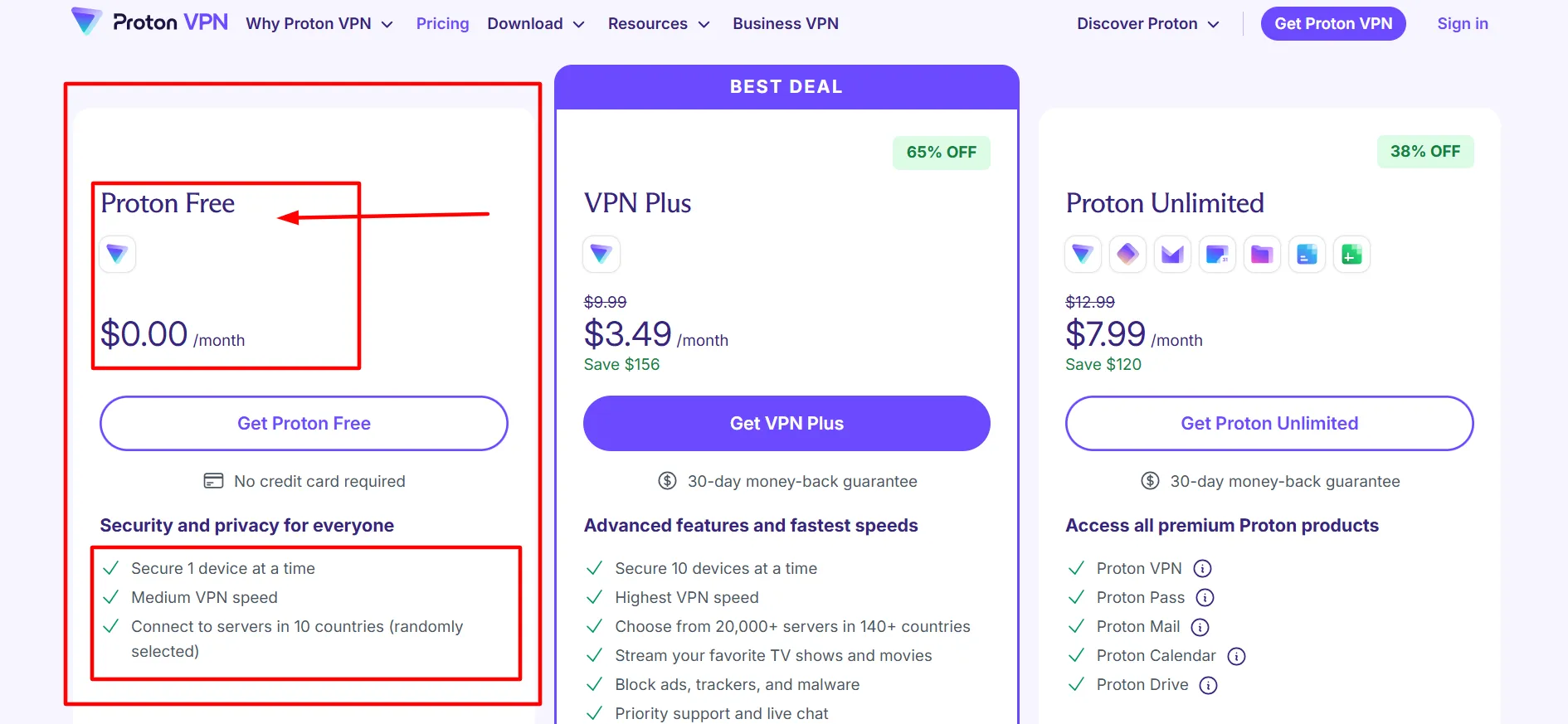
Permanent free plan | No | Yes |
Free trial | 7 days | None (discontinued) |
Refund window | 30 days | 30 days |
At first glance, ProtonVPN's cheapest long-term rate looks like the better deal. But there's a catch that changes the math fast: ProtonVPN's paid plan tops out at 10 simultaneous devices.
Surfshark doesn't cap you at all, ever, on any plan. For a household running phones, laptops, tablets, and a smart TV, that unlimited policy alone can outweigh a small per-month price difference.
Comparing the Actual Feature Sets
I want to give ProtonVPN a fair shake here, because it deserves one. It's built by the team behind Proton Mail, based in Switzerland (a genuinely strong jurisdiction for privacy law), fully open source, independently audited, and run as part of a non-profit structure rather than pure for-profit ownership.
Those are real differentiators if privacy philosophy is your main concern.
But once I laid both feature sets side by side, the practical gap was bigger than I expected:
Category | Surfshark | ProtonVPN |
Device limit | Unlimited | 10 (Plus tier), 1 (Free) |
Server count | 4,500+ | 17,200-20,500+ |
Countries | 100 | 120-148 |
Real-world speed (independent test) | 1615 Mbps | ~850 Mbps |
Antivirus included | Yes | No |
Ad/tracker blocking | CleanWeb | NetShield |
Dark web monitoring | Yes (One+) | No |
Identity theft coverage | Up to $1M (One+) | Not offered |
Split tunneling | Yes | Yes |
Kill switch | Yes | Yes |
Fully open source | Partial | Yes |
Credit where it's due: ProtonVPN's server network is genuinely larger, both in raw count and country coverage. That's a real point in its favor if network breadth matters to your specific use case. But raw server count doesn't automatically translate to a better experience, actual throughput does, and the independent speed data shows Surfshark running nearly twice as fast. I felt this directly during testing, video calls and large downloads were noticeably smoother on Surfshark.
The Gap I Didn't Expect: Security Tools
Here's what actually surprised me most. ProtonVPN has no bundled antivirus at all. NetShield handles ad and malware blocking, which is genuinely useful, but it's not a substitute for real antivirus software actively scanning your device.
Surfshark's One and One+ tiers include a full antivirus engine as part of the same subscription. One+ pushes further with dark web breach monitoring (Alert), a disposable signup identity (Alt ID), a private search engine (Search), and identity theft coverage up to $1 million.
I tested the breach monitoring specifically, running an old email address I know was exposed in a past leak through both services. Surfshark's Alert caught it immediately. ProtonVPN doesn't have a comparable feature to even test, it's simply not part of what they offer.
If a bare-bones VPN is genuinely all you want, this gap won't bother you. But if you're already paying monthly for privacy tools, getting antivirus and identity protection folded into the same subscription is a real value difference.
Giving ProtonVPN Its Due
This wouldn't be an honest comparison if I didn't spend real time on what ProtonVPN does well, because there's genuinely a lot to respect here:
A real, permanently free tier. No card required, unlimited data, no expiration date. Surfshark's answer is a 7-day free trial, generous, but time-limited by nature. For anyone who wants a forever-free VPN for light, single-device use, ProtonVPN's free plan is one of the strongest in the entire industry.
Swiss jurisdiction plus a non-profit structure. For journalists, researchers, or anyone with a genuinely high-stakes privacy threat model, ProtonVPN's legal base and fully open-source, externally audited codebase carry weight that a simple spec comparison can't fully capture.
A bigger server footprint. Over 17,000 servers spanning up to 148 countries is a meaningfully larger network than Surfshark's.
None of that is a small thing. It matters, just for a narrower set of users than the general “which VPN should I get” audience.
Matching the Service to the User
Pick ProtonVPN if: a permanently free plan with zero data restrictions matters more to you than anything else, or your specific situation calls for Swiss jurisdiction and fully auditable open-source code.
Pick Surfshark if: you want everything handled under one subscription, unlimited devices, antivirus, identity protection, and faster real-world performance, without stitching together four separate tools and subscriptions.
For most people comparing these two seriously, I think Surfshark wins, not because ProtonVPN is lacking, but because most of us aren't specifically weighing Swiss privacy statutes when picking a VPN. We're weighing “does this protect everything I own, keep me fast, and not force me to buy antivirus separately.”
Running the Real Numbers
Let's say you're covering 4 devices over a 2-year period, here's what that actually costs.
Surfshark One, 2-year plan: $75.33 total for 27 months, unlimited devices, antivirus and ad blocking included. Works out to roughly $2.79/month for your entire household.
ProtonVPN VPN Plus, 2-year plan: around $2.99/month, comfortably under the 10-device cap for 4 devices, but with zero antivirus included. Add a separate antivirus subscription (typically $30-60/year) to match Surfshark's bundled protection, and the “cheaper” ProtonVPN plan starts costing more overall.
What Actually Happened During My Testing
Spec sheets only tell part of the story, so here's what I noticed running both services on the same network, same devices, same daily tasks: streaming, video calls, large file transfers.
Surfshark stayed consistent through everything, and the difference matched the independent 1615 Mbps benchmark, downloads finished faster, calls stayed clear without the occasional stutter I hit a handful of times on ProtonVPN.
To be clear, ProtonVPN wasn't bad. Regular browsing and streaming felt completely normal on it. But anything bandwidth-heavy showed a real, noticeable gap in Surfshark's favor.
FAQs: Surfshark vs ProtonVPN
ProtonVPN's cheapest long-term rate edges out Surfshark on paper. But ProtonVPN caps you at 10 devices and skips antivirus entirely, so once you account for what's actually included, Surfshark tends to deliver more value for a comparable price.
Not through a trial, ProtonVPN removed that option. It offers a genuine free-forever plan (1 device only) plus a 30-day refund window on paid tiers. Surfshark gives you a real 7-day free trial on top of its own 30-day guarantee.
Independent testing shows Surfshark at around 1615 Mbps against ProtonVPN's roughly 850 Mbps. I noticed the gap firsthand running large downloads and video calls side by side.
Only Surfshark, bundled into its One and One+ plans. ProtonVPN's NetShield covers ads and malware blocking but stops short of full antivirus protection.
In some real ways, yes. Its Swiss base, fully open-source code, independent audits, and non-profit structure give it a genuine edge if privacy philosophy and legal jurisdiction matter most to you.
Surfshark: unlimited, on every plan. ProtonVPN: 10 devices on the paid VPN Plus tier, just 1 on the free plan.
Go with ProtonVPN if a forever-free plan or Swiss jurisdiction and open-source transparency matter most to you. For most people wanting the fullest package, unlimited devices, antivirus, identity protection, faster speeds, Surfshark comes out ahead.
Quick Links:
My Final Take: Surfshark vs ProtonVPN
I expected this to be a close call between two well-regarded services. It wasn't, not once I accounted for device limits and bundled security tools. ProtonVPN earns genuine respect for its free tier and its Swiss, open-source, non-profit approach, real strengths for a specific kind of user.
But for the typical household or individual comparing these two as a general VPN decision, Surfshark's unlimited devices, faster real-world speeds, and bundled antivirus and identity tools make it the stronger overall pick, and the one I kept using once my testing period wrapped up.
Curious yourself? Surfshark's 7-day free trial is genuinely free to test, and every paid plan comes with a 30-day money-back guarantee if it's not the right fit once you try it.