
If you're curious about Samsung's massive influence in the tech world, you're in the right place. This article breaks down the most important Samsung statistics that show just how dominant this South Korean giant has become.
From smartphones to TVs, semiconductors to home appliances, Samsung touches nearly every corner of the electronics market. Let's dive into the numbers that tell Samsung's remarkable story.
Samsung's Global Market Position
Samsung stands as one of the world's most valuable brands, and the statistics back this up impressively.
| Metric | Value |
|---|---|
| Brand Value (2024) | $99.7 billion |
| Total Employees | 270,000+ |
| Countries of Operation | 74+ countries |
| Annual Revenue (2023) | $234 billion |
| R&D Investment (Annual) | $22+ billion |
| Global Continents | 6 continents |
The company's brand value reached approximately $99.7 billion in 2024, making it one of the top technology brands globally.
Samsung employs over 270,000 people worldwide, operating in more than 74 countries across six continents.
In terms of revenue, Samsung generated around $234 billion in 2023, showcasing its massive scale of operations.
The company invests heavily in research and development, spending over $22 billion annually to stay ahead of competitors.
Also read about: iPhone User Statistics 2026: Latest Data & Trends
Smartphone Market Dominance
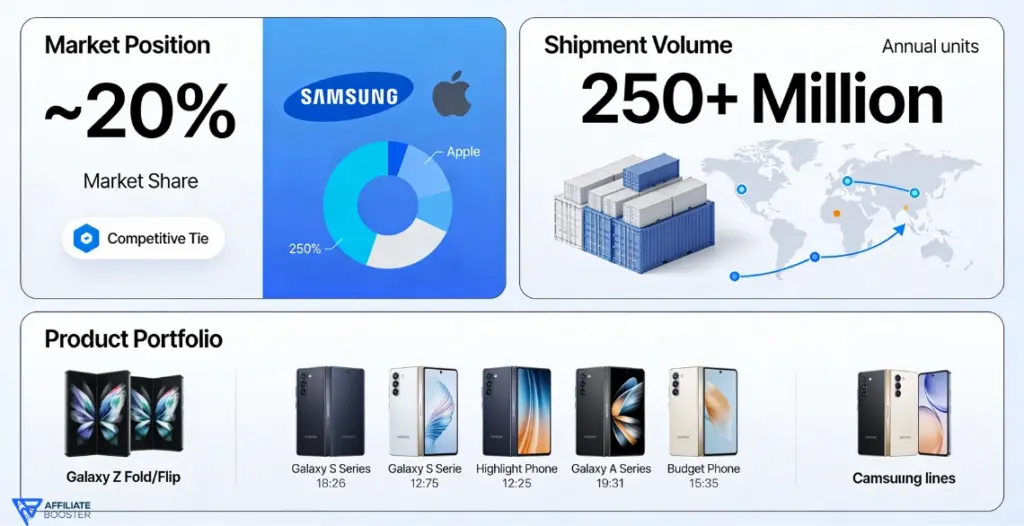
When it comes to smartphones, Samsung consistently battles for the top spot with Apple.
| Smartphone Metric | Statistics |
|---|---|
| Global Market Share | ~20% |
| Annual Shipments | 250+ million units |
| Price Range | $200 – $1,800+ |
| Flagship Series | Galaxy S & Z Series |
| Budget Series | Galaxy A Series |
Samsung held approximately 20% of the global smartphone market share in 2024, making it one of the leading manufacturers worldwide. The company ships over 250 million smartphones annually, reaching customers in virtually every country.
The Galaxy series remains Samsung's flagship line, with the Galaxy S24 selling millions of units within months of launch.
Samsung's affordable A-series phones have also captured significant market share in developing countries, where price-sensitive consumers look for quality at lower price points.
Interestingly, Samsung produces phones across all price ranges, from budget models under $200 to premium foldable phones exceeding $1,800. This diverse portfolio helps Samsung maintain its market leadership.
Also read about: Apple Music Statistics
Samsung's TV and Display Leadership
Samsung dominates the television market like few other companies in their respective industries.
| TV & Display Metrics | Data |
|---|---|
| Years as Global #1 in TV | 17+ consecutive years |
| Global TV Market Share | ~30% |
| Premium TV Market Share | 45%+ |
| Display Panels Produced Annually | 400+ million |
| Key Technologies | QLED, Neo QLED, MicroLED |
The company has held the number one position in global TV sales for 17 consecutive years as of 2024. Samsung controls approximately 30% of the global TV market, significantly ahead of competitors like LG and Sony.
In the premium TV segment (TVs priced above $2,500), Samsung's market share climbs even higher, exceeding 45%. The company's QLED and Neo QLED technologies have won numerous awards and consumer praise.
Samsung also leads in display panel production, manufacturing screens for smartphones, tablets, laptops, and monitors.
The company produces over 400 million display panels annually, supplying not just its own devices but also competitors' products.
Semiconductor and Memory Chip Statistics
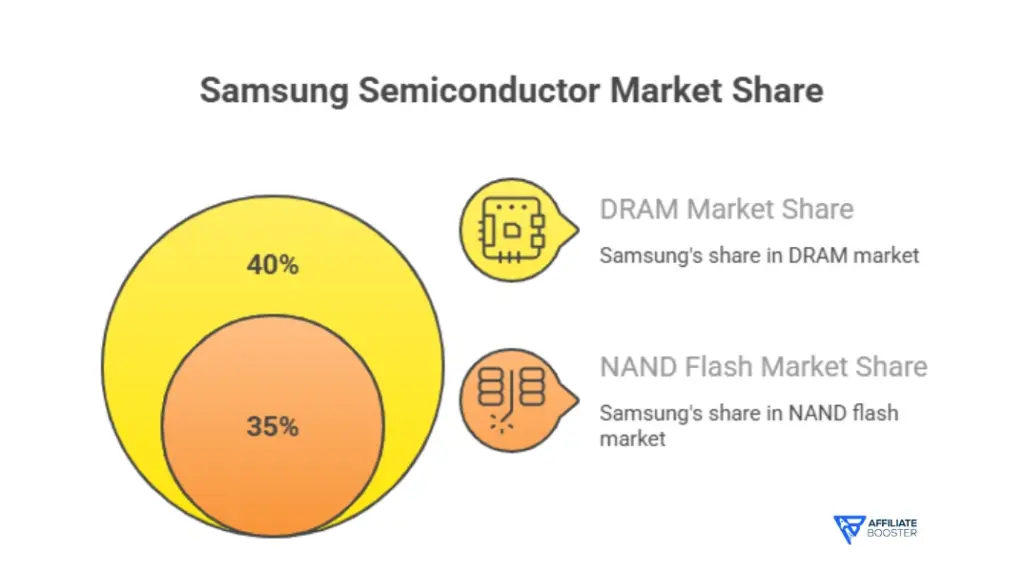
Many people don't realize that Samsung is actually the world's largest memory chip manufacturer.
| Semiconductor Metrics | Statistics |
|---|---|
| DRAM Market Share | ~40% |
| NAND Flash Market Share | ~35% |
| Semiconductor Revenue (2023) | $50+ billion |
| Chip Production Size | 3 nanometers |
| Future Investment (20 years) | $230 billion |
Samsung holds approximately 40% of the global DRAM market and around 35% of the NAND flash memory market. These chips power everything from smartphones to data centers, making Samsung essential to the global technology infrastructure.
The company's semiconductor division generated over $50 billion in revenue in 2023, despite facing industry-wide challenges. Samsung operates some of the world's most advanced chip fabrication plants, producing chips as small as 3 nanometers.
Samsung invests billions in semiconductor research, recently announcing plans to invest $230 billion in semiconductor manufacturing over the next 20 years. This commitment ensures Samsung will remain a key player in the chip industry for decades to come.
Home Appliance Market Share
Samsung's reach extends beyond electronics into your kitchen and laundry room.
The company ranks among the top three home appliance manufacturers globally, competing with Whirlpool and Haier. Samsung's refrigerators, washing machines, and dishwashers are sold in over 100 countries.
In the premium appliance segment, Samsung has seen impressive growth, with its high-end appliance sales increasing by over 15% annually in recent years. The company's smart appliances, which connect to Wi-Fi and can be controlled via smartphone, have become increasingly popular.
Samsung's Family Hub refrigerator, which features a touchscreen display, has sold over 1 million units since its introduction. This shows consumers' growing interest in connected home devices.
Samsung's Revenue by Division
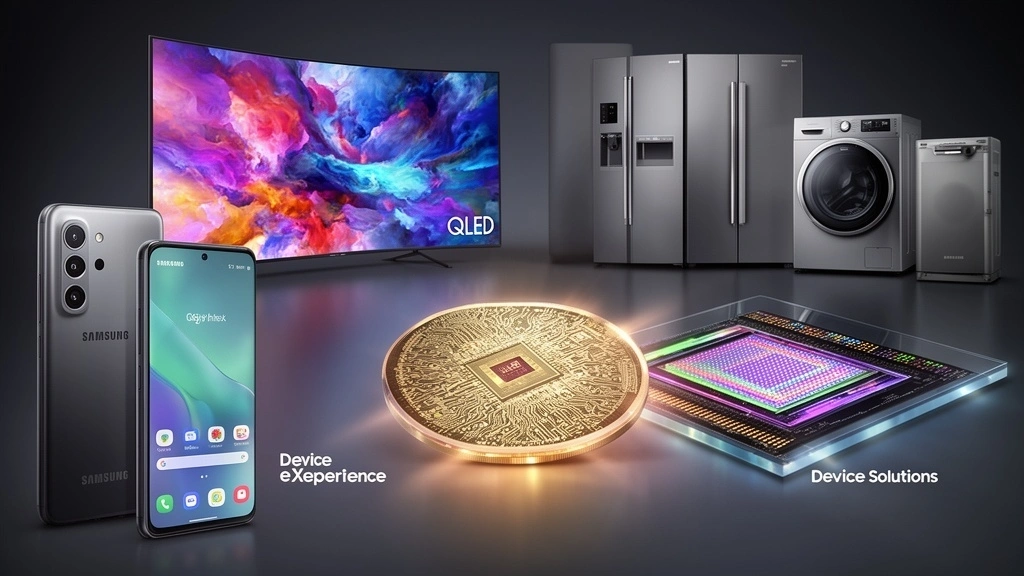
Understanding where Samsung makes its money provides insight into the company's priorities.
| Division | Revenue Contribution | Key Products |
|---|---|---|
| Device eXperience (DX) | ~50% | Smartphones, TVs, Appliances |
| Device Solutions (DS) | ~40% | Semiconductors, Displays |
| Other Businesses | ~10% | Biologics, C&T, Heavy Industries |
The Device eXperience (DX) division, which includes smartphones and consumer electronics, generates approximately 50% of Samsung's total revenue.
The Device Solutions (DS) division, focused on semiconductors and displays, contributes around 40%.
The remaining 10% comes from Samsung's other businesses, including Samsung Biologics, Samsung C&T, and Samsung Heavy Industries. This diversification helps Samsung weather downturns in any single market.
Interestingly, while smartphones get the most media attention, Samsung's semiconductor business often generates higher profit margins. In some quarters, the DS division has contributed over 70% of Samsung's operating profit.
Research and Development Investment
Innovation drives Samsung's success, and the company's R&D spending reflects this priority.
| R&D Metrics | Data |
|---|---|
| Annual R&D Spending (2023) | $22.4 billion |
| R&D as % of Revenue | 9.5% |
| R&D Employees | 90,000+ |
| Total Patents Filed | 170,000+ |
| Annual New Patent Applications | Thousands |
Samsung spent approximately $22.4 billion on research and development in 2023, representing about 9.5% of revenue. This places Samsung among the top corporate R&D spenders globally, alongside companies like Amazon, Alphabet, and Microsoft.
The company employs over 90,000 researchers and engineers across its various R&D centers worldwide. Samsung has filed over 170,000 patents globally, with thousands of new patent applications submitted annually.
This investment in innovation has resulted in breakthrough technologies like foldable smartphone displays, 200-megapixel camera sensors, and advanced AI chips for mobile devices.
Environmental and Sustainability Statistics
Modern consumers care about corporate responsibility, and Samsung has shared several environmental commitments.
| Sustainability Goals | Target/Achievement |
|---|---|
| Net-Zero Carbon Emissions | By 2050 |
| Renewable Energy (Non-Korea Markets) | 100% by 2027 |
| E-Waste Collected & Recycled | 5+ million tons (since 2009) |
| Recycled Plastics Increase | 50x more by 2030 vs 2020 |
| Water Recycled (Semiconductor Facilities) | 100,000+ tons |
Samsung has pledged to achieve net-zero carbon emissions across its global operations by 2050. The company aims to use 100% renewable energy in all markets outside Korea by 2027.
Samsung has collected and recycled over 5 million tons of e-waste globally since 2009 through its take-back programs. The company also aims to use 50 times more recycled plastics in its products by 2030 compared to 2020 levels.
In terms of water conservation, Samsung has recycled and reused over 100,000 tons of water at its semiconductor facilities, reducing environmental impact in water-stressed regions.
Customer Satisfaction and Brand Loyalty
Customer satisfaction statistics reveal how well Samsung retains its user base.
| Loyalty Metrics | Data |
|---|---|
| Customer Satisfaction Score | 75-85 out of 100 |
| Samsung User Retention Rate | ~60% |
| Apple User Retention Rate (comparison) | ~90% |
| Authorized Service Centers | 3,000+ worldwide |
| Premium Product Satisfaction | Higher than budget products |
Samsung's customer satisfaction scores vary by product category but generally range from 75 to 85 out of 100. The company's high-end smartphones and premium TVs typically receive higher satisfaction ratings than budget products.
Brand loyalty studies show that approximately 60% of Samsung smartphone users plan to purchase another Samsung device as their next phone.
While this trails Apple's industry-leading loyalty rate of around 90%, it still represents solid customer retention.
Samsung's service network, with over 3,000 authorized service centers worldwide, helps maintain customer satisfaction by providing accessible repair options.
Samsung's Global Manufacturing Footprint
Samsung operates an extensive manufacturing network that spans the globe.
| Manufacturing Metrics | Details |
|---|---|
| Total Manufacturing Facilities | 35+ worldwide |
| Vietnam Smartphone Output | 50% of global production |
| Vietnam Factory Employees | 160,000+ |
| India Factory Capacity | 120 million phones/year |
| Semiconductor Fab Cost | $15+ billion per plant |
| Major Production Hubs | South Korea, Vietnam, India, Brazil |
The company runs over 35 manufacturing facilities worldwide, strategically located to serve regional markets efficiently. Major production hubs include South Korea, Vietnam, India, and Brazil.
Samsung's smartphone factory in Vietnam is one of the world's largest, producing nearly 50% of Samsung's global smartphone output. The facility employs over 160,000 workers and exports billions of dollars worth of devices annually.
In India, Samsung opened the world's largest mobile phone factory in 2018, capable of producing 120 million smartphones per year. This facility helps Samsung compete with local manufacturers while avoiding import tariffs.
The company's semiconductor fabs in South Korea represent some of the most technologically advanced manufacturing facilities on Earth, with individual plants costing over $15 billion to construct.
5G Technology and Network Equipment
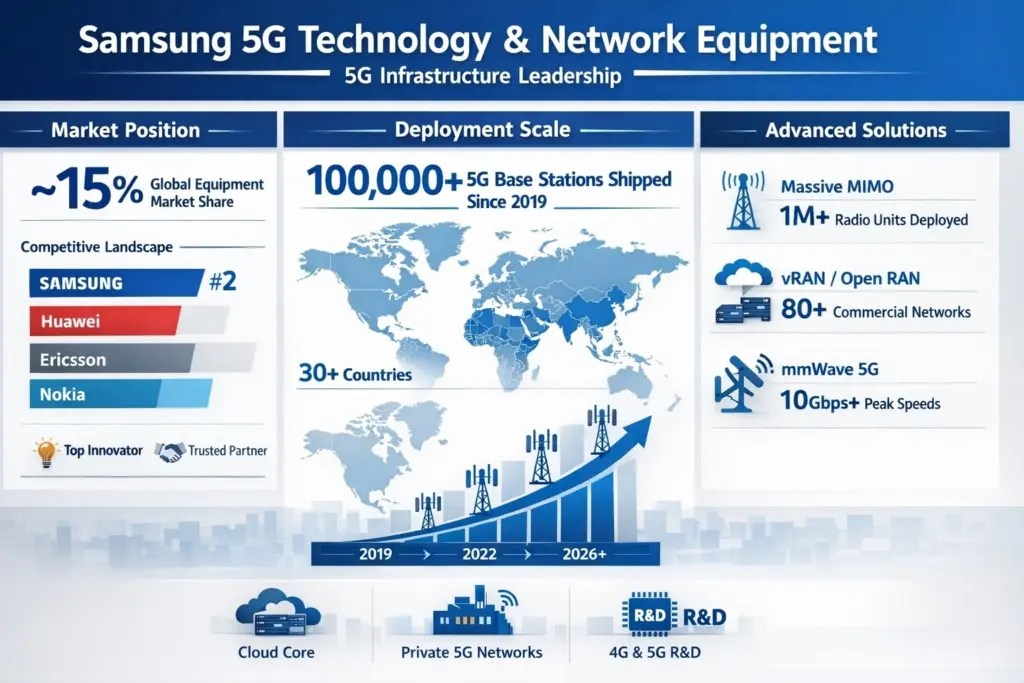
Beyond consumer devices, Samsung plays a significant role in telecommunications infrastructure.
| 5G Metrics | Statistics |
|---|---|
| Global 5G Equipment Market Share | ~15% |
| 5G Base Stations Shipped | 100,000+ (since 2019) |
| Countries with Samsung 5G | 30+ countries |
| 5G-Related Patents | 25,000+ |
| Major US Partners | Verizon, AT&T |
Samsung has secured approximately 15% of the global 5G network equipment market, competing with Huawei, Ericsson, and Nokia.
The company has shipped over 100,000 5G base stations worldwide since 2019.
In the United States, Samsung has become a major 5G equipment supplier to carriers like Verizon and AT&T, particularly as these companies diversify their supplier base. Samsung's 5G solutions are deployed in over 30 countries globally.
The company holds over 25,000 5G-related patents, making it one of the leading intellectual property holders in next-generation wireless technology.
This patent portfolio generates significant licensing revenue while protecting Samsung's competitive position.
Samsung's E-commerce and Digital Services
While primarily known for hardware, Samsung has built a substantial digital ecosystem.
| Digital Service | Key Statistics |
|---|---|
| Galaxy Store Monthly Users | 50+ million |
| Samsung Pay Countries | 30+ countries |
| SmartThings Connected Devices | 300+ million |
| Gaming Hub Launch | 2022 |
| Cloud Gaming Market Projection | $20 billion by 2025 |
The Galaxy Store, Samsung's app marketplace, has over 50 million monthly active users.
While smaller than Google Play or Apple's App Store, it provides Samsung with an additional revenue stream and greater control over the user experience.
Samsung's gaming platform, Samsung Gaming Hub, launched in 2022 and has partnered with major cloud gaming services. This positions Samsung to capitalize on the growing cloud gaming market, projected to reach $20 billion by 2025.
Samsung Pay, the company's mobile payment service, is available in over 30 countries and processes billions of dollars in transactions annually. The service competes with Apple Pay and Google Pay for digital wallet supremacy.
The company's SmartThings ecosystem connects over 300 million devices globally, making it one of the largest Internet of Things (IoT) platforms.
This platform allows users to control everything from lights to thermostats to security cameras through a single app.
Future Growth Projections
Looking ahead, Samsung continues to position itself for sustained growth.
| Future Projections | Timeline & Target |
|---|---|
| Revenue Projection | $250-260 billion by 2025 |
| Foldable Market Share | ~80% |
| Foldable Unit Sales (2023) | 16 million units |
| Foldable Unit Sales (2027) | 50+ million units |
| AI Integration Across Products | By 2026 |
| Automotive Semiconductor Market | $100+ billion by 2030 |
| Quantum Computing | Late 2020s |
Analysts project Samsung's revenue could reach $250-260 billion by 2025, driven by semiconductor demand and premium product sales.
The foldable phone market, where Samsung holds approximately 80% market share, is expected to grow from 16 million units in 2023 to over 50 million units by 2027.
Samsung's investment in AI and machine learning technologies positions the company well for the next wave of consumer electronics. The company has announced plans to integrate AI features across its entire product lineup by 2026.
In the automotive sector, Samsung is expanding its presence through automotive semiconductors and displays, targeting the growing electric vehicle market.
The automotive semiconductor market alone is projected to exceed $100 billion by 2030, and Samsung wants a significant piece of this pie.
Samsung is also investing heavily in quantum computing research, with plans to commercialize quantum processors for specific applications by the late 2020s.
This forward-looking investment could position Samsung at the forefront of the next computing revolution.
Also Read:
- Social Media Statistics
- AI Marketing Statistics
- Influencer Marketing Statistics
- Web Development Statistics
- Instagram Reels Statistics
Conclusion
Samsung's statistics paint a picture of a truly global technology powerhouse. From leading the smartphone and TV markets to dominating memory chip production, Samsung's influence on the tech industry cannot be overstated.
The company's massive R&D investments, diverse product portfolio, and global reach ensure it will remain a major force in consumer electronics for years to come. Whether you're using a Samsung phone, watching a Samsung TV, or using a computer powered by Samsung chips, these statistics show just how integral this company has become to modern life.
Understanding these numbers helps us appreciate Samsung's scale, innovation, and commitment to technological advancement. As the company continues evolving, these statistics will undoubtedly grow even more impressive.