
Mistral AI released Mistral Small 4 on March 17, 2026, delivering one of the most capable open-weight AI models available to date.
The model integrates the capabilities of Mistral's Magistral (reasoning), Pixtral (vision), and Devstral (code) model families into a single unified architecture — offering multimodal input including both text and images, optimised reasoning, and code generation in one deployable package.
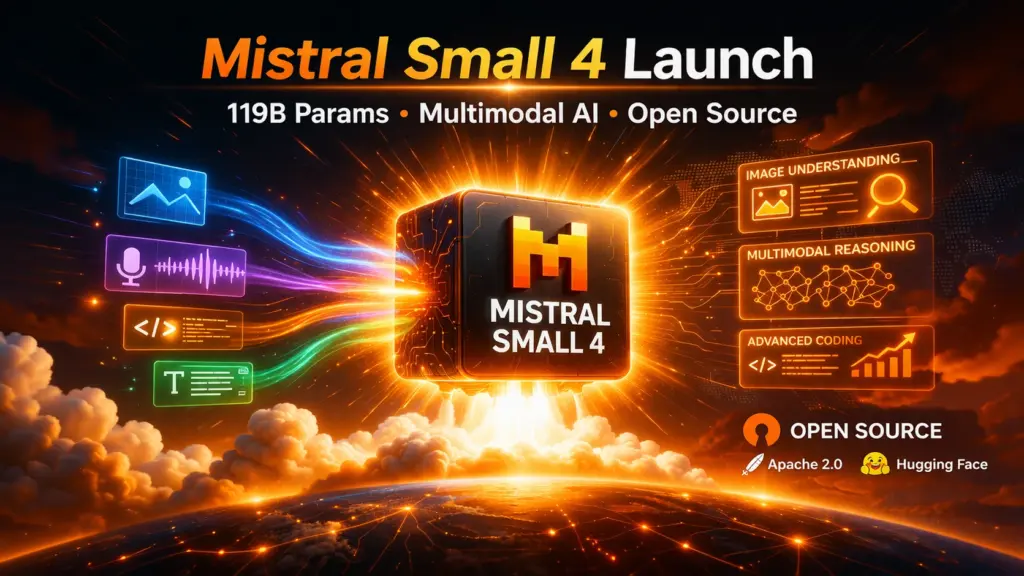
Mistral Small 4 Launch: What Makes Mistral Small 4 Different From Its Competitors
Mistral Small 4 uses a Mixture of Experts architecture with 119 billion total parameters, but is designed to scale efficiently rather than consume maximum compute.
The model's configurable reasoning effort is a standout feature — users can dial down reasoning intensity for straightforward tasks to reduce latency and cost, and increase it for complex analytical work.
It achieves competitive benchmark performance with notably reduced output length compared to earlier open models, making it a strong candidate for production API deployments where token costs matter.
The model is available immediately on vLLM, llama.cpp, and Hugging Face Transformers.
Why Open-Weight Models Matter for Marketers and Developers
Mistral Small 4's release is significant not just as a technical milestone but as a market signal.
Open-weight models with enterprise-competitive capabilities are narrowing the gap with proprietary alternatives from OpenAI and Anthropic, giving businesses more deployment flexibility and cost control.
For SaaS founders and affiliate tech teams, the practical implication is that AI capabilities that previously required API subscriptions to frontier providers can increasingly be self-hosted or run on private infrastructure.
The launch coincides with NVIDIA's ongoing Nemotron Reasoning Challenge on Kaggle (total prizes: $106,388) for developers pushing open model performance further.
More News To Read: