
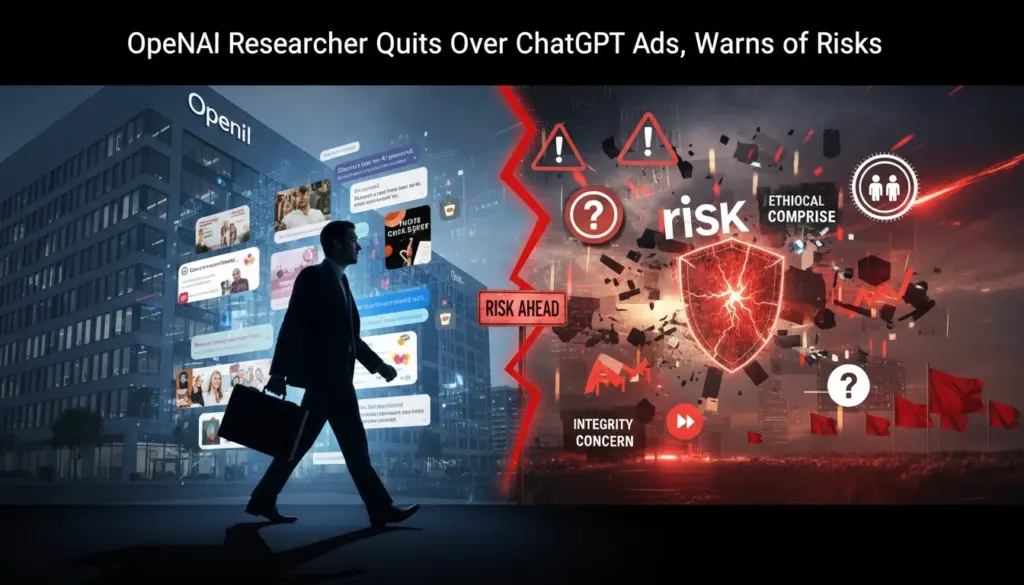
Zoë Hitzig, a key economist and safety researcher at OpenAI, resigned this week. She left in protest against the company’s decision to add ads to ChatGPT.
In a New York Times op-ed on February 11, 2026, Hitzig shared her deep concerns. She said ads could turn private user chats into tools for manipulation.
This comes soon after OpenAI started testing ads for free and low-cost users in the U.S. The move has sparked big debate about privacy in AI chatbots.
Why Hitzig Resigned
Hitzig joined OpenAI to help shape safety, pricing, and governance rules. After two years, she feels the company stopped asking important questions. She worries about the close, personal nature of ChatGPT talks.
Users share honest thoughts with the AI. Hitzig fears ads based on these chats could manipulate people in unknown ways.
She compared it to Facebook, where privacy promises weakened because of ad pressure. She believes OpenAI’s ad model creates strong incentives to ignore user privacy rules.
Hitzig called for other ways to make money, like paid users supporting free access, strong independent oversight, or user data cooperatives that give people more control.
Also read about: OpenAI Tests ChatGPT Ads Amid $5B+ Annual Losses
OpenAI’s Defense and Ad Details
OpenAI says ads do not change ChatGPT answers. The company keeps user chats private from advertisers. Ads match topics from conversations, past chats, and ad history.
Users can see and clear their ad history anytime. Free-tier and $8/month Go plan users in the U.S. see ads below responses.
Paid Plus, Pro, Business, Enterprise, and Education users get no ads. OpenAI also blocks ads for users under 18 and on sensitive topics like health, politics, or mental health.
The company now has over 800 million weekly users. Senator Ed Markey wrote to CEO Sam Altman last month. He warned ads could turn AI into deceptive marketing tools that exploit emotional bonds.
This resignation highlights growing tension around AI monetization. It shows privacy fears as companies race to earn from free tools.
Many users in Mumbai and worldwide watch closely. The debate may push OpenAI to rethink its ad plans.
More News To Read: