
The Model Context Protocol — the open standard for connecting AI agents to external tools, platforms, and data sources — has crossed 97 million installs as of March 2026. Anthropic published the milestone alongside a detailed ecosystem report.
MCP was introduced in late 2024, meaning it has achieved this adoption rate in roughly 16 months — faster than most developer infrastructure protocols reach in their first five years. X's developer community is treating the number as confirmation that MCP has graduated from experiment to foundational infrastructure.
How the Model Context Protocol Is Quietly Becoming the Infrastructure Layer of Agentic AI
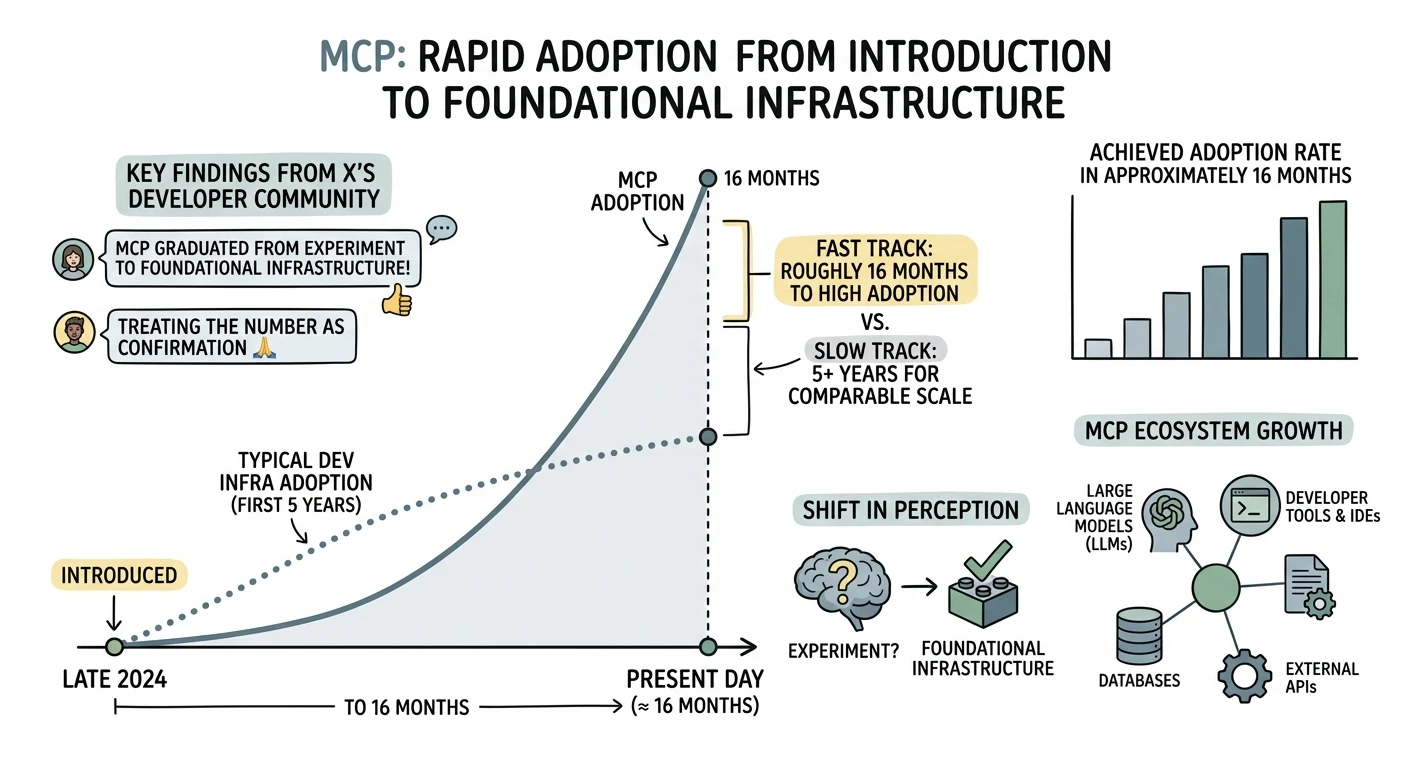
Every major AI provider now ships MCP-compatible tooling. Claude, GPT-5.4, Gemini, and most agent frameworks support MCP as the connection layer for integrating with marketing platforms, CRM systems, e-commerce tools, and analytics dashboards.
The practical meaning for marketing teams: AI agents can now browse, read, update, and act across the software stack without custom connector development for each integration.
The White House's national AI policy framework released March 20 specifically identified agentic AI infrastructure as a priority area for investment and governance — underscoring that MCP-level tooling is now being taken seriously at regulatory levels.
Why Every Marketing Technology Team Should Care
Marketing technology vendors that have not shipped MCP servers are increasingly at a disadvantage. Enterprise marketing teams evaluating automation platforms in 2026 are prioritizing MCP compatibility because it determines whether their AI agent stack can connect without engineering overhead. Platforms that ship MCP servers integrate with any AI agent immediately; those without MCP require months of custom development.
The agentic workflow use cases becoming most common discussed in r/MachineLearning include automated campaign reporting, cross-platform audience analysis, content brief generation from live search data, and end-to-end ad copy testing loops.
All of these previously required either human coordination or brittle custom integrations. MCP makes them composable — you describe the workflow, and an AI agent assembles the connections. Claude's recent computer use feature — which can control desktop interfaces when no direct MCP integration exists — extends this capability further into legacy software environments.
Also Read